
Three routes get real spins: DIY pitching to college, community, and internet stations for artists with limited budgets and local roots; aggregator platforms for artists who need scale and reporting fast; and paid promoters for artists with a polished release and cash to break into bigger markets. Pick the one that matches your budget and your readiness, not the one that sounds most impressive.
TL;DR:
- DIY pitching works best for local or specialty stations with minimal gatekeeping and requires significant time but no budget.
- Aggregator platforms provide quick scale and reporting but require trade-offs in control and often involve moderate costs.
- Paid promoters yield faster results in larger markets but only when your release already shows streaming momentum and proper mastering.
- Target college, community, and internet stations first, reserving national or satellite outlets for after establishing a track record locally.
- Accurate, broadcast-ready files with metadata, a short pitch, and proof of traction significantly improve your chances of securing spins.
Table of Contents
- How to Get Radio Airplay Through Three Practical Routes
- Which Radio Outlets Should You Target First?
- What to Send: The Submission Checklist That Gets Opened
- How Do You Pitch and Build Relationships With DJs?
- How Do You Track Spins and Collect Royalties?
- When Does Paying for Promotion Actually Make Sense?
- Hot Mic Radio’s Take on Where Online Radio Fits in a Release Plan
- Ready to Submit? Here’s How Hot Mic Radio Fits Into Your Plan
- Where to Go Next for Airplay Research and Tools
- Sources
How to Get Radio Airplay Through Three Practical Routes
Every artist chasing spins ends up choosing between three lanes, and each one works differently once you’re in it.
DIY pitching means you find the show, you find the human running it, and you send your music directly. At least 190 U.S. stations currently publish an open submission door, and each one has its own preferred method, whether that’s email, a web form, or old-school mail. This route costs time, not money, and it works best when you already have a regional fanbase or a story tied to a specific city.
Aggregator and distribution platforms batch-submit your track to internet and satellite outlets and hand you reporting on adds and spins. You trade some control for speed and scale, which suits artists who need proof of traction across multiple markets at once.
Paid promoters work their existing relationships with program directors at commercial and public stations. This route only makes sense once your release is mixed, mastered, and already showing streaming movement, because promoters are pitching momentum, not potential.
- DIY: slow, free, best for local and specialty shows
- Aggregators: fast, moderate cost, best for scale and tracking
- Promoters: fastest for bigger markets, highest cost, requires a ready release
Which Radio Outlets Should You Target First?
Not every station type plays by the same rules, and knowing the difference saves you months of wasted pitches.
- College radio runs on student programmers who love discovering new and independent artists, and many accept unsolicited submissions with almost no gatekeeping.
- Community and public radio lean into specialty shows built around specific genres, so a Hip-Hop or R&B-focused program is a much better target than a general music block.
- Internet radio offers the lowest barrier to entry and the widest reach, since format fit matters more than geography and a curated show can play you to listeners on another continent.
- Satellite radio requires distributor or promoter relationships in almost every case, making it the wrong first move for a debut single.
College, community, and internet outlets remain the most realistic entry points for independent artists, while national and satellite slots tend to open up only after you’ve built a track record elsewhere. Start local and specific, then widen your net once you have adds to show for it.
What to Send: The Submission Checklist That Gets Opened
Stations expect a package that drops straight into their system without extra work on their end, and broadcast-ready files with clean loudness, clear metadata, and a tight EPK are the baseline expectation, not a bonus.
Here’s what belongs in every submission:
- A clean radio edit as WAV and a 320kbps MP3, with any profanity or lyrical content clearly labeled
- File names formatted like “Artist Name – Song Title – Radio Edit.wav” so nothing gets lost in a crowded inbox
- The correct ISRC code included in the file name or EPK, plus release date and an artist name that matches your DSP profiles exactly
- A one-sheet or EPK with a short bio, press photo, streaming links, and contact info
- Delivery through whatever the station actually asks for, whether that’s an email attachment, a private stream link, or a submission form
Pro Tip: Keep your intro under 10 seconds and get to the hook within 20 to 30 seconds. Programmers are listening for the payoff fast, and a long atmospheric build is the quickest way to get skipped before your chorus even hits.
Test every download link on mobile before you hit send. A dead link is the fastest way to land in the “pass” pile, no matter how strong the track is.
How Do You Pitch and Build Relationships With DJs?
Getting one spin is easy compared to getting ten, and the difference comes down to how you approach the person on the other end.
- Find the actual show, not just the station. A general inbox gets buried, but a named DJ or program director who runs a Hip-Hop or R&B block is a real human you can talk to.
- Write a two-line pitch. Name the track, name the show you’re pitching, and give one reason it fits their sound. Skip the life story.
- Follow up once, and only once. Send a single polite check-in seven to ten days after your first email, then move on if you hear nothing. Repeated follow-ups read as pushy, not passionate.
- Turn a yes into a relationship. Send a genuine thank-you the moment you hear your track on air, and ask if the station has an interview slot or live session you could fill next.
- Capture proof. Screenshot the playlist, save the show archive, or grab the DJ’s social post about your track. That evidence becomes your credibility when you pitch the next station.
Curated, targeted pitches consistently outperform mass blasts, so slow down on volume and speed up on relevance.
How Do You Track Spins and Collect Royalties?
A spin that nobody can verify is a spin that does nothing for your career, so document everything as it happens.
- Save screenshots of playlists, show archives, and any social posts mentioning your track
- Log every submission with the date, contact, and station so you can follow up intelligently
- Watch for movement in Shazam activity, streaming numbers, and follower counts in the days right after a confirmed add
A documented post-airplay workflow, tracking submissions, confirming spins, and watching stream movement, is what actually turns a spin into measurable career value, rather than just a nice mention you forget about.
Before you pitch a single station, register with SoundExchange for digital and satellite performance royalties, and register with a PRO like ASCAP, BMI, or SESAC for terrestrial and general performance royalties. Skip this step and airplay you’ve already earned generates royalties nobody claims. Worth remembering too: stations increasingly use your streaming numbers to decide whether your track fits their sound, so airplay often follows proof of traction rather than creating it from scratch.
When Does Paying for Promotion Actually Make Sense?
Paid promotion isn’t a shortcut around a weak release. It’s an accelerant for a strong one, and the difference between those two situations is where most artists lose money.
Pricing models vary widely, from flat campaign fees to per-station outreach costs, and no legitimate promoter can promise you specific add numbers. What they can promise is effort, relationships, and reporting.
Watch for these red flags before you sign anything:
- Guaranteed rotation or a specific number of spins in writing
- No reporting on which stations were contacted or which responded
- Vague pay-to-play arrangements that blur the line between promotion and payola
Pro Tip: Before paying anyone, run your own readiness check: is the single mastered, does it have a clean radio edit, and is it already showing some streaming or social traction? If the answer to any of those is no, spend on production first.
Hot Mic Radio’s Take on Where Online Radio Fits in a Release Plan
We’re not going to pretend every station works the same way, because they don’t. Hot Mic Radio programs new music across curated rotations built around Hip-Hop, R&B, neo-soul, gospel, Afrobeats, and dancehall, alongside specialty shows spotlighting regional scenes. When we’re deciding what earns a spot in a live DJ set or a themed block, format fit comes first: does the record actually belong in the lane we’re building, not just technically qualify for it.
After that, we look for the basics that make a track easy to say yes to. Clean radio-ready exports, accurate metadata, and a submission that shows you’ve done the work before you asked for the favor. Here’s the part most artists miss. A confirmed spin on an internet station like ours is proof you can hand to the next program director. Use it. That’s how one add becomes momentum instead of a one-off.
— Hot Mic Radio Team
Ready to Submit? Here’s How Hot Mic Radio Fits Into Your Plan
If you’ve read this far, you already know the DIY grind, aggregator platforms, and paid promoters each ask something different of you. Another option exists for independent Hip-Hop and R&B artists that doesn’t require a promoter’s budget or months of cold email: a curated station building rotation around the culture.
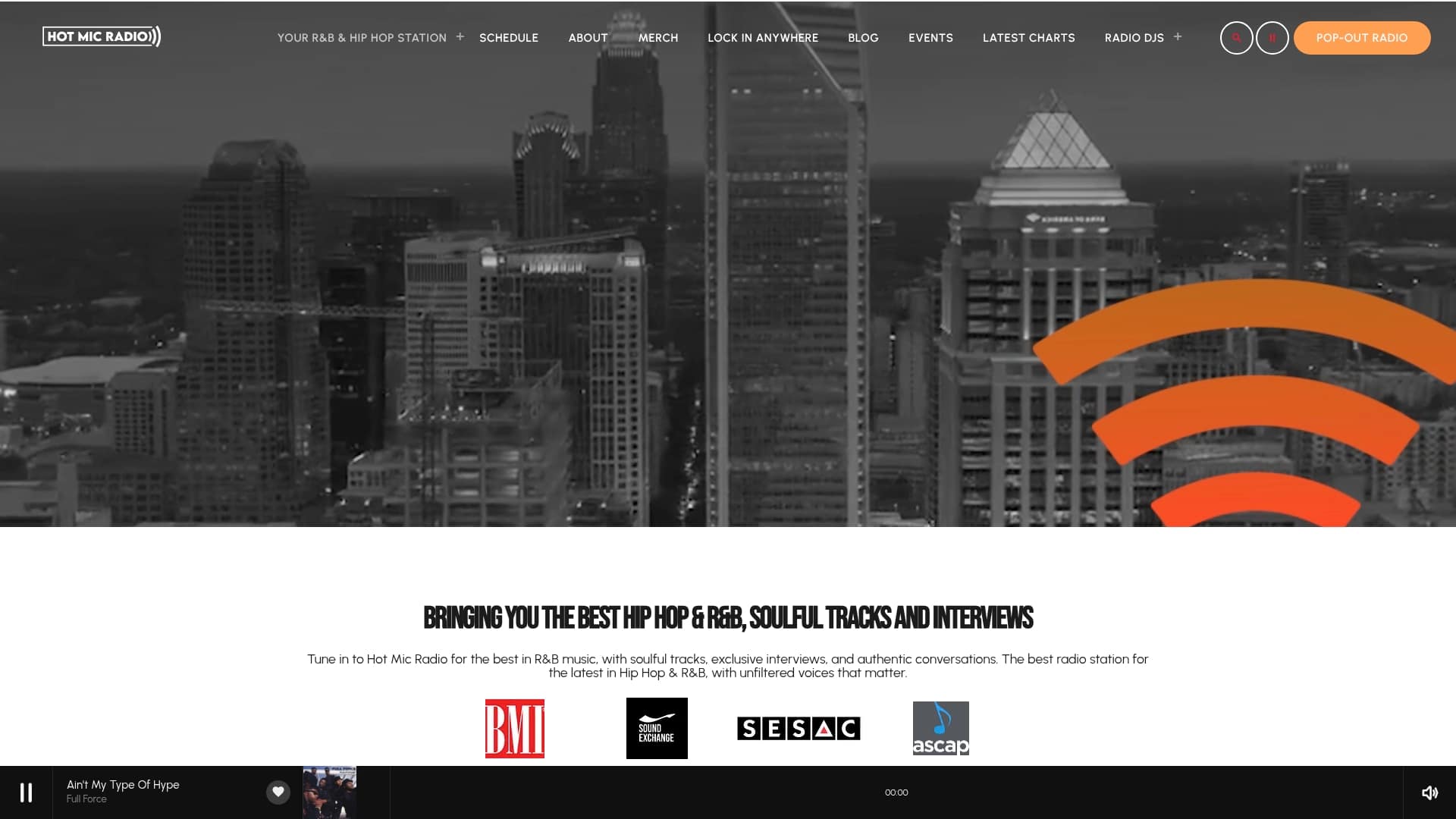
Our programming spans Hip-Hop and Hip-Hop & R&B archives, live DJ sets, and regional scene spotlights, which means a submission has multiple lanes it could land in rather than one narrow slot. Send a clean radio edit, accurate metadata, and a short EPK using the same music submission checklist outlined above, and you’re already ahead of most inboxes we open. If your track leans into that classic sound, our Classic Hip-Hop and R&B archives are worth checking for fit before you submit.
Once you land a spin, capture it, then use it as leverage for your next pitch elsewhere. Start by browsing our Hot Mic Radio show page to see where your sound might fit, and send your submission today.

Where to Go Next for Airplay Research and Tools
A few resources are worth bookmarking as you build out your submission strategy. Rotation’s station database documents how hundreds of stations prefer to receive music, which saves you from guessing at submission formats. The Artist breaks down technical file requirements in more depth if you want a second reference for metadata and exports. For royalty collection, start directly with SoundExchange and your PRO of choice rather than a third-party guide.
On the production side, if your track still needs a stronger instrumental before it’s submission-ready, Telling Beatzz offers Hip-Hop beats and rap instrumentals worth a look. And for Hot Mic Radio’s own take on how online radio slots into a broader release plan, our guide on online radio for artists and our five-step internet radio discovery guide both go deeper than we could cover here.
Sources
- Streaming impact on radio airplay (Barrett Media)
- How to submit music to radio stations (Rotation)
- Artist
- How to get your music on the radio as an independent artist (Tools4Music, 2026)
- How to Get Radio Airplay: A Practical Guide for Artists (Music Analytics Tools)

