


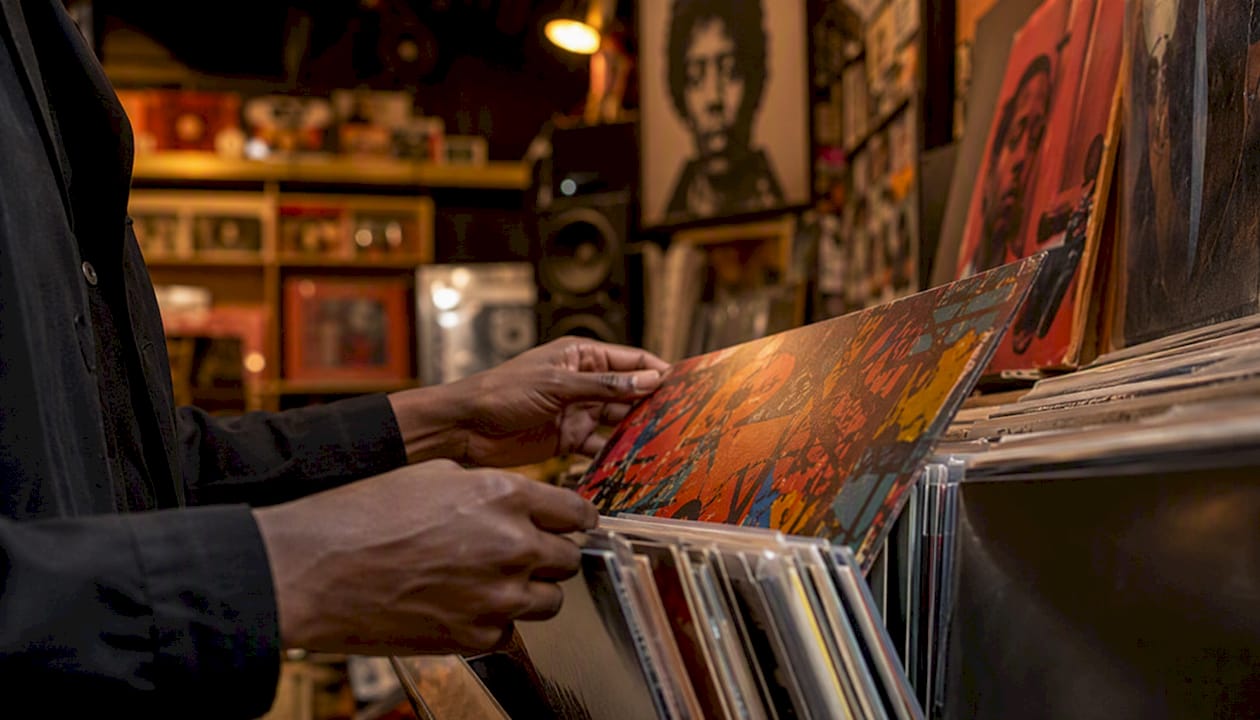
Black music worldwide fan communities are transnational networks built on shared cultural memory, collective buying power, canon-making, and mutual protection — and the fastest way to plug in is to join an active diaspora-focused group, radio station, or professional network right now. These aren’t casual listener groups. They’re living institutions that shape charts, build careers, and preserve legacies that the mainstream industry has historically ignored or extracted from without credit.
Here’s where to start today:
- Tune in to Hot Mic Radio for curated Hip-Hop, R&B, Afrobeats, and Soca programming that connects you to the global sound in real time.
- Find one organization from the list in this guide — BWMG, ISBM, or BMM Network — and follow their programming or membership pathway.
- Join one online forum or social group centered on your favorite Black music genre, whether that’s a battle rap thread on ABlackWeb or a neo-soul Discord.
Key Takeaways
Black music worldwide fan communities thrive when they operate across all four pillars — class, clout, canon, and comfort — with Black leadership, ethical governance, and consistent programming at the center.
| Point | Details |
|---|---|
| Four C’s framework | Alfred L. Martin Jr.’s class, clout, canon, and comfort pillars define how Black fan communities actually function. |
| Where to join now | BWMG, ISBM, BMM Network, BLKXCNCT, and Hot Mic Radio each offer distinct entry points from institutional research to live programming. |
| Fans as active stewards | Coordinated streaming campaigns, archiving, and reaction culture are how fans build canon and mobilize clout with real industry impact. |
| Ethics are infrastructure | Centering Black leadership, transparent revenue-sharing, and artist consent aren’t best practices — they’re the foundation. |
| Hot Mic Radio as community | Hot Mic Radio’s curated Hip-Hop, R&B, and global programming connects fans across the diaspora and supports independent artists seeking airplay. |
Table of Contents
- What makes a Black music fan community real?
- How do artists build and sustain global Black music communities?
- Where can you find and join worldwide Black music fan communities?
- How do fans steward, shape, and protect these communities?
- Hot Mic Radio and the communities that prove the model works
- How do you start or scale a Black music fan community?
- What are the ethical rules every Black music community must follow?
- What we’ve learned building community through the music
- Hotmicradio: your next step into the culture
- Sources
What makes a Black music fan community real?
The term “fan community” gets thrown around loosely, but scholar Alfred L. Martin Jr. gives us a sharper framework. His book Fandom for Us, by Us identifies four pillars that define how Black fan cultures actually operate: class, clout, canon, and comfort. Class describes how fans navigate identity and social position within the community. Clout is the collective consumer and cultural power fans can mobilize. Canon is the communal, fluid process of deciding which artists, albums, and moments matter. Comfort is the safe-space function — the reason Black fans seek out communities where they don’t have to explain or defend their cultural references.

These four C’s show up across every form Black music fan communities take. Local scene groups, online fandoms, radio communities, professional networks, cultural institutions, and grassroots safe-space collectives all express some combination of them. A Motown deep-dive Facebook group is doing canon work. A coordinated streaming campaign for an independent R&B artist is clout in action. A Discord server where Black country fans don’t have to justify their genre love? That’s comfort, full stop.
Regional variations matter here too. In West Africa, fan communities often organize around live events and radio, with Afrobeats fandoms building transnational reach through WhatsApp groups and YouTube reaction channels. In the Caribbean, Dancehall and Soca communities carry strong local identity tied to carnival culture while connecting globally through diaspora networks in the UK, Canada, and the US. European Black music appreciation groups often center jazz and soul alongside newer Afrobeats scenes, frequently operating as cultural advocacy organizations as much as fan spaces. North American communities tend to be the most digitally organized, with Reddit threads, Discord servers, and Twitter/X spaces running alongside institutional bodies like ISBM and BWMG.
Pro Tip: When you’re evaluating a community to join, check whether it uses all four C’s. A group that only does canon debates without offering comfort or clout is incomplete — and often exhausting for newer members.
How do artists build and sustain global Black music communities?
The artists who build the most durable communities don’t just release music and wait. They create consistent touchpoints that give fans something to gather around between projects.
Direct-to-fan strategies are the foundation. Curated radio shows and regular live streams give fans a scheduled reason to show up. Localized touring paired with community events — meet-and-greets, listening sessions, pop-up shows in diaspora neighborhoods — turns passive listeners into invested members. Patreon-style memberships and fan clubs let artists offer exclusive content while building a revenue layer that doesn’t depend on streaming royalties alone.
Platform strategy is where the real cross-border reach happens. Artists who understand algorithm literacy use YouTube reaction culture deliberately, releasing archival or behind-the-scenes content that invites fan response videos. Community playlists on streaming platforms become collaborative canon-building tools when artists seed them and invite fan additions. Social platforms, particularly Instagram and TikTok, let artists reach diasporic fans in Lagos, London, Toronto, and Atlanta simultaneously — but the artists who sustain those connections do more than post. They respond, they credit, they show up in the comments.
Programming and curation are canon-building tools. When a radio show sequences a Fela Kuti record before a J. Cole track before a Burna Boy cut, it’s not just a playlist — it’s an argument about lineage, influence, and what belongs together. That argument is what fans carry into their own communities.
Hot Mic Radio does exactly this. Regional Hip-Hop spotlights and cross-genre programming that moves from Gospel roots to Afrobeats to neo-soul aren’t random rotations. They’re a curatorial statement about how Black music connects across geography and generation. That kind of programming gives fans a shared reference point — the raw material for community conversation.
Pro Tip: Cross-genre programming is one of the most underused community-building tools. An artist who references shared canon across genres — say, connecting their R&B sound to gospel chord structures or Afrobeats rhythms — signals cultural fluency that resonates with diverse Black audiences far more than staying in one lane. The role of social media in music amplifies this when artists explicitly name those connections in their posts and interviews.
- Curated radio shows and live streams create scheduled gathering points.
- Localized touring and community events convert listeners into members.
- Membership models build sustainable revenue outside streaming.
- Algorithm literacy and reaction culture extend reach across diaspora networks.
- Cross-genre programming signals cultural fluency and builds broader community trust.
Where can you find and join worldwide Black music fan communities?
The ecosystem is bigger than most fans realize. Here’s a practical map organized by what you’re looking for.
For discovery and listening: Hot Mic Radio covers Hip-Hop, R&B, Afrobeats, Dancehall, Gospel, Southern Soul, and more through curated shows and live DJ sets. A Black Web hosts large-scale music discussion threads, including niche spaces for battle rap and record-store culture, making it one of the most active forum-based communities for Black music conversation.
For professional development and transnational exchange: BLKXCNCT (Black Connect) operates as a global network connecting Black artists and community members through music education, professional development, and cross-cultural exchange, directly addressing equity gaps in the industry. The BMM Network unites Black music professionals worldwide for international collaboration, training, and career development — particularly useful for managers, agents, and artists navigating sync licensing and touring markets across borders.
For institutional research and advocacy: BWMG produces research and programming that increases visibility for Black women in music and addresses structural barriers. The International Society for Black Musicians (ISBM) advocates for centering Black musical contributions as foundational to global music history and practice.
For niche safe spaces: The Black Opry is a standout example of what happens when Black fans of historically exclusionary genres build their own space. It centers Black leadership, curates inclusive programming, and documents community history — a model that applies far beyond country music.
Before you join any community, check for these:
- Clear moderation rules and an enforcement process for harassment.
- Reciprocity norms — does the community support artists financially, not just emotionally?
- Transparency about who runs it and how decisions get made.
- Privacy policies for any personal data or content you share.
- Whether Black voices hold leadership positions, not just membership slots.
How do fans steward, shape, and protect these communities?
Fans aren’t passive consumers in Black music communities. They’re archivists, canon-makers, organizers, and sometimes the only people keeping an artist’s legacy alive.
Stewardship looks like: building and maintaining playlists that document an artist’s full catalog, recording oral histories from community elders, creating reaction videos that contextualize music for new audiences, and organizing listening events that bring people together physically. Scholar Dayna Chatman documents how Black fans of K-pop, for example, actively reframe that genre through African American R&B traditions — using reaction videos on YouTube to draw sonic and cultural connections that neither the K-pop industry nor mainstream music criticism bothers to make. That interpretive work is community-building in real time.
Collective action is where the clout pillar gets activated. Coordinated streaming campaigns, purchase drives, and petitions have demonstrable industry impact when organized across diasporic networks and paired with public narratives about representation. Research on Black fandom shows this clout can be mobilized as a consumer strategy to demand better outcomes — more equitable label deals, more diverse festival lineups, more radio airplay for independent artists.
Community norms are the infrastructure that makes all of this sustainable. The gatekeeping vs. access debate is real: some communities protect their space so tightly that newcomers can’t find the door, while others are so open that bad actors dilute the culture. The healthiest communities thread this needle with clear moderation, anti-harassment practices, and transparent reporting pathways.
Niche communities show the full range of what’s possible. Black country fans organizing through the Black Opry, Black K-pop fan coalitions drawing on African American acafandom traditions, Black jazz preservation societies — each one is doing the same core work: deciding what matters, protecting who belongs, and making sure the culture doesn’t get erased or co-opted.
Pro Tip: Building a fan archive? Establish contributor credits from day one. Use a shared doc or platform that logs who added what, and include a simple permissions clause: “Contributors retain credit; content may be shared within the community with attribution.” That one sentence prevents most of the disputes that kill collaborative archives.

Hot Mic Radio and the communities that prove the model works
Hot Mic Radio’s programming model is a working case study in community-building through curation. The station’s structure — moving from Gospel and Motown roots through Hip-Hop and R&B to Afrobeats and Dancehall — isn’t just genre variety. It’s a deliberate argument about Black music’s connective tissue across the African diaspora. Regional Hip-Hop spotlights give local scenes a platform they rarely get on mainstream radio, which creates loyalty from listeners who feel seen rather than just served content.
The measurable behaviors that signal a healthy radio community include: repeat listening sessions, music submission requests from independent artists, listener-driven song dedications, and social sharing of specific show segments. When fans start submitting music and requesting dedications, they’ve moved from audience to participant — which is the transition every community builder is working toward.
BLKXCNCT demonstrates a complementary model: education and professional development as community infrastructure. Their cross-cultural exchange programs create transnational connections between Black artists that touring and social media alone can’t replicate. The BMM Network scales this further by focusing on the professional layer — managers, agents, and industry professionals who can open structural doors for artists across borders.
Pro Tip: If you want to sample what community-driven radio programming sounds like, start with Hot Mic Radio’s R&B Archives or the Hip-Hop Archives. Notice how the sequencing creates conversation between eras and regions — that’s the canon-building in action.
- Hot Mic Radio’s regional spotlights create loyalty by making local scenes visible.
- Listener submissions and dedications signal the shift from audience to community member.
- BLKXCNCT’s education model builds transnational professional infrastructure.
- BMM Network opens structural industry doors across borders for Black music professionals.
How do you start or scale a Black music fan community?
Here’s a sequenced playbook, whether you’re launching from zero or trying to grow past a plateau.
- Define your scope and values. What genre or era? What geographic focus? Write three sentences about who this community is for and what it will never compromise on. That’s your founding document.
- Pick a primary platform. Discord works for real-time conversation and voice events. Facebook Groups still hold the largest cross-generational Black music audiences. Reddit suits deep-dive canon debates. Choose based on where your intended members already spend time, not where you’re most comfortable.
- Seed membership intentionally. Invite 20–30 people who already embody the community’s values before you open the doors. A community with the right founding members is more valuable than one with 10,000 passive followers.
- Set moderation norms before you need them. Write a community charter that covers harassment, crediting, and what happens when someone violates the space. Post it publicly. Enforce it consistently.
- Plan your first 90 days of programming. Weekly listening threads, a monthly live event or stream, one collaborative playlist per month. Consistency builds habit; habit builds community.
- Measure early KPIs. Track active participation (comments, submissions, event attendance), not just follower count. A community of 200 active members beats 5,000 lurkers every time.
For growth, the checklist looks like this:
- Post on a consistent schedule — three to five times per week minimum for active communities.
- Partner with artists for exclusive content drops or listening sessions.
- Run localized events in diaspora hubs: Atlanta, London, Lagos, Toronto, Paris.
- Add multilingual content or translated recaps to reach non-English-speaking Black music fans.
- Collaborate with aligned organizations (BWMG, ISBM, local music schools) while keeping community governance in Black hands.
On budget: a DIY community on Discord or Facebook costs nothing to launch. Meaningful programming — live events, guest artist sessions, archival projects — typically runs a few hundred dollars per month at the grassroots level. Music networking resources can help you find partnership opportunities that reduce costs while expanding reach. Expect six to twelve months before a community develops genuine self-sustaining momentum.
What are the ethical rules every Black music community must follow?
Ethics aren’t optional here. They’re the difference between a community that lasts and one that burns out or gets co-opted.
- Center Black leadership. Every decision-making role — moderation, programming, partnerships — should be held by Black community members. Allies can participate; they shouldn’t govern.
- Build transparent revenue-sharing. If the community generates income through events, merchandise, or sponsorships, publish how that money flows. Opacity breeds resentment.
- Get artist consent for archival use. Before you archive, share, or redistribute an artist’s work — even for preservation purposes — establish a clear consent process. This is especially important for independent artists whose work isn’t covered by major label agreements.
- Credit everyone, always. Producers, songwriters, session musicians, and community contributors who built the archive or the playlist deserve their names on the work.
- Protect vulnerable members actively. Anti-harassment policies need enforcement mechanisms, not just statements. Assign moderators, create reporting pathways, and act on reports within 24 hours.
When inviting external collaborators — brands, non-Black artists, academic researchers — the test is reciprocity. What does the community get in return? If the answer is “exposure,” that’s extraction. BWMG’s institutional model shows what genuine reciprocity looks like: research that translates into industry education and policy, not just visibility for the organization doing the research.
Pro Tip: When a brand or researcher approaches your community, ask for their track record with Black communities before you agree to anything. A history of extractive partnerships is a pattern, not a one-time mistake.
What we’ve learned building community through the music
We’ve watched what happens when programming gets the sequencing right. At Hot Mic Radio, the decision to run regional Hip-Hop spotlights alongside classic soul and Afrobeats wasn’t a format experiment — it was a bet that listeners who grew up on one branch of the diaspora tree would recognize themselves in another. That bet paid off in the form of listeners who don’t just tune in; they submit music, request dedications, and bring their people along. That’s the community signal we look for.
The cultural exchange that Black music enables is real, and it’s happening in real time across every platform and time zone. You don’t have to wait for an institution to validate your community. You just have to start with the right values, the right people, and a consistent reason to gather.
Hot Mic Radio: your next step into the culture
You’ve got the framework, the organizations, and the playbook. Now here’s the most direct path to actually living inside a Black music community every day: Hot Mic Radio. We’re not a passive streaming service — we’re a curated platform where Hip-Hop, R&B, Afrobeats, Gospel, Dancehall, and neo-soul all share the same space, programmed by people who know the culture from the inside out.
Live DJ sets, regional scene spotlights, independent artist features, and listener-driven dedications make every session a community event, not just a listening session. Independent artists can submit music directly for airplay consideration — no label required. Fans who want to go deep on the canon can start with the Hip-Hop Archives or the R&B Archives and find shows that connect the dots across eras and regions. Tune in, turn it up, and bring your community with you.
Sources
The scholarship, institutions, and networks below are vetted starting points for deeper learning, membership, and professional development in Black music communities worldwide.
- Fandom for Us, by Us — Alfred L. Martin Jr.
- BLKXCNCT (Black Connect) — About
- I Know That Song! Black Fans and the Familiarity of K-pop — Dayna Chatman / Flow
Three organizations worth prioritizing for membership or research partnership:


Post comments (0)