

Most indie artists should start in the $500 to $2,000 tier, run a focused regional test, and concentrate that spend into one channel instead of spreading it thin. The rule is simple: pick your lane, test it with a clear signal to watch, then scale once that signal proves itself. Radio earns its keep when you want community credibility and a local or regional fan base that streaming ads alone can’t buy you.
TL;DR:
- A regional radio push with a $1,500 to $3,500 budget can secure 10 to 30 station adds if the record is strong.
- Small-market radio spots typically cost $200 to $500 per week, while large-market airtime can reach thousands of dollars per spot.
- Most indie promo campaigns fall between $1,000 and $5,000 for regional efforts, with higher costs for national or multi-market campaigns over $5,000.
- Successful promotion requires verifying station adds through trusted tracking services and avoiding vague promises from promoters.
- Spending on multiple channels simultaneously often dilutes results; concentrate your budget on one region or promoter until you see a clear signal.
Table of Contents
- Budget tiers explained: what each range really gets you
- Radio pricing mechanics and how they compare to other channels
- How to allocate a radio promo budget: test, then scale
- DIY, college, and online radio routes that keep costs low
- Hiring promoters and pluggers: fee bands and red flags
- Legal must-knows: FCC payola rules and how to stay clean
- How to measure results and know when to scale
- Common budget mistakes and quick fixes
- Our take on what makes a submission worth a station’s airtime
- How Hot Mic Radio fits into your promo budget
- FAQ
- Sources
Budget tiers explained: what each range really gets you
We’ve watched enough campaigns cross our desk to know the tier you pick shapes everything downstream, from which promoter will even take your call to what kind of outcome you can honestly expect. Here’s how the money typically breaks down.
The $0 to $500 tier is DIY territory: submission fees, maybe a single boosted post, and your own hustle emailing program directors. You’re trading cash for time here, and that’s a fair trade if you’ve got the patience.

The $500 to $2,000 tier is where a regional push starts to make sense.
The $2,000 to $10,000+ tier opens the door to multi-market regional or light national campaigns. Regional promoter campaigns commonly run $1,000 to $5,000 on their own before you add production and ad support on top.
- $0-$500: DIY outreach, college and community stations, minimal paid elements.
- $500-$2,000: One regional promoter, polished production, light digital amplification.
- $2,000-$10,000+: Multi-market regional push or an entry-level national campaign.
Outcomes scale with spend but never perfectly. A strong $1,500 to $3,500 regional push can land 10 to 30 station adds when the record itself is undeniable, while national campaigns in the $5,000 to $25,000+ range often struggle to pay off for smaller independents without existing traction. Pick your tier based on what you’re actually trying to prove: a touring artist needs regional density, a streaming-focused artist needs spins that convert to saves, and an artist building a brand needs the relationship capital that comes with interviews and live station appearances.
Radio pricing mechanics and how they compare to other channels
Radio rates aren’t mysterious once you know the formula. Stations price airtime using Average Quarter Hour (AQH) audience multiplied by CPM, the cost per thousand listeners reached. A bigger AQH audience means a bigger price tag for the same 30 seconds, which is why a spot in a major market costs wildly more than the same spot on a community station three towns over.
Spot pricing swings hard by market size. Small-market weekly buys can run roughly $200 to $500 per week, while large-market placements can run into the thousands per spot. Production adds another variable: a simple voiceover with a pre-cleared bed can come in under $500, while a fully produced spot with original scoring can run $300 to $3,500 depending on how much you outsource.

One of the clearest cost benchmarks in the space: independent radio promotion for indie artists ranges from nearly $0 for DIY college campaigns to $25,000+ for national commercial pushes, with most regional work landing between $1,000 and $5,000. That spread matters because it tells you radio isn’t a single price point, it’s a ladder, and you choose your rung.
Compared to playlist pitching or social ad spend, radio tends to buy something different: a community connection and a sense of discovery that feels earned rather than served up by an algorithm. Social ads scale fast and cheap per impression, but they rarely build the kind of local loyalty a station relationship can.
- Radio: slower build, stronger community tie, pricing tied to market size and format.
- Playlist/social promotion: faster scale, lower per-impression cost, weaker local relationship value.
How to allocate a radio promo budget: test, then scale
We tell every artist the same thing: concentrate before you expand. A test budget should hit one audience, run one campaign angle, and watch one primary signal, whether that’s station adds, spins, or a streaming bump you can actually attribute to the push.
- Set a test budget equal to roughly 25% to 30% of your total available funds.
- Pick one region or one station tier (college, community, or a single regional commercial outlet) and commit fully.
- Define your scale rule in advance: if you hit your target (say, five station adds in three weeks), release the next 40% into expansion; if you don’t, diagnose before you spend another dollar.
Three sample mixes depending on your goal:
- Awareness mix: 50% promoter fees, 25% production, 25% digital amplification of any wins.
- Touring mix: 60% regional promoter and station relationship costs, 20% production, 20% travel and in-station appearances.
- Streaming lift mix: 40% promoter fees, 30% production, 30% retargeting ads aimed at listeners in markets where you’ve landed spins.
Concentration matters because a thin spread across five stations in five markets produces noise, not signal. You can’t tell what worked. The most common misallocation trap is paying for reach you can’t measure and skipping the production polish that makes a track playable in the first place.
Pro Tip: Keep a simple line-item checklist before you spend a dollar: promoter fee, production cost, digital support, travel, and reporting. If a line item doesn’t map to one of those five, question why it’s in the budget.
DIY, college, and online radio routes that keep costs low
DIY submission costs are mostly time, not money. Expect to spend evenings researching program directors, writing one-sheets, and following up politely but persistently. Submission fees through aggregator platforms or direct station portals typically run low, and our own music submission checklist walks through what a program director actually wants to see before they’ll listen past the first ten seconds.
College, community, and online stations are where most independent artists should cut their teeth. These outlets often run on volunteer staff who genuinely want to discover new music, and a well-targeted pitch costs little beyond your time and a clean radio edit. Our breakdown on the role of online radio for artists covers how discovery actually happens on these platforms.
- Use a single clean master and one radio edit rather than paying for multiple versions.
- Record a simple high-quality voiceover drop instead of a full studio production.
- Batch your outreach emails so you’re not reinventing the pitch every time.
- Track every submission in a spreadsheet so you know what landed and what didn’t.
Decide to DIY when you have more time than money and a record that’s genuinely ready. Decide to pay when you need speed, scale, or relationships you haven’t built yet.
Hiring promoters and pluggers: fee bands and red flags
Regional promoter campaigns commonly fall in the $1,000 to $5,000 range, while national pushes often run $5,000 to $25,000 or more depending on format and scope. Deliverables should include a defined station list, a contact timeline, and regular reporting, not a vague promise of “exposure.”
- Ask exactly how billing works: flat retainer, per-add fee, or a hybrid of both.
- Request that every reported add be verifiable through a recognized tracking service like Mediabase or BDS.
- Get an itemized timeline showing which stations get contacted and when, so adds don’t arrive as an unverifiable surprise.
Billboard’s reporting on label and promoter practices found that payments routed through independent promoters have in documented cases coincided with sharp spin increases at targeted stations, which is exactly why itemized, trackable reporting matters so much before you sign anything.
Red flags include promoters who won’t name specific stations, who guarantee adds outright, or who get vague when you ask how they bill. A legitimate local promoter relationship should be able to explain, in plain terms, what they do for touring and regional discovery and how that work gets tracked.
Pro Tip: Never pay the full fee upfront. Structure payment around milestones tied to verifiable reporting, not promises.
Legal must-knows: FCC payola rules and how to stay clean
Section 317 of the Communications Act and 47 C.F.R. § 73.1212 require broadcasters to disclose when airplay or program material has been paid for. Skip that disclosure and you’re looking at payola, which carries real enforcement risk for the station and potential exposure for artists involved in the arrangement.
The FCC’s Enforcement Bureau has specifically warned that exchanging artist appearances for airplay can trigger payola rules if that exchange isn’t disclosed and reported properly.
- Get every promoter and station agreement in writing, including what’s being paid for.
- Insist on sponsorship identification whenever a paid placement airs.
- Ask stations directly what their written payola compliance policy looks like.
- File a complaint with the FCC if you suspect an undisclosed pay-for-play arrangement.
How to measure results and know when to scale
A readable test needs one audience, two creative versions, and one primary signal you’re actually watching, whether that’s station adds, spins, or streaming uplift in the targeted market.
- Track adds and spins through a recognized monitoring service, not self-reported promoter claims.
- Watch for streaming uplift specifically in the markets where you landed airplay.
- Set a scale threshold in advance: hit it, and you release more budget; miss it, and you pause to diagnose.
- Log every result, cost, and timeline detail so your next campaign starts smarter than this one.
| Signal | What to track | Scale trigger |
|---|---|---|
| Station adds | Verified adds via Mediabase or BDS | 5+ adds in test window |
| Spins | Weekly spin count per station | Rising trend over 2-3 weeks |
| Streaming lift | Saves and streams in target market | Noticeable bump tied to airplay dates |
Common budget mistakes and quick fixes
The single biggest mistake we see is spreading a small budget across too many channels at once, which produces noise instead of a readable result. Fix it by concentrating on one region or one promoter relationship until you have a real signal.
- Spreading too thin: pick one channel and commit fully before expanding.
- Paying for unverified adds: require tracking through Mediabase or BDS before you pay a bonus.
- Underinvesting in production: a weak master kills your shot no matter how good the pitch is.
- No follow-up after spins: pair every add with a social push or press outreach so the spin actually converts.
Our take on what makes a submission worth a station’s airtime
Programming fit matters more to us than polish alone. We’re looking for records that genuinely fit the rotation, whether that’s the Hip-Hop and R&B foundation or the Afrobeats and dancehall corners of our programming, and artists who understand that a regional spotlight or a live DJ feature is a relationship, not a transaction. Budget for the relationship, not just the spin.
— Hot Mic Radio Team
How Hot Mic Radio fits into your promo budget
Unlike many internet radio stations, Hot Mic Radio does not charge artists for getting their music played on our station. This commitment to supporting independent artists without fees distinguishes us in the digital radio landscape. For those interested in sponsorship opportunities, our Advertising page provides details on reaching our audience through brand partnerships and ad placements.
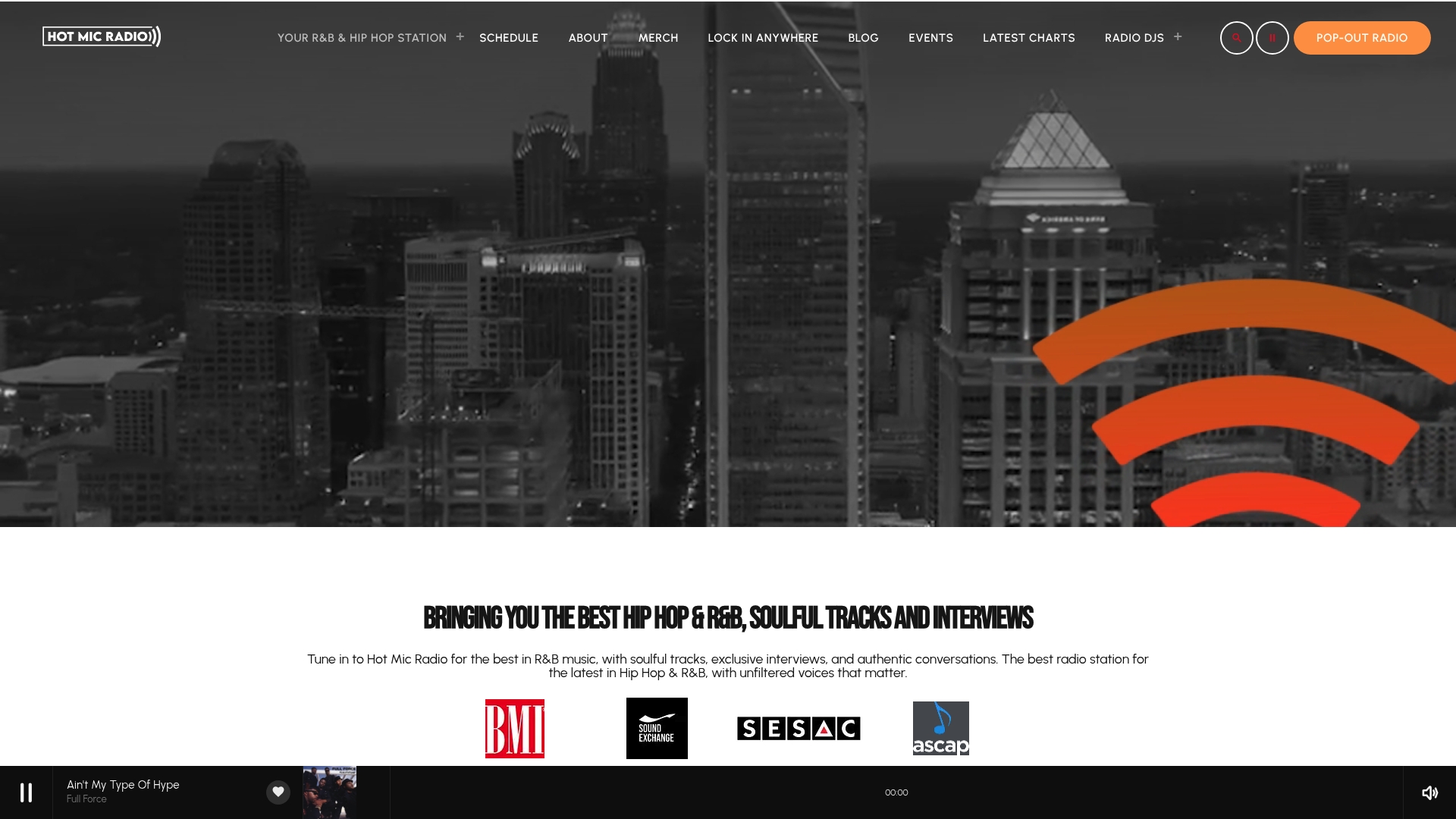
The Bars & Beats Club is Hot Mic Radio’s exclusive membership program designed to support our operations and keep the music flowing. Accessible through the Hot Mic Radio App or at members.hotmicradio.com, the Bars & Beats Club offers listeners a way to contribute directly to the station while enjoying perks tailored to different support levels. Membership tiers range from The Headliner who get early access to playlists and exclusive content, to premium members who receive VIP access to live DJ shows and special events. This club not only fuels Hot Mic Radio’s mission to champion independent Hip-Hop and R&B artists but also builds a vibrant community around the culture. If you want to support the station and enjoy unique benefits, joining the Bars & Beats Club is the way to go. For artists ready to get their music heard, submissions are always welcome via hotmicradio.com/submit or through the Hot Mic Radio app, available on iOS and Android.
- Advertising: For brands looking to promote their business and explore direct sponsorship opportunities.
- Bars & Beats Club: Support Hot Mic Radio’s operations by joining our exclusive membership program.
- Merch: Shop official Hot Mic Radio merchandise at the Hot Mic Radio Store or through the Hot Mic Radio app available on the Apple App Store and Google Play Store.
FAQ
How much do radio promoters typically cost?
Regional promoter campaigns commonly run $1,000 to $5,000, while national commercial pushes often cost $5,000 to $25,000 or more depending on format and market scope. The right fee band depends on how many markets you’re targeting and whether you need a regional or national push.
How much does a 30 second radio ad cost?
Pricing depends heavily on market size: small-market weekly buys can start around $200 to $500, while large-market placements run into the thousands per spot. Production costs sit separately and can add anywhere from a few hundred dollars to a few thousand depending on how polished the spot needs to be.
What is a promo budget?
A promo budget is the total amount of money you set aside to get your music heard, covering production, promoter or plugger fees, ad buys, and any supporting digital push. The smartest promo budgets are built around a test-then-scale approach rather than spreading cash evenly across every possible channel at once.
What is the typical budget for radio advertising?
Most indie artists find a workable starting point in the $500 to $2,000 range for a focused regional push, scaling toward $2,000 to $10,000+ for multi-market or light national campaigns. The right number depends on your goal, whether that’s local touring support, a streaming bump, or broader brand building.
Sources
- Payola and sponsorship identification | Federal Communications Commission
- DA-25-104A1 — FCC Enforcement Advisory on payola and artist promotions
- How Much Does Radio Promotion Cost and Is It Worth It? (2026) | Tools 4 Music
- How radio charts are influenced by record labels | Billboard