


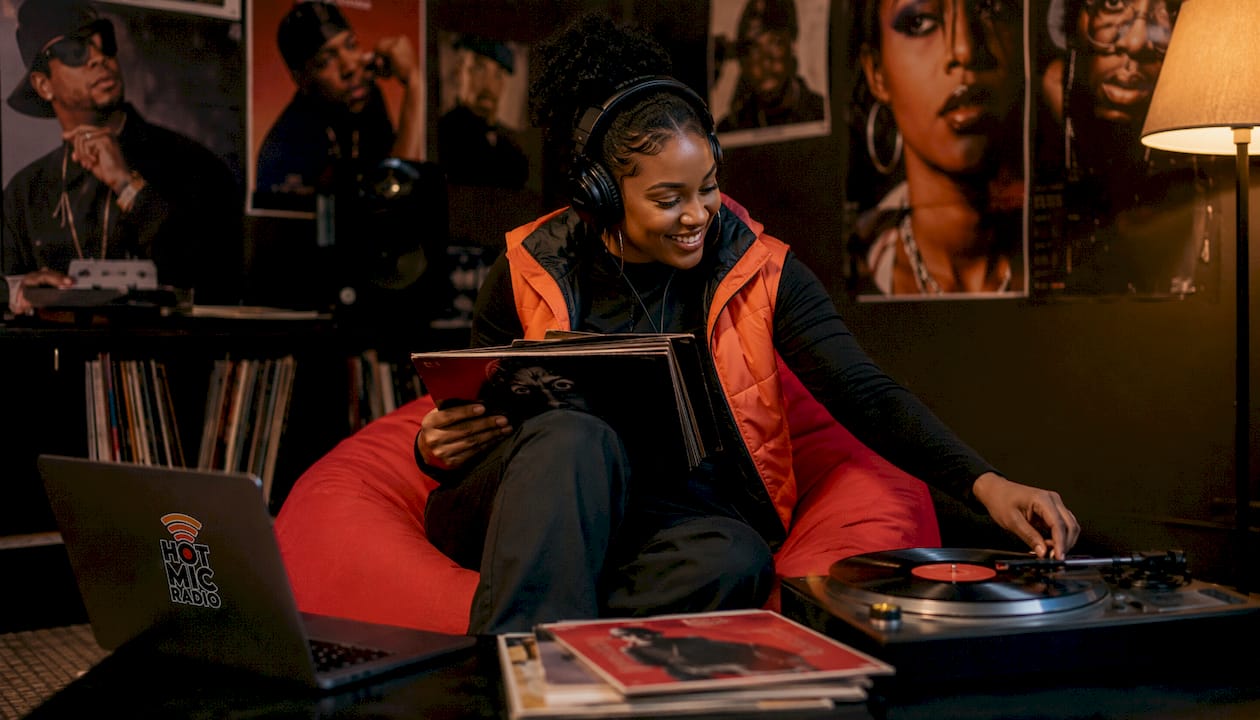
In R&B, lyrics are the primary vehicle for emotional specificity, narrative intimacy, and social shorthand. Linguistic analyses confirm that R&B carries significantly higher frequencies of feeling words than most other popular genres, and songwriting practice backs that up: the genre’s most powerful moments come from raw honesty pinned to a single, specific scene.
TL;DR:
- R&B lyrics label and release emotions that listeners struggle to name on their own, creating catharsis through recognition.
- The best R&B lines build around a single scene or “breaking point” rather than a broad emotional summary, which is what makes them hit so hard.
- Prosody, the fit between syllables and melody, is what lets a singer’s vocal delivery and ad-libs complete the emotional message the words set up.
Table of Contents
- What themes keep showing up in R&B lyrics?
- How R&B lyrics turn feelings into scenes you can feel
- How words fit the music: prosody in R&B
- The craft tools R&B writers use most
- Why research backs up what listeners already feel
- How to write R&B lyrics: a practical checklist
- How R&B lyrics speak to social issues and community
- Key Takeaways
- Our take: listen like you’re reading
What themes keep showing up in R&B lyrics?
R&B has a core set of thematic anchors that listeners recognize almost immediately. Love and intimacy sit at the center, but the genre goes deeper than the surface-level romance you hear in pop. Heartbreak, betrayal, desire, loyalty, and the quiet strain of long-term relationships all get their own lane here.

A multi-decade linguistic study found that terms like “love,” “heart,” “boy,” and “girl” appear as central narrative anchors in R&B at rates that outpace many other genres. The same research flagged higher frequencies of anxiety-related words alongside positive-emotion terms, which tracks: R&B holds joy and pain in the same breath. A cross-genre analysis also documented that R&B and hip-hop carry statistically higher rates of sexual content compared to most other popular genres, reflecting how openly the genre handles desire and physical intimacy.
Where soul leans toward spiritual longing and gospel resolution, R&B tends to stay in the mess of the moment. Hip-hop often frames personal experience through social commentary or competitive identity. R&B’s lane is relational and interior: what’s happening between two people, inside one person’s chest, at 2 AM.
How R&B lyrics turn feelings into scenes you can feel
The technique that separates a great R&B lyric from a generic one is scene-first storytelling. Instead of announcing an emotion (“I’m heartbroken”), the writer drops you into a specific moment: the unanswered text, the empty side of the bed, the argument that started over nothing. That specificity is what creates empathy.

Songwriting guidance for soulful R&B consistently points to this: start with a moment, build sensory imagery around it, and cut every line that doesn’t earn its place. The scene does the emotional heavy lifting so the singer doesn’t have to explain.
The “breaking point” is a structural pivot you’ll find in countless R&B songs. It’s the moment in a verse or bridge where the narrator stops holding it together. A close reading of Rihanna’s “Breakin’ Dishes” shows exactly how this works: the lyric escalates from frustration to full emotional release through direct, vivid lines that feel unfiltered. Anger, betrayal, and empowerment layer on top of each other, and the listener feels the snap in real time. Contemporary R&B also renders quieter crises. Kelela’s “retaliation lullaby” is a masterclass in emotional exhaustion: the lyrics don’t announce a breakup, they map the slow erosion of love into something that feels like a threat.
Pro Tip: When you’re listening to an R&B song, find the moment where the vocal delivery shifts, where the singer gets louder, softer, or breaks slightly. That’s almost always where the narrative pivot lives. Pause there and read the line again.
How words fit the music: prosody in R&B
Prosody is the technical term for how syllable stress, rhythmic placement, and vowel sounds align with the melody and beat. In R&B, it’s not just a craft detail. It’s the whole game.
When prosody works, you don’t notice it. The words feel inevitable, like they could only sit in that exact spot. When it breaks down, even a great lyric feels clunky coming out of a singer’s mouth. Production and mixing choices create the space where prosody lands: vocal spacing, reverb tails, and rhythmic pockets all shape how a lyric breathes.
Here’s what prosody sounds like in practice:
- Stretched vowels on emotionally loaded words (“staaaay,” “pleeeease”) signal that the singer is leaning into the feeling.
- Syncopated syllables that land slightly off the beat create tension and urgency.
- Ad-lib spaces built into the lyric give the singer room to add a run, a sigh, or a whispered aside without crowding the line.
- Breath placement between phrases lets the listener absorb what was just said before the next line arrives.
Writers who understand prosody write lines that invite vocal personality rather than dictating it. The lyric sets the emotional temperature; the singer decides how hot it gets.
The craft tools R&B writers use most
R&B lyricism has a recognizable toolkit. These are the devices that show up again and again, and understanding them changes how you hear the music.
- Hook design: The chorus in R&B is usually built around one phrase that contains the whole emotional thesis of the song. It’s short, singable, and emotionally loaded.
- Repetition: Repeating a line or phrase isn’t laziness. It’s emphasis. Each repetition adds weight, and by the third time, the listener feels it differently than the first.
- Sensory imagery: Specific, tangible details, what writers sometimes call “sensory crumbs,” anchor abstract emotions. A lipstick stain on a collar, a voicemail saved for months, the smell of a hoodie: these details create text-like intimacy.
- Conversational phrasing: R&B lyrics often sound like something you’d actually say to someone. That directness is intentional. It closes the distance between singer and listener.
- Specific object anchoring: One concrete object can carry an entire emotional arc. It’s more powerful than any adjective.
The classic verse-hook-bridge structure maps directly onto emotional escalation: the verse sets the scene, the hook delivers the thesis, and the bridge is where the breaking point lives. Contemporary R&B has also shifted toward more explicit, direct language, which means writers now have to balance that directness with enough musical space for the singer to breathe and interpret.
Why research backs up what listeners already feel
The emotional power of R&B lyrics isn’t just a vibe. There’s real evidence behind it. The linguistic analysis showing elevated emotional-word frequencies in R&B suggests that the genre is literally built from a denser concentration of feeling language than most of its peers. That density is part of why R&B hits differently.
Academic work has also documented how R&B lyrics function as pedagogical texts, supporting inclusive classroom practices and giving students a way to analyze rhetorical moves, voice, and narrative structure. Treating a song lyric as a text, the way you’d treat a poem or a short story, opens up composition and literature curricula to voices that traditional canons often exclude.
Cultural reporting confirms that R&B lyrics become everyday social shorthand. People quote lines in conversations, in texts, in captions, because the lyric already said the thing they couldn’t find words for. That’s not just fandom. That’s the genre functioning as a shared emotional language. Mood-matched playlists amplify this effect: when lyrical and musical emotional alignment clicks, repeat listening and social sharing both increase.
How to write R&B lyrics: a practical checklist
Whether you’re a student working on a songwriting assignment or an aspiring writer trying to find your voice, this checklist gives you a starting point grounded in how the best R&B lyrics actually work.
- Pick one focused moment. Not a feeling in general. A specific scene: a conversation, a look, a silence.
- Add 2–3 sensory crumbs. What does the moment smell, sound, or feel like? One concrete detail beats five abstract adjectives.
- Choose a vocal-friendly meter. Say your line out loud. Does it sit naturally in your mouth? If you’re stumbling, the singer will too.
- Write a tight hook phrase. One sentence that contains the emotional thesis. If it takes two sentences, cut one.
- Leave space for ad-libs. Don’t fill every beat. The silence is where the singer’s personality lives.
Pro Tip: Write your first draft with everything you want to say, then cut 30% of it. The lines that survive are usually the ones that actually matter.
Pro Tip: Read your lyric aloud without the melody. If it sounds like a speech, it’s over-explained. If it sounds like something you’d say in a real conversation, you’re close.
Quick exercise: Pick a specific argument or emotional moment from your own life. Write four lines describing only what you saw and heard, no emotional labels. Then write the hook that names what it felt like. Compare the two. The gap between them is where the song lives.
How R&B lyrics speak to social issues and community
R&B has never been just love songs. The genre has a long history of carrying community narratives, social critique, and political consciousness inside its most intimate-sounding lines. From Marvin Gaye’s “What’s Going On” to more recent work that addresses police violence, mental health, and Black identity, R&B lyrics have consistently held space for what the community is living through.

The intimacy of the form is actually what makes it effective for social commentary. When a lyric sounds like a personal confession, it lowers defenses. The listener is already emotionally open by the time the social message lands. R&B’s global cultural reach means those messages travel far beyond their original communities, shaping conversations about race, gender, sexuality, and belonging across the world. The genre’s ability to center marginalized voices in a commercially viable format gives those voices a platform that more explicitly political music sometimes can’t access.
Key Takeaways
Lyrics are the emotional engine of R&B: they create specificity, enable social shorthand, and depend on prosody and performer interpretation to land fully.
| Point | Details |
|---|---|
| Emotional word density | Linguistic analysis confirms R&B carries higher frequencies of feeling words than most other popular genres. |
| Scene-first storytelling | The most effective R&B lyrics anchor emotion in a single specific moment rather than a broad emotional summary. |
| Prosody shapes delivery | Syllable stress and rhythmic placement determine how much interpretive room a singer has to add vocal personality. |
| Lyrics as social language | R&B lines become everyday shorthand, letting fans express complex emotions quickly in real conversations. |
| Classroom and cultural value | Academic research supports using R&B lyrics as pedagogical texts that center diverse voices and rhetorical analysis. |
Our take: listen like you’re reading
Here at Hot Mic Radio, we think most people undersell how much craft goes into an R&B lyric. We talk about whether a song “hits” or “slaps,” but we don’t always slow down to ask why it hits. The answer is almost always in the words.
Next time you’re in the R&B archives and a song catches you, try this five-point listening check:
- What’s the specific scene in the first verse? Can you picture it?
- Where does the vocal delivery shift? That’s your breaking point.
- What’s the one sensory detail you remember after the song ends?
- How does the hook change meaning by the third time you hear it?
- Where does the singer add something the lyric didn’t write? That’s prosody doing its job.
R&B rewards close listening the same way great fiction rewards close reading. The more you bring to it, the more it gives back. That’s not an accident. That’s the craft.


Post comments (0)