
A music release strategy is a planned, multi-phase campaign that connects your audio, assets, channels, and measurement to a single goal — turning a drop into sustained discovery and measurable growth.
Your MVP release plan, right now:
- Pick one measurable goal (saves, follows, email signups, or ticket sales) and lock a release date at least 6–8 weeks out.
- Finalize your master, artwork, metadata, and splits before you upload anything.
- Set your distribution window several weeks out, create your pre-save smart link, and submit your Spotify editorial pitch before the track goes live.
If you already have a mastered track and need to move in the next 7 days:
- Upload to your distributor today and set a release date 3–4 weeks out (not tomorrow).
- Create a pre-save link via Feature.fm or Linkfire and make it your only conversion URL everywhere.
- Submit your Spotify for Artists editorial pitch immediately — this window closes the moment the track goes live.
- Batch 6–10 pieces of short-form content (clips, behind-the-scenes, lyric moments) to drip across the next 3 weeks.
- Email your list, text your contacts, and post the pre-save link with a clear ask.
Table of Contents
- The three phases every release campaign needs
- Your 8-week release checklist (copy this into your project tool)
- Technical assets you must have before you upload
- How to pitch playlists the right way
- A content plan that actually keeps the momentum going
- The 28-day feedback loop: how to measure what matters
- Release cadence by career stage
- Which release playbook fits your situation?
- Distribution, rights, and the admin work you can’t skip
- The tools that make a release campaign work
- Key Takeaways
- What we’ve seen work for Hip-Hop and R&B artists
- Hotmicradio airplay is a real part of your release plan
- Useful sources
The three phases every release campaign needs
Think of your release in three distinct windows. Each one has its own priorities, and skipping or rushing any phase costs you momentum you can’t buy back.
Pre-release (weeks 8–1 before drop)
This is where the real work happens. Finalize your master and get it to your distributor 3–6 weeks before release so that you have time for editorial pitching and processing. Claim your Spotify for Artists and Apple Music for Artists profiles. Set up your pre-save link and make it the primary URL in your bio. Batch your content so you’re not scrambling to post every day. Reach out to independent playlist curators and press contacts early — they need lead time too.
Launch week (release day through day 7)
Release day is not the finish line. It’s the starting gun. On drop day: confirm the track is live on all DSPs, update your artist profiles with the new release, send your email list, push the smart link everywhere, and engage with every comment and share you get. The first 24–48 hours are when algorithmic playlists like Spotify’s Release Radar and Discover Weekly are watching your engagement signals most closely. Stay active.
Post-release (days 8–30 and beyond)
Most artists go quiet after release week. That’s the gap you can exploit. Repurpose your content into new formats (a lyric video, a reaction clip, a behind-the-scenes story). Re-pitch to independent curators using your early streaming data as social proof. Review your 28-day analytics and use what you learn to plan the next drop. The 28-day feedback loop — saves, repeat listening, demographics — is the data that shapes your next release’s artistic direction and promotional choices.
Your 8-week release checklist (copy this into your project tool)
A multi-week checklist prevents rushed mistakes and keeps you inside the pitch windows that actually matter. Here’s the full calendar.
Weeks 8–6 out
- Lock your release date and primary goal
- Finalize audio mix and master (lossless WAV/FLAC, target appropriate loudness to avoid normalization issues)
- Complete artwork (square and high resolution, avoiding URLs or handles)
- Confirm songwriter splits and get split agreements signed
- Register the composition with your PRO (ASCAP, BMI, or SESAC)
- Register the sound recording with the MLC if you’re a self-published writer
- Obtain ISRCs for every track
Weeks 6–4 out
- Upload to your distributor and set the release date with enough lead time
- Create your pre-save/smart link (Feature.fm or Linkfire)
- Begin press outreach to blogs, online radio, and playlist curators
- Start batching short-form content (aim for 10–15 pieces)
- Draft your Spotify editorial pitch copy
Weeks 4–2 out
- Claim and update Spotify for Artists and Apple Music for Artists profiles
- Submit your Spotify editorial pitch (must be done before the track goes live) with enough lead time
- Schedule social posts and email sequences
- Reach out to independent curators with your pre-save link and pitch
- Begin posting pre-release content (teasers, snippets, story content)
Release week and days 1–30
| Window | Priority Actions |
|---|---|
| Release day | Confirm live on DSPs, update profiles, send email, post smart link everywhere, engage all comments |
| Days 1–7 | Monitor saves and completion rate, push content daily, respond to every share |
| Days 7–14 | Check first-week analytics, re-pitch curators with early data, post a second content wave |
| Days 14–30 | Repurpose content, pitch to higher-tier curators, review 28-day data, plan next release |

Technical assets you must have before you upload
Get these wrong and you’re looking at rejected uploads, blocked royalties, or a track that sounds worse on streaming than it did in your DAW. None of that is recoverable after the fact.
Audio standards:
- Deliver lossless files: WAV or FLAC, 24-bit, 44.1 kHz minimum
- Target loudness around −14 LUFS with a true-peak ceiling of −1.0 dBTP to avoid platform normalization clipping your dynamics
- Run a final check for clipping, phase issues, and silence at the start/end of the file
Artwork specs:
- 3000×3000 pixels, RGB color mode, JPG or PNG
- No URLs, social handles, pricing, or explicit content in the artwork image itself
- Confirm you own or have licensed every visual element — stock image licensing for commercial music use is different from personal use
Metadata and credits:
- ISRC for every track (your distributor assigns these or you can register through USISRC.org)
- Accurate songwriter, producer, and featured artist credits
- Explicit content flag (get this wrong and you’ll be filtered out of family-friendly playlists)
- Language tag and release territory settings
- Publisher and PRO affiliation fields completed
Administrative must-dos:
- PRO registration: ASCAP, BMI, or SESAC for performance royalties
- MLC registration for digital mechanical royalties (U.S. streaming mechanicals)
- Sample clearances in writing before upload — no exceptions
- Split agreements signed by all collaborators before the track goes live
Pro Tip: The single most common metadata mistake is mismatched songwriter credits between your distributor upload and your PRO registration. If the names don’t match exactly, royalties get held. Double-check every spelling, including middle names and legal names vs. stage names.
How to pitch playlists the right way
Playlist placement is not luck. It’s timing, copy, and follow-through. There are three distinct tracks, and each one requires a different approach.
Editorial playlists (Spotify, Apple Music)
Submit through Spotify for Artists at least 7 days before release — ideally 2–4 weeks out. Upload early and pitch while the track is unreleased; once it’s live, that editorial window is permanently closed. Your pitch copy should be concise and specific: describe the sound in one sentence, name two or three listener reference points (not “sounds like Drake” — be more specific), explain the story behind the track, and describe what promotional support you’re bringing to the release.
Pitch template (Spotify for Artists):
That’s it. Specific sound, specific story, specific support plan. Curators don’t need your whole biography.
Algorithmic playlists (Release Radar, Discover Weekly)
You don’t pitch these directly. They respond to engagement signals: saves, completion rate, and playlist adds in the first 7 days. Every action you take to drive saves and full listens in release week is, indirectly, your pitch to the algorithm.
Independent curators
Reach out 3–4 weeks before release with your pre-save link and a short, personalized pitch. Use platforms like SubmitHub or Groover to find curators in your genre. After release, follow up with your first-week streaming data — early traction is the best pitch you have for a higher-tier curator who passed on you before the drop.
Pro Tip: Re-pitching after traction is underused. If your track picks up 500 saves in the first week, that’s a real data point. Go back to the curators who didn’t respond and lead with the number.
A content plan that actually keeps the momentum going
Content is how you turn a release into a campaign. Without a repeatable content framework, you’ll run out of ideas by day three and go quiet right when the algorithm is paying attention.
The 28-day feedback loop: how to measure what matters
Tracking the right numbers turns each release into a lesson for the next one. Here’s what to watch and when.
Primary KPIs:
- Saves — the strongest algorithmic signal; a save means intent to return
- Completion rate — what percentage of listeners finish the track; low completion tells you the intro or hook needs work
- Follower growth — are listeners converting to fans?
- Email signups — the only audience you fully own
- Playlist adds — both editorial and user-generated
- Conversion to merch or tickets — the downstream revenue signal
Time windows:
- 24–48 hours: algorithmic sensitivity window; saves and completion rate here directly influence Release Radar and Discover Weekly eligibility
- 7 days: early signal; enough data to know if the creative is connecting or if you need a second content wave
- 28 days: strategic window; use this data to shape the next release’s sound, audience targeting, and promotional approach
How to read the signals:
- High saves, low streams: people are saving to listen later — push more content to convert saves to plays
- High streams, low follows: the track is connecting but not the artist — lean into more personal Story content
- Low completion rate: the intro isn’t landing — test a different clip entry point in your next content batch
- Strong demographic data from a city or region you didn’t expect: that’s a touring opportunity and a targeting signal for your next ad campaign
Pro Tip: Screenshot your Spotify for Artists and Apple Music for Artists dashboards at day 7 and day 28. Keep a simple spreadsheet across releases. Patterns across three or four drops will tell you more about your audience than any single release ever will.
Release cadence by career stage
How often you should release depends entirely on where you are right now. Releasing too infrequently and you lose algorithmic momentum. Releasing too fast and you can’t execute each campaign properly.
| Stage | Monthly Listeners | Recommended Cadence | Primary Goal | Key Budget Focus |
|---|---|---|---|---|
| Starter | — | Single every 4–8 weeks | Profile cleanup, email subscribers | — |
| Growth | 1k–10k | Single every 4–8 weeks; EP at 6 months | Playlist adds, follower growth | $50–$200/release |
| Acceleration | 10k | Strategic singles + album arc | Press, partnerships, paid ads | $200+/release |
What to prioritize at each stage:
- Starter: Clean up your artist profiles on Spotify for Artists and Apple Music for Artists. Build your email list before anything else — it’s the one audience you own outright. Keep releases simple and consistent. Independent artists who skip the major label path are building real fan bases one release at a time, and the foundation is always the email list.
- Growth: Start testing paid ads at small budgets. Pitch independent curators aggressively. Use EPs to tell a story and give press something to write about.
- Acceleration: Bring in PR support, plan multi-single rollouts before an album, and build partnerships with other artists, brands, and media outlets. At this stage, a music release timeline of 8+ weeks per project is standard.
Which release playbook fits your situation?
There’s no single right way to roll out a release. The playbook you choose should match your goals, your resources, and your current audience size.
Waterfall (single → EP → album):
The most artist-friendly model for independent releases. You drop a single, then bundle it into an EP, then roll the EP into an album — and if you manage your ISRCs correctly, the same track reuses the same ISRC across all three releases, so stream counts compound rather than fragment. This is the play for artists who want to build momentum over time without starting from zero with each project.
Single-first cadence:
Drop singles consistently every 4–8 weeks. Each one is a fresh algorithmic opportunity, a new pitch to curators, and a new piece of content. This is the default strategy for most independent artists in the streaming era and the best approach for audience building at the Starter and Growth stages.
Surprise drops:
High-risk, high-reward. Works when you already have a large, engaged audience that will amplify the drop immediately. Without that earned attention, a surprise drop just means no pre-save campaign, no editorial pitch, and no press lead time. Not recommended for artists under 10k monthly listeners.
Album-led rollouts:
Needs 3–5 pre-release singles, a press campaign, and a lead time of 3–6 months minimum. The album itself becomes the event, but only if you’ve already built the audience to make it feel like one. Attempting an album rollout without an existing fan base usually means the project gets ignored.
Distribution, rights, and the admin work you can’t skip
Choosing the right distributor and finishing your legal and administrative tasks before upload is not optional. Get this wrong and you’re either losing royalties or locked out of editorial pitching.
Distributor selection checklist:
- Upload speed and reliability (how fast does it deliver to DSPs?)
- Fee structure: flat annual fee (DistroKid) vs. per-release fee (CD Baby) vs. percentage of royalties (LANDR)
- Analytics depth: can you see saves, streams by source, and demographic data?
- Pre-save and smart link tools built in or integrated
- Delivery to all major DSPs including Spotify, Apple Music, Amazon Music, Tidal, and YouTube Music
Administrative must-dos (U.S. market):
- Register as a songwriter/publisher with ASCAP, BMI, or SESAC before the release goes live
- Register sound recordings with SoundExchange for digital performance royalties
- Register compositions with the MLC (Mechanical Licensing Collective) for U.S. streaming mechanicals
- Get sample clearances in writing — master clearance and sync clearance are separate agreements
- Sign split sheets with every collaborator before upload; verbal agreements don’t hold up
Pro Tip: Incorrect metadata is the number-one reason independent artists lose royalties. Your legal name on the PRO registration must match the songwriter credit on your distributor upload exactly. One typo means unclaimed money sitting in a black box.
Finish PRO registration and split agreements at weeks 8–6. Complete distributor upload and ISRC assignment at weeks 6–4. Never leave administrative tasks for the week of release — that’s when you need to be focused on content and engagement, not paperwork.
The tools that make a release campaign work
Here’s the practical toolkit, with a one-line setup note for each.
Distribution:
- CD Baby: per-release fee, strong sync licensing network, and a detailed distribution guide for new artists. Good for artists who want a one-time fee per project.
- LANDR: — combines AI mastering with distribution; useful if you need a quick master and distribution in one workflow. Check their mastering output against your engineer’s version before committing.
Artist analytics and profile tools:
Direct-to-fan:
Pre-saves and smart links:
Playlist outreach:
Paid ads:
Mastering:
- LANDR for speed and budget; a human engineer for anything you’re pitching to press or major playlists. The −14 LUFS target applies regardless of who masters it.
For a deeper breakdown of how these tools fit into a full release execution plan, the music release strategy guide at Music Video Marketplace is worth bookmarking alongside the platform docs.
Key Takeaways
A music release strategy is a planned campaign connecting goal, timeline, assets, pitching, and measurement — and every release should feed data into the next one.
| Point | Details |
|---|---|
| Start 6–8 weeks out | Upload to your distributor several weeks before release to hit editorial pitch windows. |
| Pitch before it goes live | Spotify editorial pitching closes permanently once your track is live — submit early. |
| Saves beat streams early | First-week saves are the primary algorithmic signal; every content action should drive them. |
| Measure at 7 and 28 days | Use 28-day data on saves, completion rate, and demographics to plan your next release. |
| Hot Mic Radio fits the plan | Submit to Hot Mic Radio during pre-release week for airplay that creates shareable moments and feeds streaming activity. |
What we’ve seen work for Hip-Hop and R&B artists
Here’s the honest take from the Hot Mic Radio Team: the artists who consistently grow their audiences aren’t the ones with the biggest budgets. They’re the ones who treat every release like a campaign and every data point like a lesson.
What we see work specifically in Hip-Hop and R&B: features and remixes. A feature with a local artist in a regional scene you’re trying to crack is worth more than three solo singles in terms of cross-audience discovery. A remix of a track that’s already connecting gives you a second editorial pitch window, a new content cycle, and a reason to re-engage fans who already saved the original. These aren’t gimmicks — they’re legitimate campaign extensions that the algorithm treats as new releases.
The other thing that’s genuinely underused: online radio airplay as a content source. When your track gets played on a live DJ show, that’s a real moment — a timestamp, a DJ co-sign, a clip you can post. That kind of earned credibility feeds your social content and gives independent playlist curators a third-party signal that someone with taste already vouched for the record. Timing an on-air premiere to land during your pre-release window, right as your pre-save campaign is running, creates a compound effect that a solo social post simply can’t replicate.
The artists who get the most out of their releases also own at least one channel outright. Not followers, not streams — an email list. Build it from day one, even if it’s 50 people. Those 50 people who gave you their email address are worth more to your long-term career than 5,000 passive followers who might never see your post again. Marketing to a Black audience in Hip-Hop and R&B specifically means building community, not just broadcasting — and email is still the most direct line to the people who actually care.

Hot Mic Radio airplay is a real part of your release plan
Independent artists in Hip-Hop and R&B have a specific advantage that most release guides don’t talk about: curated online radio airplay creates a moment. Not just a stream count — an actual, shareable, timestamped event that feeds your content calendar and gives your release a co-sign from a platform that lives and breathes the culture.
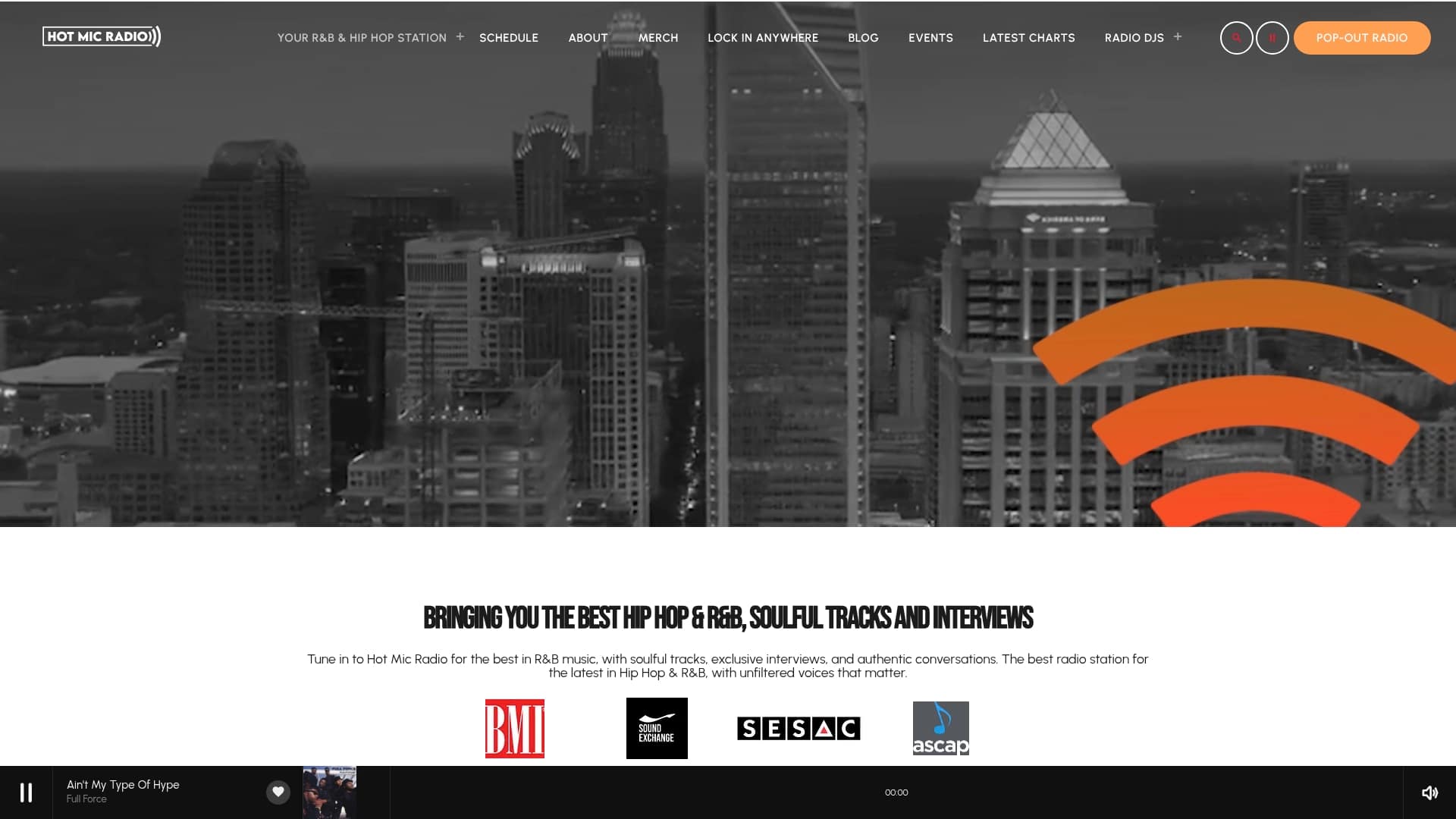
Hot Mic Radio is built for exactly this. We’re not a passive playlist — we’re a live, curated station with DJ shows, regional scene spotlights, and dedicated programming for Hip Hop, R&B, indie, and global sounds. When your track gets featured during a live DJ set, that’s a clip. That’s a story post. That’s a DM to your playlist curator contacts saying “we just got airplay on Hot Mic Radio.” It’s social proof that converts.
The best time to submit is during your pre-release window, 3–4 weeks before your drop date. That timing lets an on-air premiere land while your pre-save campaign is live, creating a compound push that drives saves and streaming activity simultaneously. After the feature, follow up with the DJ directly, ask for a timestamp or a clip, and use it across every platform. Submit your music and get your airplay slot while your release window is still open.
Useful sources
These are the platform tools and guides worth bookmarking for your next release.
- Ultimate guide to releasing music on Spotify & Apple Music (2026) — DistroVibe
- The Ultimate Music Release Strategy — Songkeeper
- Music release checklist — Music Advertising blog
- How to release music independently — Tools4Music
- Music distribution & release guide — CD Baby (DIY Musician)
- Music marketing strategy guide — NotNoise


Post comments (0)