

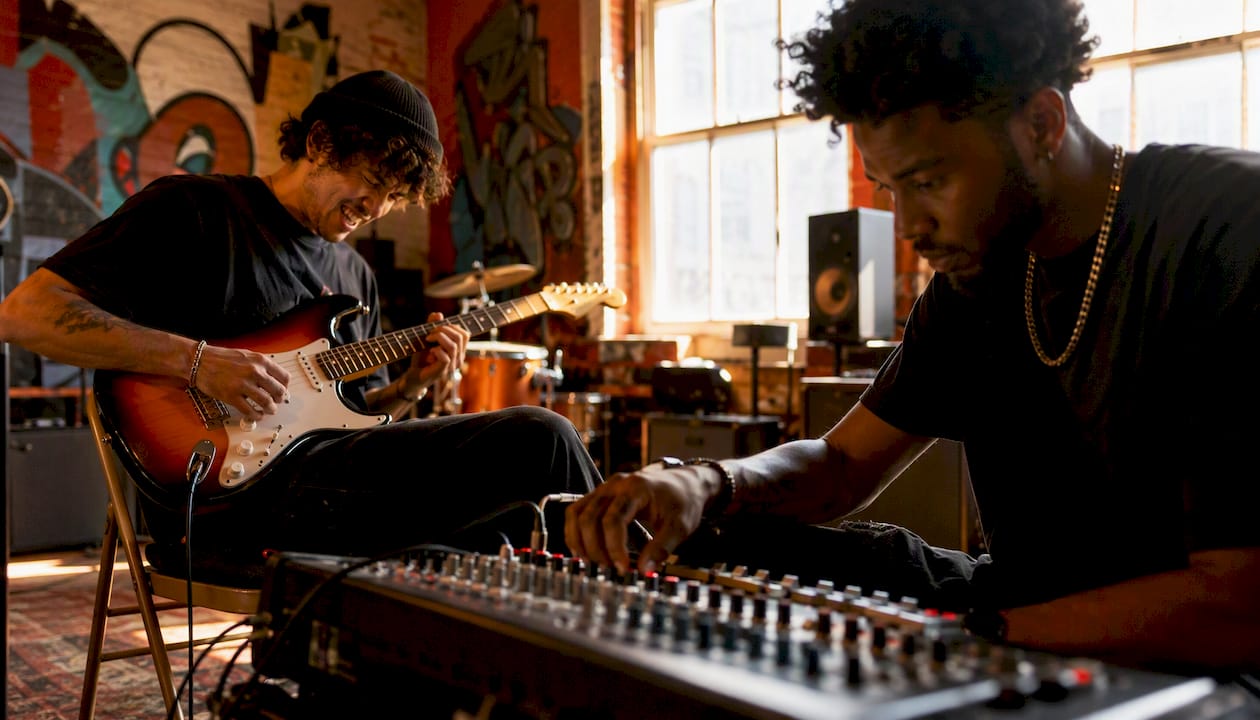
The fastest way to land useful, long-term collaborations as an indie musician is this: build a shortlist of matched collaborators, lock in roles and rights before you record a single bar, and use a repeatable remote workflow to finish and promote the release together. That’s the whole recipe. Everything below unpacks how to execute it.
Your immediate shortlist of platform types:
- Curated-match networks (relationship-first, sonic-matched): The Indie Collaborative, MicDrop
- Session marketplaces (hire producers, vocalists, engineers): SoundBetter, Splice
- Real-time DAW collab tools (co-write and produce remotely): BandLab, Kompoz
One-line workflow: Record a rough demo → share stems via cloud storage → co-produce the session remotely → export final stems at 24-bit/48kHz → mix, master, and deliver to your distributor with a completed split sheet filed with the U.S. Copyright Office.
Before you pitch anyone, register your works-in-progress with your PRO (ASCAP, BMI, or SESAC). That one step protects you from the most common dispute indie artists face: who wrote what, and when.
Pro Tip: Before reaching out to any collaborator, have a 60-second voice memo or streaming link ready. Artists respond to sound, not descriptions.
Table of Contents
- Why collaborating with other independent artists is worth it
- Where to find other independent artists to work with
- What does a reliable remote collaboration workflow look like?
- How do you pitch a collaborator and actually get a response?
- What agreements do you need before you release a collaboration?
- How do you release and promote a collab so both artists win?
- How do you turn a one-off collab into a long-term partnership?
- Real-world examples of indie collaborations that worked
- Key Takeaways
- Why Hotmicradio is invested in your collaborations
- Get your collaborative release on Hotmicradio
- Useful sources, downloads, and links
Why collaborating with other independent artists is worth it
Let’s be real: the solo grind is romantic, but it’s slow. When you work with independent musicians, you’re not just making a better song. You’re tapping into each other’s audiences, skill sets, and promotional networks simultaneously.
The audience cross-pollination effect is the most immediate win. When two artists with distinct but overlapping fan bases release together, each artist’s followers encounter someone new they’re likely to enjoy. That’s organic discovery that no ad budget can fully replicate. Fans trust the artists they already love, so a co-sign from a collaborator carries real weight.
Collaboration isn’t just a creative move. It’s a distribution strategy. Two artists releasing together effectively double their promotional surface area: two social accounts, two email lists, two sets of playlist relationships, and two communities showing up on release day.
Skill exchange is the underrated benefit. A vocalist who co-writes with a producer picks up arrangement instincts. A beatmaker who works with a singer learns how to leave space in a mix. These aren’t soft gains. They show up in every track you make afterward.
On the money side, shared costs matter. Splitting mixing, mastering, and promo expenses cuts your per-release overhead. Joint sync pitching, where both artists submit a collaborative track to music supervisors, doubles your pitch volume for the same creative effort. Platforms like Venice Music document how collaborative releases consistently outperform solo releases in streaming lift during the first 30 days.

Creative accountability is real, too. When someone else is waiting on your verse, you finish it. Deadlines become social contracts, and that pressure produces output.
Pro Tip: After your first collab drops, track streaming numbers in each artist’s top markets separately. That data tells you exactly where your new audience lives and what to target next.
Where to find other independent artists to work with
Not all platforms are built the same, and using the wrong one wastes time. Here’s how to think about each category and when to use it.
Platform categories and when each fits
- Curated-match networks — pair you based on sound, vibe, and workflow preferences. The Indie Collaborative, founded in 2015, takes a relationship-first approach rather than a contest-style feed. MicDrop uses sonic profiling to deliver curated matches instead of mass cold-DM culture. Both are built for long-term co-authorship.
Platform comparison
| Platform | Primary Purpose | Cost / Pricing | Visibility Benefit | Rights & Payment | Mobile |
|---|---|---|---|---|---|
| Indie Collaborative | Curated-match community | Free | Community discovery | No built-in splits | Limited |
| Venice Music | Distribution + collab resources | Subscription | Distribution reach | Split tools included | Yes |
| Bandcamp | Storefront + community | Free / revenue share | Fan-direct discovery | Artist-controlled | Yes |
| Vampr | Music networking app | Free / premium tier | Industry connections | No built-in splits | Yes (primary) |
| Splice | Sample marketplace + collab | Subscription | Producer discovery | License-based | Limited |
| SoundBetter | Session hire marketplace | Per-job / commission | Hire-side visibility | Escrow payments | Limited |
| Kompoz | Async DAW collaboration | Free / premium | Project-based | No built-in splits | Limited |
| BandLab | Real-time DAW collab | Free | Social feed discovery | No built-in splits | Yes |
When to go local vs. remote: Local collaboration works best when you need fast creative chemistry, shared studio time, or in-person performance. Remote works when the best match for your sound lives in another city or country. Don’t let geography limit your shortlist.
- Best for co-writing: Indie Collaborative, Vampr, BandLab
- Best for hiring session players: SoundBetter, Splice
- Best for long-term co-authorship: Kompoz, Indie Collaborative, BandLab
What does a reliable remote collaboration workflow look like?
The biggest reason remote collabs fall apart isn’t creative differences. It’s messy files, unclear versions, and no agreed handoff process. Here’s a workflow that actually finishes tracks.
Recommended tools by workflow stage
| Stage | Tool Options | Cost | Notes |
|---|---|---|---|
| Demo sharing | SoundCloud (private), Google Drive | Free | Streaming link preferred over attachment |
| Co-production | BandLab, Kompoz | Free / freemium | BandLab for real-time; Kompoz for async |
| Cloud storage | Google Drive, Dropbox | Free / subscription | Use shared folders with version folders |
| Communication | Discord, Notion, WhatsApp | Free | Discord for ongoing projects; Notion for session notes |
| Distribution | Venice Music, DistroKid, TuneCore | Subscription / per-release | Venice Music includes split tools |
Stem export specs to paste into your session notes:
- Format: WAV, 24-bit, 48kHz
- Naming:
[SongTitle]_[Instrument]_[Artist]_[Version].wav - Include: tempo map, key signature, reference mix, and a consolidated stems folder
Versioning rule: Never overwrite a file. Create a new version folder for every significant change (/v1, /v2, /final). One overwritten file has killed more collabs than any creative disagreement.
Pro Tip: Open every remote session with a 10-minute voice or video call to align on the goal for that session. “We’re finishing the hook today” beats three hours of aimless back-and-forth.

How do you pitch a collaborator and actually get a response?
Cold outreach has a low reply rate because most messages lead with the sender’s needs. Flip that. Lead with what you bring, keep it short, and make the ask small.
Three outreach templates
Template 1: Cold intro
Subject: Quick collab idea — [Your Name] x [Their Name] “Hey [Name], I’ve been listening to [specific track] and the way you handled [specific element] is exactly the energy I’m building toward. I’m working on a [genre] track that I think would hit different with your [vocal/production style] on it. I’ve got a 60-second demo ready. Worth a listen?”
Template 2: Mutual-fan approach
Subject: We both love [shared artist] — collab? “Hey [Name], saw you shouted out [shared artist] last week. I’ve been in that same lane and just finished a rough that feels like it lives in that world. Would love to swap demos and see if anything sparks.”
Template 3: Friend-of-friend intro
Subject: [Mutual contact] said I should reach out “Hey [Name], [Mutual contact] connected us. I’m [Name], a [genre] artist based in [city]. [Mutual contact] thought our sounds would click. I’ve got a project in progress and I’m looking for a [vocalist/producer/co-writer]. Here’s a quick link to my latest: [link].”
Do and don’t checklist for first contact
Do:
- Reference a specific track or moment in their work
- Include a streaming link, not a file attachment
- Make a small, low-commitment ask (listen to a demo, swap feedback)
- Mention a reciprocal offer: beat trade, demo feedback, a mini-feature on your platform
Don’t:
- Open with your bio or your streaming numbers
- Send an unsolicited attachment
- Ask for a full collaboration in the first message
- Follow up more than once within 72 hours
Pro Tip: Offer something before you ask for anything. “I’d love to give feedback on your current project in exchange for a listen to mine” doubles your reply rate compared to a straight ask.
What agreements do you need before you release a collaboration?
A split sheet is not optional. It’s the one document that prevents 90% of the disputes that kill indie partnerships. Get it signed before you record anything significant.
Split-sheet template outline
Venice Music’s free split sheet is a solid starting point. At minimum, your split sheet should capture:
| Field | Artist A | Artist B | Notes |
|---|---|---|---|
| Legal name | As it appears on PRO registration | ||
| PRO affiliation | ASCAP / BMI / SESAC | ASCAP / BMI / SESAC | Must match PRO records |
| Upfront fee paid | $0 if backend-only deal | ||
| Signature + date | Both parties sign |
Release registration checklist
- Register the sound recording with SoundExchange for digital performance royalties
- Register the composition with your PRO: ASCAP, BMI, or SESAC
- Register the copyright with the U.S. Copyright Office for full legal protection
When to escalate to a written contract: Any collaboration involving upfront money, sync licensing potential, or a label deal on the horizon needs a simple written agreement beyond the split sheet. A music attorney can draft a one-page co-production agreement for a few hundred dollars. That’s cheap insurance.
How do you release and promote a collab so both artists win?
Promotion is where most indie collabs leave money on the table. Both artists post on release day, get a small spike, and then go quiet. A coordinated plan stretches that spike into a sustained lift.
Release timeline (6–8 weeks out)
- Week 6–7: Finalize artwork, metadata, and distributor delivery. Both artists submit to playlist curators via SubmitHub or direct outreach. Check out music release schedule best practices to sequence your drops correctly.
- Week 4: Pitch to online radio stations, including Hot Mic Radio’s DJ submission portal. Submit your press kit: bio, high-res photo, streaming link, and one-paragraph pitch.
Promotion comparison: who handles what
| Promo Task | Artist A | Artist B | Shared |
|---|---|---|---|
| Playlist pitching | Their curator relationships | Their curator relationships | SubmitHub joint campaign |
| Social content | Their audience | Their audience | Co-created Reels / Lives |
| Radio submission | Yes | Yes | Hot Mic Radio submission |
| Email list blast | Their list | Their list | Coordinated timing |
| Press outreach | Their market contacts | Their market contacts | Shared press release |
Cost-estimate categories to budget for:
- Distribution: $0–$35 per release depending on platform
- Mixing and mastering: $150–$600 split between both artists
- Promo ads: $50–$300 per artist for targeted social campaigns
- Optional video/visuals: $200–$1,000+ depending on production level
Services like PressedFresh Collective offer distributed marketing support for indie releases, including PR, playlist pitching, and social strategy, with a long-term compounding approach rather than one-off blasts. Infinite Echo applies campaign strategies tested by independent artists for Spotify growth, useful for post-release targeting.
The cross-pollination metric that actually matters: track streaming numbers in your collaborator’s top city during the first two weeks. If you’re seeing a lift there, the collaboration is working as a distribution strategy, not just a creative one.
How do you turn a one-off collab into a long-term partnership?
One great track is a proof of concept. Two or three is a creative identity. Here’s how to build toward the latter without making it feel like a business meeting.
Habits that build trust between collaborators:
- Schedule a monthly 30-minute check-in, even when you’re not actively working on something
- Keep a shared demo folder (Google Drive or Dropbox) where both artists drop rough ideas freely, no pressure to develop them
- Celebrate each other’s wins publicly. A repost or a shoutout costs nothing and builds goodwill that compounds
How to propose the next project without sounding transactional
- Reference the last release’s data. “Our track is still getting streams in Atlanta. I think there’s a lane there. Want to do a follow-up targeting that market?”
- Propose a low-risk mini-project. A one-song EP, a remix, or a freestyle over a shared beat. Low stakes, high creative freedom.
- Frame it around mutual goals. “You mentioned wanting to break into the neo-soul lane. I’ve got a track that’s halfway there. Want to finish it together?”
- Ask the right questions after a release. “What did you learn from this one?” and “What would you do differently?” open the door to more projects naturally.
Operational habits for ongoing partnerships:
- Use a shared calendar for release windows so you’re not competing with each other’s solo drops
- Set up a recurring revenue split review every six months for tracks that continue to generate royalties
- Explore co-branded merch or joint live performances once the creative relationship is solid
Real-world examples of indie collaborations that worked
Earl Sweatshirt and MIKE: the long game
Earl Sweatshirt and MIKE’s creative friendship, documented by Marfa Public Radio, is one of indie rap’s clearest examples of a mutual apprenticeship. Their collaboration grew over years, not weeks, with each artist pushing the other’s craft in ways that showed up across multiple projects. The lesson: the best partnerships aren’t transactional. They’re built on genuine mutual respect and a shared artistic vision that evolves over time.
Ninajirachi and Porter Robinson: mutual respect across time zones
Ninajirachi and Porter Robinson’s collaboration on “WannaCry” showed that high-impact work can happen across significant geographic and time-zone gaps. In a 2026 Wonderland interview, Porter Robinson emphasized that productive sessions run on mutual respect and confident, fast creative decisions. No second-guessing every idea for hours. You make a call, you move forward.
“The best sessions are the ones where both people feel safe enough to be wrong quickly.” That’s the operating principle behind every productive remote collab: speed and trust, not perfection.
Key lessons from their process:
- Agree on the creative direction before you open a session
- Make decisions quickly and revisit only when something genuinely isn’t working
- Respect each other’s instincts even when your taste differs
Josaleigh Pollett and Jordan Watko: 8,000 miles, one album
Josaleigh Pollett and Jordan Watko wrote and produced an entire album across 8,000 miles, using the distance itself as a creative theme. Their process relied on persistent communication, clear version control, and treating the geographic gap as a feature rather than a limitation.
- Time-zone planning: schedule overlap windows in advance, not ad hoc
- Version control: every file named and dated, no overwrites
- Communication: regular voice messages and shared notes kept the creative thread alive between sessions
Hot Mic Radio’s indie Hip-Hop programming regularly spotlights artists whose collaborative work reflects exactly this kind of long-distance creative discipline. If your collab has that story, that’s your pitch angle.
Long-distance collaborations that succeed share one trait: both artists treat communication as part of the creative process, not an interruption to it.
Key Takeaways
The most effective way to collaborate with other independent artists is to match intentionally, agree on rights before recording, use a versioned remote workflow, and coordinate promotion from both sides of the release.
| Point | Details |
|---|---|
| Match before you pitch | Use curated platforms like The Indie Collaborative or MicDrop to find sonic-matched collaborators instead of cold-DMing at random. |
| Lock rights before recording | Complete a split sheet covering publishing splits, master ownership, and ISRC assignment before the first session. |
| Use a versioned workflow | Export stems at 24-bit/48kHz, name every file with artist and version, and never overwrite a previous take. |
| Coordinate promotion from both sides | Align social posts, playlist pitches, and radio submissions within the same release window for maximum cross-pollination. |
| Hot Mic Radio for airplay | Submit your collaborative Hip-Hop or R&B release to Hot Mic Radio’s DJ submission portal to reach a dedicated indie-focused audience. |
Why Hot Mic Radio is invested in your collaborations
We’ve been championing independent artists since day one, and we’ll tell you straight: collaborative releases are some of the most exciting music hitting our rotation right now. When two indie artists bring their distinct sounds together, the result often hits harder than either could produce solo. That’s not just a creative observation. It’s what we hear in our listener engagement every week.
At Hot Mic Radio, our programming is built around discovery. Our regional Hip-Hop spotlights, live DJ sets, and curated genre shows are specifically designed to surface artists who are doing something real, and collaborative releases with a genuine story behind them are exactly what our DJs and curators are looking for. If your collab has the sound and the narrative, we want to hear it.
We’re not a passive platform. We actively look for music that represents the culture’s next chapter, and partnerships between indie artists, especially those crossing genre lines or geographic distances, fit that mission perfectly. Submit your collaborative work and let’s see if it belongs in the rotation.
Get your collaborative release on Hot Mic Radio
Your collab is done. The split sheet is signed, the stems are delivered, and the release is live. Now it needs ears. Hot Mic Radio reaches a dedicated Hip-Hop and R&B audience that’s actively looking for what’s next, and our indie Hip-Hop and indie R&B programming is built specifically for artists grinding outside the major-label system.
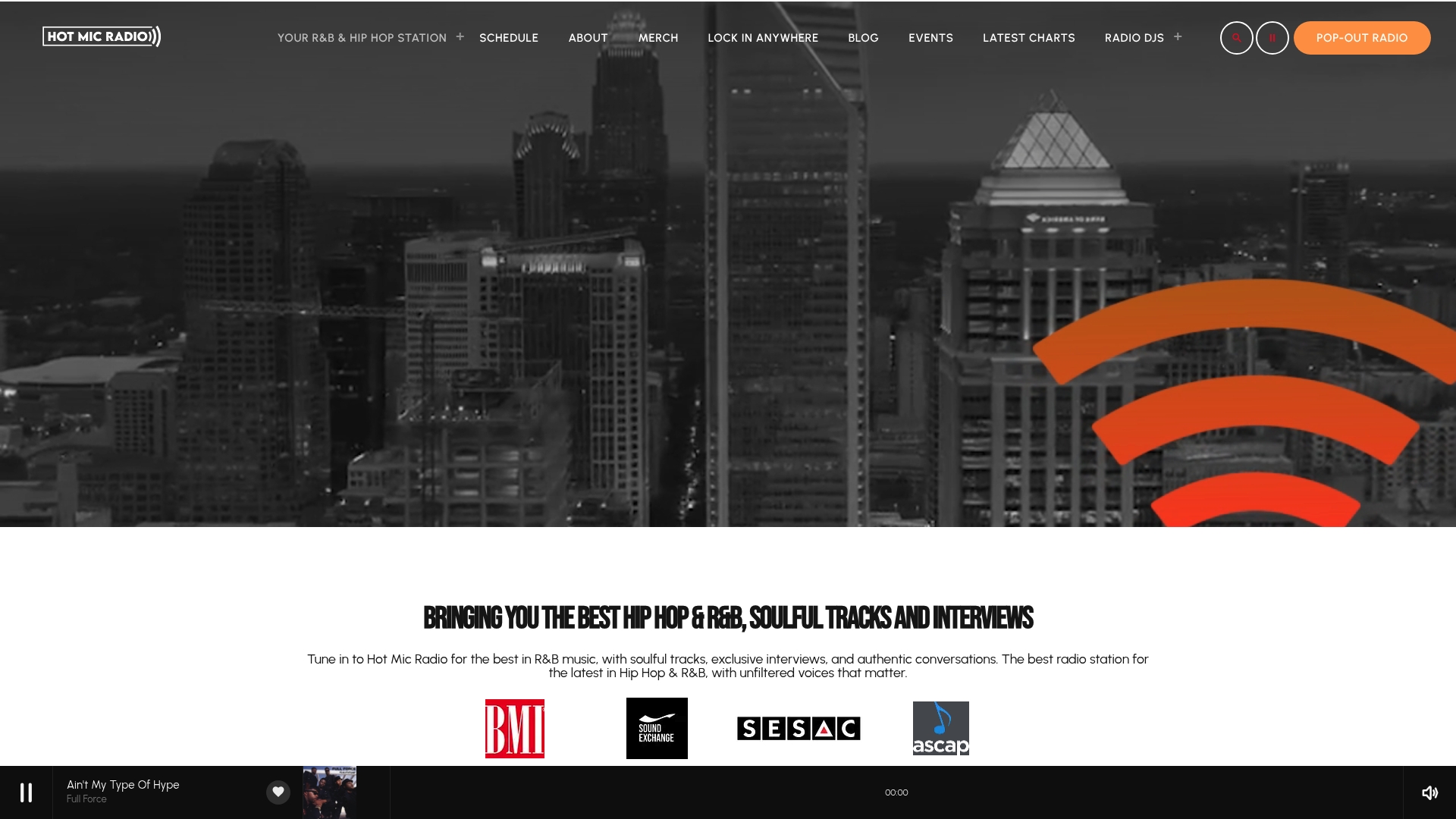
Here’s what to send when you submit: a high-quality streaming link (SoundCloud or Spotify preferred), a one-paragraph artist bio for each collaborator, a press photo at 300dpi or higher, and a short pitch explaining the story behind the collab. Timing matters too. Submit at least three weeks before your release date so our team has time to review and schedule. Head to our DJ submission page and get your music in front of the people who are already listening for it.
Useful sources, downloads, and links
Split sheets and agreements:
- The Indie Collaborative
- CAN’T GET ENOUGH OF EACH OTHER
- Earl Sweatshirt and MIKE put a ring on indie rap’s favorite friendship | Marfa Public Radio
- An 8,000-mile friendship inspired Josaleigh Pollett’s latest album
- MicDrop – Where Indie Music Connects
- PressedFresh Collective — Built to keep artists INDEPENDENT.
- Why and How Independent Artists Should Collaborate [Free Split Sheet]
- Infinite Echo — Finally Start Building Your Music Career
Platform homepages:
Promotion and release resources:
- Music release schedule best practices — sequencing your release for maximum impact
Hot Mic Radio submission and discovery:
| Resource | URL | What you’ll find |
|---|---|---|
| DJ Submission Portal | hotmicradio.com/dj-submission | Submit your collaborative release for airplay consideration |
| Indie Hip-Hop Archives | hotmicradio.com/showgenre/indie-hip-hop | Browse indie Hip-Hop programming and discover what’s in rotation |
| Indie R&B Archives | hotmicradio.com/showgenre/indie-rb | R&B programming for collaborative and independent releases |
| Music Submission Checklist | hotmicradio.com/music-submission-checklist-for-artists-2026-guide | Step-by-step checklist for preparing your submission assets |


Post comments (0)