


When the numbers came out showing hip-hop’s market share dropping to 24.6% in the first half of 2025, the doom and gloom headlines practically wrote themselves. “Hip-hop is losing its grip.” “The golden era is over.” “Streaming killed the culture.”
But here’s the thing – those headlines are missing the bigger picture. Yeah, hip-hop/R&B’s share of total U.S. audio streams dropped from 25.8% the previous year. And yes, current hip-hop releases saw their streams fall by 9.2% year-over-year. But if you dig deeper into what’s actually happening, this “decline” might be the best thing that’s happened to hip-hop in years.
The Numbers Don’t Lie (But They Don’t Tell the Whole Story)
Let’s get the facts straight first. Hip-hop/R&B held 24.6% of total U.S. streams in H1 2025, down from 25.8% in H1 2024. That’s a real decline – we’re talking about 3.7 billion fewer plays for current releases compared to the same period last year. The genre has been steadily losing ground since 2020, dropping 1.7 share points in 2024 alone and another full point in Q1 2025.
On paper, it looks rough. But context is everything.
The Fragmentation Revolution
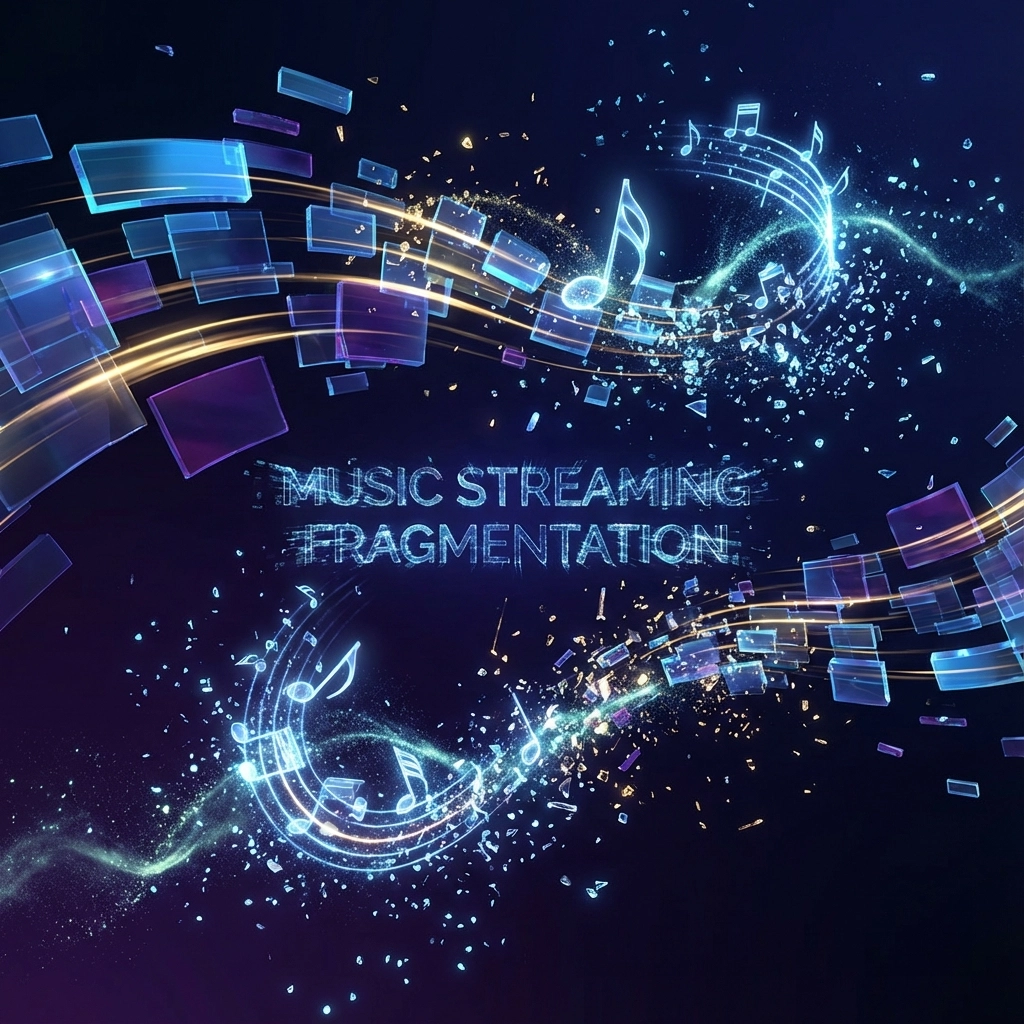
Here’s what’s really happening: the music landscape isn’t consolidating around mega-hits anymore – it’s fragmenting in the best possible way. The top 10 tracks in the U.S. during H1 2025 only captured 0.52% of total streams. Just a few years ago, that number was 1.6%.
What does this mean? Listeners aren’t just playing the same handful of songs on repeat. They’re exploring deeper, discovering more artists, and spreading their attention across a much wider range of music. Hip-hop’s “declining” share isn’t because people are abandoning the genre – it’s because the entire streaming ecosystem is becoming more democratic.
This is huge for hip-hop artists who might not have the marketing machine of a major label behind them. When streams are spread across thousands of tracks instead of concentrated on a few viral hits, there’s more room for everyone to find their audience.
R&B Is Having a Moment (Finally)
While the overall hip-hop/R&B category saw a dip, something interesting happened with R&B specifically – it’s actually growing. For the first time in three years, R&B finished among the five subgenres with the most share growth in Q1 2025, powered by 9.1% volume growth year-over-year.
And this isn’t just algorithmic noise or playlist manipulation. We’re talking about genuine quality driving the numbers. “30 For 30” by SZA and Kendrick Lamar didn’t just dominate R&B – it ranked as the eleventh most-streamed song across all genres in the U.S. That’s the kind of crossover power that shows the culture is still incredibly strong.
Quality Over Quantity Is Winning
This brings us to maybe the most important point: hip-hop is getting better at making hits that matter. The fragmented streaming landscape rewards authenticity and genuine connection over manufactured viral moments. When an R&B track can break into the overall top 15 while the genre as a whole grows, that tells you something about the quality bar rising.
Artists like SZA and Kendrick aren’t just making music that streams well – they’re making music that resonates. They’re building careers, not just chasing chart positions. And in a world where attention is scattered across more tracks than ever, that kind of genuine artistic connection becomes even more valuable.
The streaming economy used to reward artists who could game the system – short songs, frequent releases, playlist optimization tricks. Now it’s rewarding artists who can actually hold listeners’ attention in a crowded field. That’s a win for everyone who cares about the culture.
The Long Game Is Looking Good
Think about it this way: hip-hop dominated streaming for years by being the most digitally native genre. While rock and pop were still figuring out the internet, hip-hop artists were already building fanbases online, releasing mixtapes, and understanding how to reach people directly.
Now the entire music industry has caught up. Latin music is exploding, country is having a digital renaissance, and pop is more algorithm-savvy than ever. Hip-hop’s market share decline isn’t because the genre got worse – it’s because everything else got better at playing the game hip-hop invented.
But here’s the key: hip-hop isn’t losing its cultural influence just because it’s losing streaming percentage points. The genre is still setting trends, driving conversations, and influencing everything from fashion to politics. That cultural power doesn’t show up in streaming statistics, but it’s arguably more important than chart position.
What This Means for Artists and Fans
For artists, this fragmented landscape actually creates more opportunities. Instead of needing to compete with Drake and Travis Scott for the same limited attention span, there’s space for a thousand different types of hip-hop to flourish. The underground is more accessible than ever, and niche sounds can find global audiences.
For fans, it means more variety and more discovery. The algorithm isn’t just feeding you the same megahits everyone else is hearing. It’s digging deeper, finding the artists who might become your new favorites. That’s how scenes grow and cultures evolve.
The streaming services are noticing this too. Platforms are investing more in genre-specific programming, artist development, and community-building tools. They know that engaged, diverse audiences are more valuable than passive ones just playing whatever’s popular.
The Competition Is Making Hip-Hop Stronger
Latin music and country aren’t taking market share from hip-hop by accident – they’re doing it by applying lessons they learned from watching hip-hop dominate the early streaming era. They’re being more direct with fans, more authentic in their presentation, and more innovative with their marketing.
That competition is forcing hip-hop to level up. Artists can’t just coast on the genre’s past success or rely on streaming tricks that worked five years ago. They have to actually connect with audiences, build real relationships, and make music that stands out in a crowded field.
This competitive pressure is already showing results. The R&B growth we’re seeing isn’t happening in a vacuum – it’s happening because artists in that subgenre are rising to meet the challenge. They’re making better music, finding their voices, and refusing to be overlooked.
Looking Forward
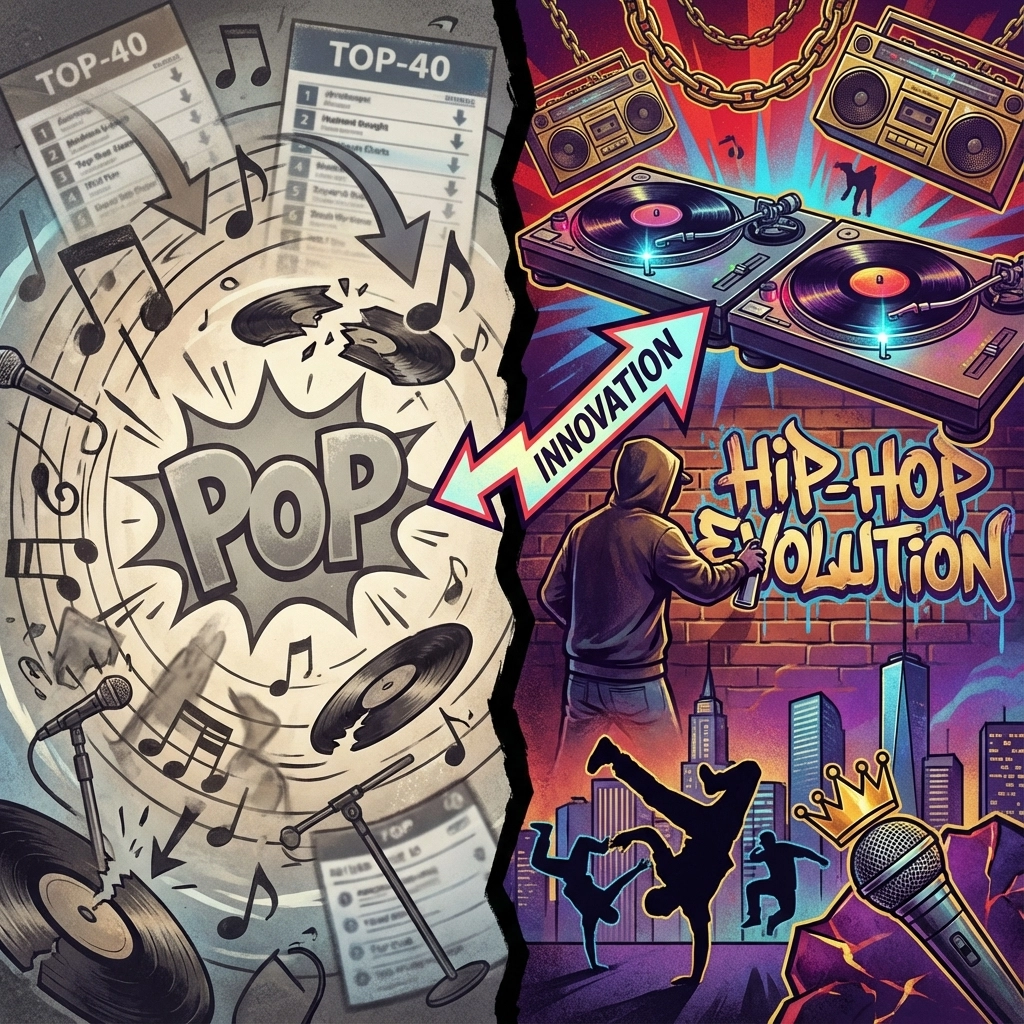
Hip-hop’s market share “decline” to 24% isn’t the end of an era – it’s the beginning of a more mature, sustainable phase of the genre’s evolution. Instead of chasing pure dominance through volume, hip-hop is learning to maintain influence through quality and cultural impact.
The artists who understand this shift are already adapting. They’re focusing on building genuine fanbases instead of gaming algorithms. They’re making albums instead of collections of potential TikTok sounds. They’re investing in their craft for the long term instead of chasing quick viral moments.
And honestly? That’s exactly what hip-hop needs. The genre didn’t become the most important musical force of the last 50 years by playing it safe or settling for surface-level success. It got there by constantly evolving, constantly challenging itself, and constantly proving that authentic artistic expression can compete with anything the industry throws at it.
So yeah, hip-hop’s market share is down to 24%. But if that means we get more artists like SZA breaking through with genuine artistry, more space for underground scenes to flourish, and more pressure on everyone to make better music, then bring on the decline. The culture will be stronger for it.


Post comments (0)