


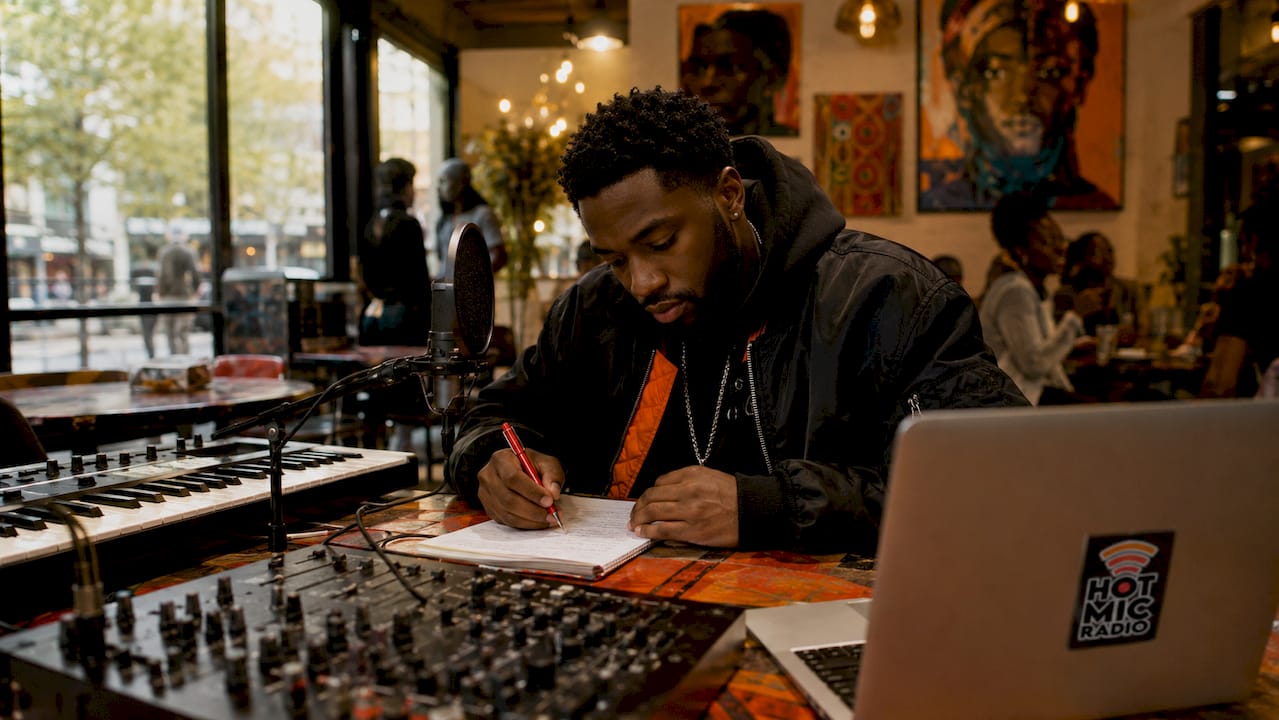
Hip hop storytelling is defined as the practice of embedding structured narrative arcs, vivid characters, and emotional tension inside rap lyrics. The best hip hop storytelling examples, from Eminem’s “Stan” to Kendrick Lamar’s “m.A.A.d City,” prove that rap is one of the most powerful short-story formats in American music history. These tracks use techniques like epistolary form, perspective shifts, framing devices, and intertextuality to pull listeners into fully realized worlds. If you study these songs closely, you will find a masterclass in compression, character, and consequence. We broke down the most important ones so you can hear them differently and write with more intention.
1. What makes Eminem’s “Stan” the gold standard of hip hop storytelling?
“Stan” is the pinnacle of epistolary storytelling in hip hop, using a series of letters to reveal a character arc that ends in tragedy. The song unfolds across four verses, each letter escalating in obsession and desperation. Eminem never tells you how to feel. He shows you through Stan’s own words, and that restraint is what makes it devastating.
The narrative structure is tight and deliberate:
- Verse 1: Stan writes a fan letter, polite and eager, referencing Eminem’s lyrics as personal guidance.
- Verse 2: Stan writes again, more urgent, feeling ignored and misunderstood.
- Verse 3: Stan records a final message from inside his car, drunk and driving toward a bridge with his pregnant girlfriend in the trunk.
- Verse 4: Eminem replies, unaware Stan is already dead, realizing the connection too late.
“The greatest hip-hop story ever told uses letters as weapons. Each one tightens the noose. By the time Eminem writes back, it’s already over. That delayed realization is what separates ‘Stan’ from every other track.” — Lupe Fiasco, on Eminem’s narrative craft
The narrative twist lands because the structure earns it. You spend three verses inside Stan’s head before Eminem’s perspective arrives. That reversal hits harder than any punchline. “Stan” also entered the Oxford English Dictionary as a common noun, which tells you everything about its cultural reach.
Pro Tip: When writing a story rap, try locking into one character’s voice for the first two-thirds of the song before introducing a second perspective. The contrast creates emotional impact you cannot manufacture any other way.

2. How Kendrick Lamar’s “m.A.A.d City” shifts perspective to tell a survival story
“m.A.A.d City” is the standard for perspective-shifting storytelling in hip hop, moving from raw street chaos to quiet introspection within a single track. The first half drops you into Compton with no warning. Gunshots, police lights, and adrenaline. The second half pulls back and asks what it means to survive all of that.
What makes this track technically brilliant:
- Concrete specificity: Kendrick names real streets, real friends, and real moments. That specificity builds authenticity that generic storytelling cannot fake.
- Tone shift: The beat change mid-song mirrors the narrative shift from chaos to reflection. Form and content move together.
- Identity theme: The song asks whether the environment shapes you or whether you shape yourself inside it. That tension never fully resolves, which is exactly how real life works.
- Rhythm as emotion: The rapid-fire delivery in the first half physically mimics the feeling of being overwhelmed. The slower second half gives you room to breathe and think.
Kendrick does not explain the violence. He places you inside it, then steps back and lets you sit with the weight. That is the difference between reporting and storytelling. Music becomes a vehicle for identity when it refuses to simplify the experience it describes.
Pro Tip: Use your beat structure as a storytelling tool. A tempo drop or a production shift can signal a narrative turn without you writing a single transitional line.
3. Slick Rick’s “Children’s Story” as the original blueprint for narrative rap
“Children’s Story” is the foundational example of the framing device in hip hop narrative, with Slick Rick adopting the Uncle Ricky persona to position himself as a storyteller before the story even begins. That framing creates a contract with the listener. You know you are about to hear a tale. You lean in.
The song follows a young man who makes a series of bad choices, escalating from petty crime to a fatal confrontation with police. The structure is a classic cautionary tale:
- Introduction of the protagonist as a relatable figure
- A tempting opportunity that leads to crime
- Escalating consequences with no exit
- A tragic, irreversible ending
“Slick Rick’s genius was making the listener feel like a child being warned by a wise elder. The Uncle Ricky persona gave the story moral authority without ever moralizing directly. You felt the lesson without being lectured.” — Analysis of “Children’s Story” narrative craft
The social critique is embedded in the plot, not stated outright. Slick Rick never says “crime doesn’t pay.” He just shows you the ending. That restraint is what separates great storytelling from a PSA. The song’s narrative blueprint influenced a generation of lyricists who understood that showing beats telling every single time.
4. Other standout narrative rap examples and the techniques behind them
The best hip hop stories share a set of craft tools that any lyricist can study and apply. Beyond the three landmark tracks above, several other songs demonstrate how diverse narrative techniques can be.
Black Star’s “Thieves In The Night” is the clearest example of intertextuality in hip hop, directly adapting Toni Morrison’s “The Bluest Eye” to critique Black identity and beauty standards. Mos Def and Talib Kweli do not just reference the novel. They inhabit its emotional core and translate it into a hip hop context. Intertextuality layers cultural depth into a song, giving listeners who catch the reference an additional layer of meaning without excluding those who do not.
Nas’s “A Queens Story” uses mosaic storytelling, combining personal memories, tributes, and gritty realities into a portrait of a neighborhood rather than a single character. Nas names specific blocks, specific people, and specific moments. The result feels like a documentary told in bars. It balances celebration and mourning without tipping into sentimentality.
| Track | Artist | Primary technique | Core theme |
|---|---|---|---|
| “Stan” | Eminem | Epistolary form, the reveal | Obsession and consequence |
| “m.A.A.d City” | Kendrick Lamar | Perspective shift, specificity | Survival and identity |
| “Children’s Story” | Slick Rick | Framing device, cautionary arc | Choice and consequence |
| “Thieves In The Night” | Black Star | Intertextuality | Identity and cultural critique |
| “A Queens Story” | Nas | Mosaic storytelling | Community, memory, loss |
Hip hop storytelling is fundamentally intertextual, linking music to broader cultural narratives through sampling and literary references. That connection to wider culture is what gives the genre its staying power as a social record. You can dig into more of these tracks through Hot Mic Radio’s classic hip hop archives to hear how these techniques evolved across decades.
The common thread across all these examples is compression. Every great story rap sets a scene fast, builds tension efficiently, and delivers an emotional payoff inside a four to six minute window. That constraint forces precision. It is the same discipline that makes short fiction harder to write than novels.
Pro Tip: Study how music storytelling spans platforms by examining how the same narrative techniques show up in film, literature, and cross-platform storytelling. The craft principles transfer directly back to your lyrics.
Key takeaways
The most powerful hip hop storytelling examples work because they combine compression, concrete specificity, and a clear narrative arc that earns its emotional payoff.
| Point | Details |
|---|---|
| Epistolary form creates distance and impact | “Stan” uses letters to build character and deliver a devastating delayed reveal. |
| Perspective shifts deepen emotional range | “m.A.A.d City” moves from chaos to reflection, making survival feel real and complex. |
| Framing devices build listener trust | Slick Rick’s Uncle Ricky persona signals a story is coming, increasing engagement from the first bar. |
| Intertextuality adds intellectual depth | Black Star’s Morrison reference layers cultural critique into the song without slowing the narrative. |
| Concrete specificity grounds any story | Real names, streets, and places transform a generic narrative into an immersive experience. |
Our take: why these songs are still the curriculum
Here at Hot Mic Radio, we have spent years listening to, programming, and championing hip hop storytelling across every era. And the honest truth? Most aspiring lyricists skip the study part. They want to write “Stan” without ever sitting with why it works.
The thing that separates these tracks from thousands of others is not talent alone. It is structure. Eminem knew exactly when to withhold information. Kendrick knew the beat change needed to carry narrative weight. Slick Rick knew a persona could do more work than a direct message. These are craft decisions, not accidents.
We also think the compression point gets underrated. Hip hop is a short story format, and short story craft is brutally hard. You have maybe sixteen bars to make someone care about a character. That means every word has to earn its place. No wasted syllables. No vague imagery. The writers who master this are the ones whose songs you still quote twenty years later.
If you are an aspiring lyricist, our advice is simple. Pick one technique from this list. Study one song that uses it. Then write one verse that applies it deliberately. Do not try to do everything at once. Epistolary form, perspective shifts, framing devices, intertextuality. Each one is a full semester of study on its own.
Hip hop’s role as a cultural storyteller is not a side effect of the genre. It is the whole point. These songs are social documents as much as they are music. That is why we take the craft seriously here, and why we think you should too.
— Hot Mic Radio Team
Hot Mic Radio’s curated archives for deeper listening
If this breakdown lit a fire in you, the next step is simple. Go listen. Reading about narrative techniques only gets you so far. You need to hear how these tools actually sound in motion, across different eras and styles.
Hot Mic Radio’s hip-hop archives cover everything from the foundational storytelling era of the late 1980s through today’s most lyrically complex releases. You will find classic narrative rap sitting right next to independent artists who are pushing the form forward right now. We also spotlight regional hip hop scenes that mainstream playlists consistently overlook, which means you will hear storytelling voices and styles you genuinely have not encountered before. Tune in, turn it up, and let the stories hit different when you know what to listen for.
FAQ
What is hip hop storytelling?
Hip hop storytelling is the practice of building structured narratives with characters, tension, and resolution inside rap lyrics. Tracks like Eminem’s “Stan” and Slick Rick’s “Children’s Story” are the most studied examples of the form.
What narrative techniques do rappers use most often?
The most common techniques include epistolary form, framing devices, perspective shifts, intertextuality, and concrete specificity. Each technique serves a different storytelling goal, from building character to grounding a scene in authentic detail.
Why is Eminem’s “Stan” considered the greatest story rap?
Lupe Fiasco and many lyrical analysts cite “Stan” as the greatest story rap because its epistolary structure and delayed narrative reveal create an emotional impact that few tracks have matched. The song also entered the Oxford English Dictionary, confirming its cultural permanence.
How does concrete specificity improve rap storytelling?
Using real names, street names, and personal references transforms generic stories into immersive, believable experiences. Listeners connect more deeply when a narrative feels grounded in a real place and real stakes.
What is intertextuality in hip hop?
Intertextuality in hip hop is the practice of referencing or adapting other cultural works, such as novels, films, or earlier songs, to add depth to a lyric. Black Star’s “Thieves In The Night” adapts Toni Morrison’s “The Bluest Eye” as its narrative foundation, making the song richer for listeners who catch the connection.


Post comments (0)