



Spotify’s algorithm thinks it knows what you want to hear next. Apple Music’s AI believes it can predict your perfect hip hop playlist. But ask any real hip hop head, and they’ll tell you something different: the best moments in hip hop happen when a real DJ breaks the algorithm.
We’re living in the streaming era, no doubt. Algorithms decide what 500 million people hear every day. But here’s the thing – hip hop wasn’t built by algorithms. It was built by DJs like Kool Herc, Grandmaster Flash, and Afrika Bambaataa who understood something that no machine learning model can grasp: hip hop is about the moment, the crowd, and the culture.
The Algorithm Problem: When Hip Hop Gets Sanitized
Streaming platforms have turned music discovery into a science experiment. They analyze your listening patterns, cross-reference your data with millions of other users, and serve up what they think you’ll like. Sounds efficient, right?
The problem is, algorithms optimize for engagement and retention, not for artistic integrity or cultural authenticity. They push music that keeps people listening without skipping – which usually means smoother, more polished, safer tracks. This is how we end up with what industry insiders call “algorithmic hip hop” – tracks engineered for streaming success rather than cultural impact.
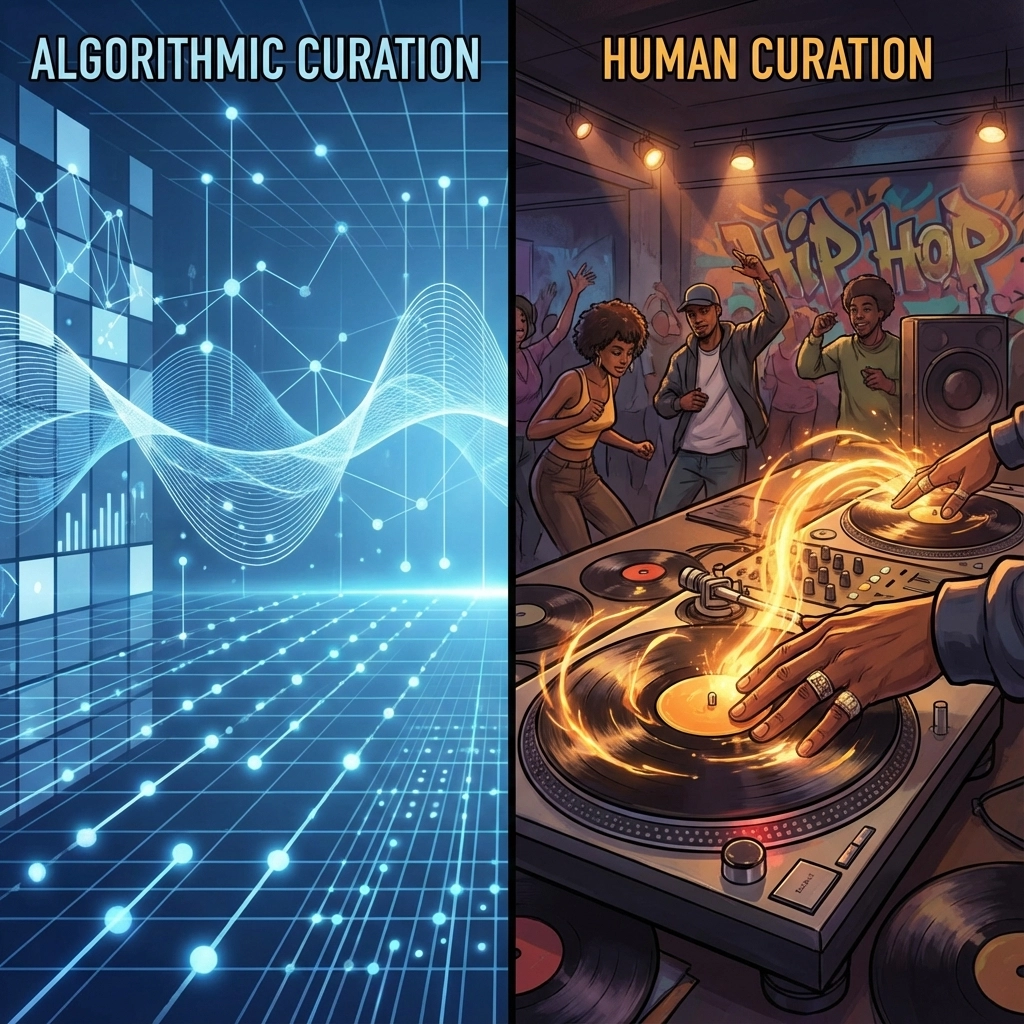
Real hip hop has always been about disruption, surprise, and pushing boundaries. When Kendrick Lamar drops a surprise verse that shifts the entire conversation, or when a DJ cuts between two completely different eras to create something new – that’s not algorithmic thinking. That’s human creativity responding to human energy.
What Real DJs Bring That Algorithms Can’t Touch
Reading the Room (Literally)
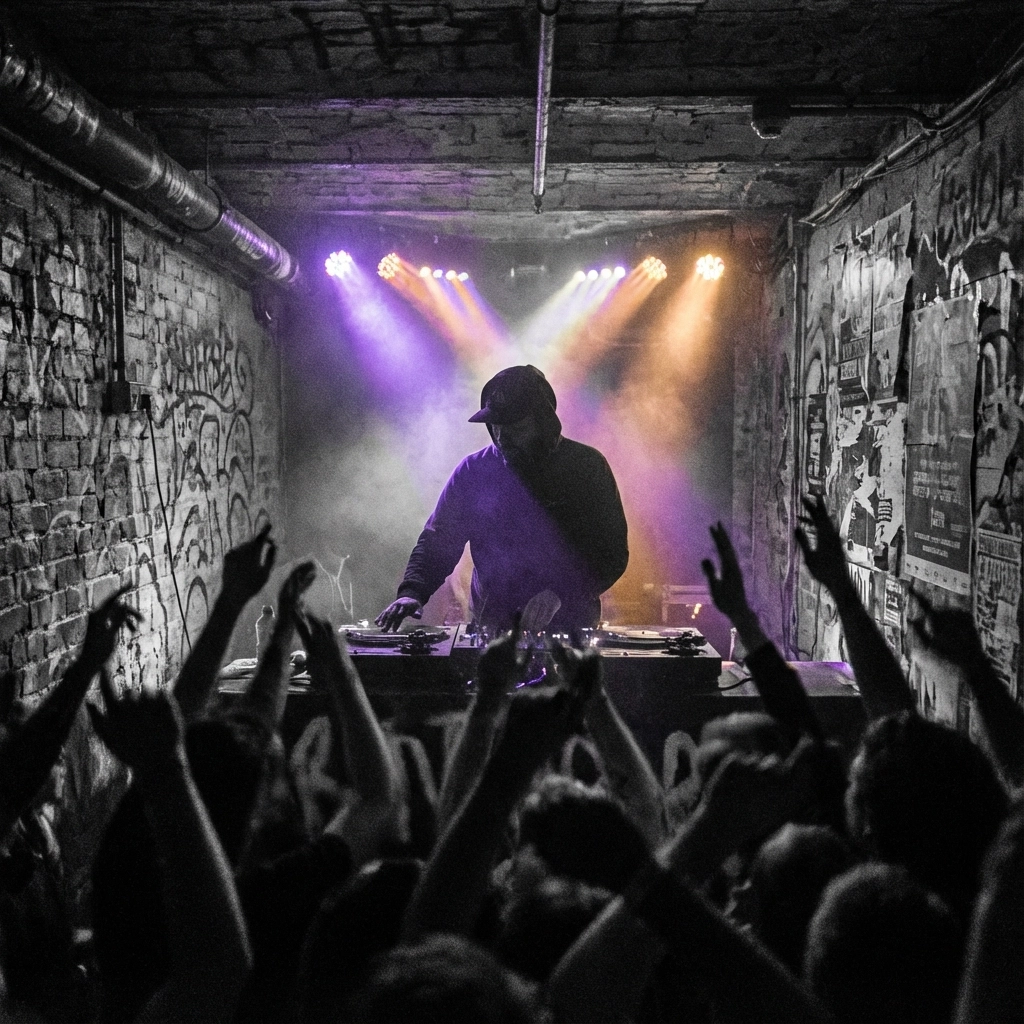
Walk into any real hip hop venue – whether it’s a underground club, block party, or major festival – and watch a skilled DJ work. They’re not following a predetermined playlist. They’re reading facial expressions, watching how people move, feeling the energy shift in real-time.
When DJ Kid Wonder drops a surprise throwback that gets the whole crowd hyped, that’s not because an algorithm suggested it. It’s because they felt the moment and knew exactly what the people needed to hear. That intuition, built from years of understanding hip hop culture and human psychology, can’t be coded.
Cultural Context and Authenticity
Hip hop is deeply rooted in community, struggle, and authentic expression. Real DJs carry that cultural weight. They understand the history behind the tracks, the beefs between artists, the regional differences, and the social context that gives hip hop its power.
An algorithm might know that certain songs have similar BPMs or musical characteristics, but it doesn’t know why Jay-Z and Nas ending their beef was such a big deal, or why playing West Coast classics hits different in LA than it does in New York. Real DJs carry that cultural DNA.
The Art of the Unexpected
The best hip hop DJs are masters of surprise. They’ll throw in an old-school break, blend a current hit with a ’90s classic, or drop an unreleased track that completely changes the vibe. These moments create shared experiences that people talk about for years.
Algorithms hate surprises. They’re designed to minimize risk and maximize predictability. But hip hop culture thrives on those unpredictable moments when a DJ takes a creative risk and it pays off huge.
How Streaming Has Changed the Game (For Better and Worse)
Let’s be real – streaming platforms have democratized music discovery in amazing ways. Independent hip hop artists can now reach global audiences without major label backing. Fans can discover regional scenes they never would have heard otherwise. That’s genuinely revolutionary.
But there’s a flip side. The same algorithms that help artists get discovered also tend to favor certain types of content. Tracks that hook listeners in the first 30 seconds. Songs that fit neatly into established genres. Music that doesn’t challenge or disrupt too much.
This creates pressure for hip hop artists to make “algorithm-friendly” music rather than pushing creative boundaries. When artists start optimizing for streaming success rather than artistic vision, the culture suffers.
The Underground Strikes Back
Here’s what’s interesting: as streaming algorithms get more sophisticated and mainstream hip hop gets more sanitized, the underground scene is getting more experimental and wild. It’s like there’s a reaction happening – the more predictable streaming gets, the more unpredictable the live scene becomes.
Underground hip hop venues, pop-up parties, and intimate club nights are where you’ll find the most innovative DJing and the most authentic hip hop experiences. These spaces exist specifically because they offer something algorithms can’t: genuine surprise, community, and raw creative energy.
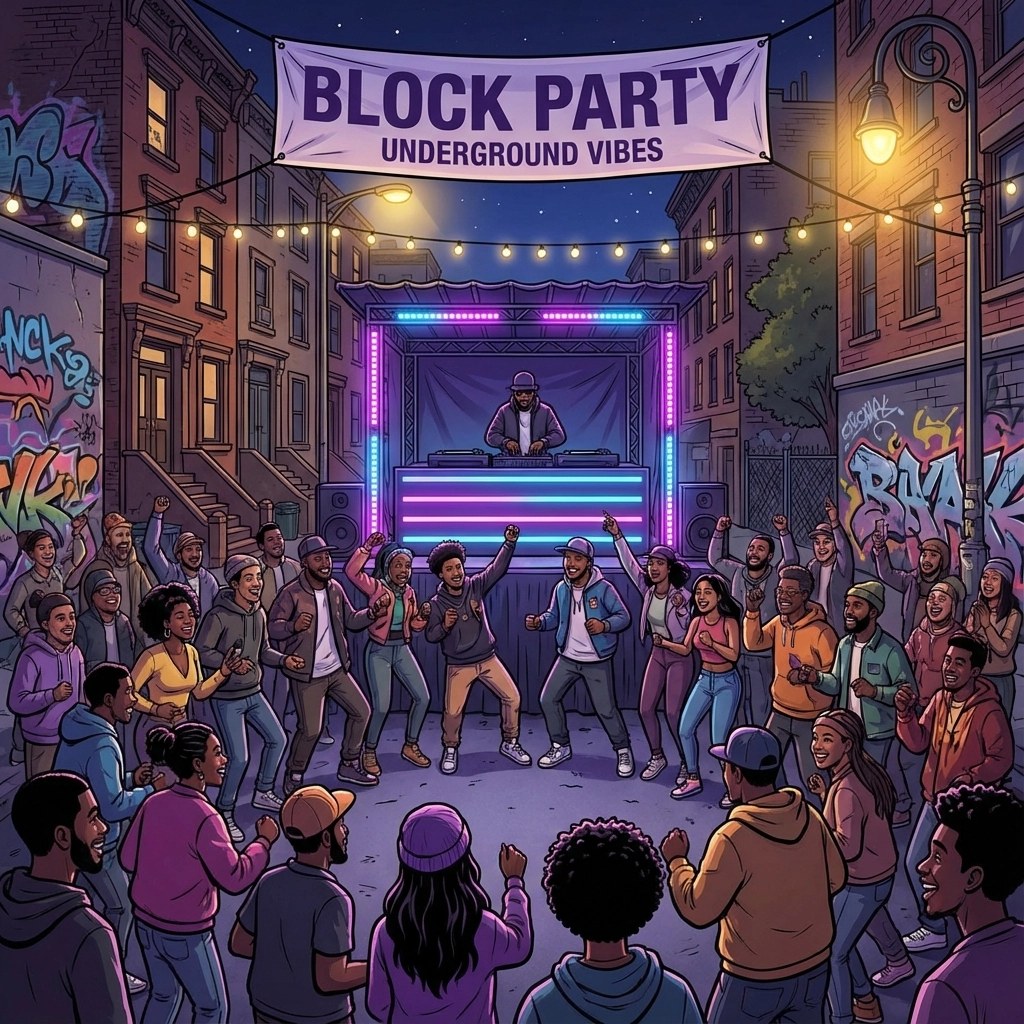
Real DJs are thriving in these spaces precisely because they offer what streaming can’t – the human connection, the cultural knowledge, and the ability to create moments that can’t be replicated or predicted.
Technology as a Tool, Not a Replacement
Smart hip hop DJs aren’t fighting technology – they’re using it to enhance their craft. They’re leveraging AI tools for things like automatic BPM matching and key detection, but using their human creativity for the stuff that actually matters: track selection, timing, and reading the crowd.
The future isn’t about DJs versus algorithms. It’s about DJs using technology to amplify their human abilities while maintaining the authenticity and cultural knowledge that makes hip hop special.
Why This Matters for Hip Hop Culture
Hip hop has always been about more than just music. It’s a culture built on community, authenticity, and pushing against the mainstream. Real DJs are cultural gatekeepers who maintain that authenticity and pass down the knowledge from generation to generation.
When we let algorithms completely take over music curation, we risk losing that cultural transmission. We risk hip hop becoming just another product optimized for consumption rather than a living culture that evolves through human creativity and community.
The Real Battle: Passive vs. Active Listening
Maybe the real divide isn’t between DJs and algorithms – it’s between passive and active music experiences. Streaming algorithms are perfect for background listening, working out, or discovering new music casually. But when people want to really experience hip hop – when they want to feel connected to the culture and community – they still turn to real DJs.
Live hip hop events, whether it’s a massive festival or an intimate The Corner Live session, offer something fundamentally different from streaming. They offer presence, community, and the unpredictable magic that happens when human creativity meets human energy.
Looking Forward: Both Have Their Place
The truth is, we need both algorithms and real DJs. Algorithms are incredible for music discovery, convenience, and exposing people to artists they might never find otherwise. But real DJs remain essential for maintaining hip hop’s cultural authenticity, creating unforgettable live experiences, and pushing creative boundaries.
The best future for hip hop isn’t one where algorithms replace DJs, or where DJs ignore technology. It’s one where both coexist, each serving their unique role in the ecosystem. Streaming platforms for discovery and convenience. Real DJs for culture, community, and those magical moments that remind us why we fell in love with hip hop in the first place.
As we move deeper into 2025, the DJs who understand this balance – who can leverage technology while maintaining their cultural authenticity – will be the ones who continue to shape hip hop’s future. Because at the end of the day, hip hop isn’t just about the music. It’s about the culture. And culture needs human guardians, not just algorithms.


Post comments (0)