


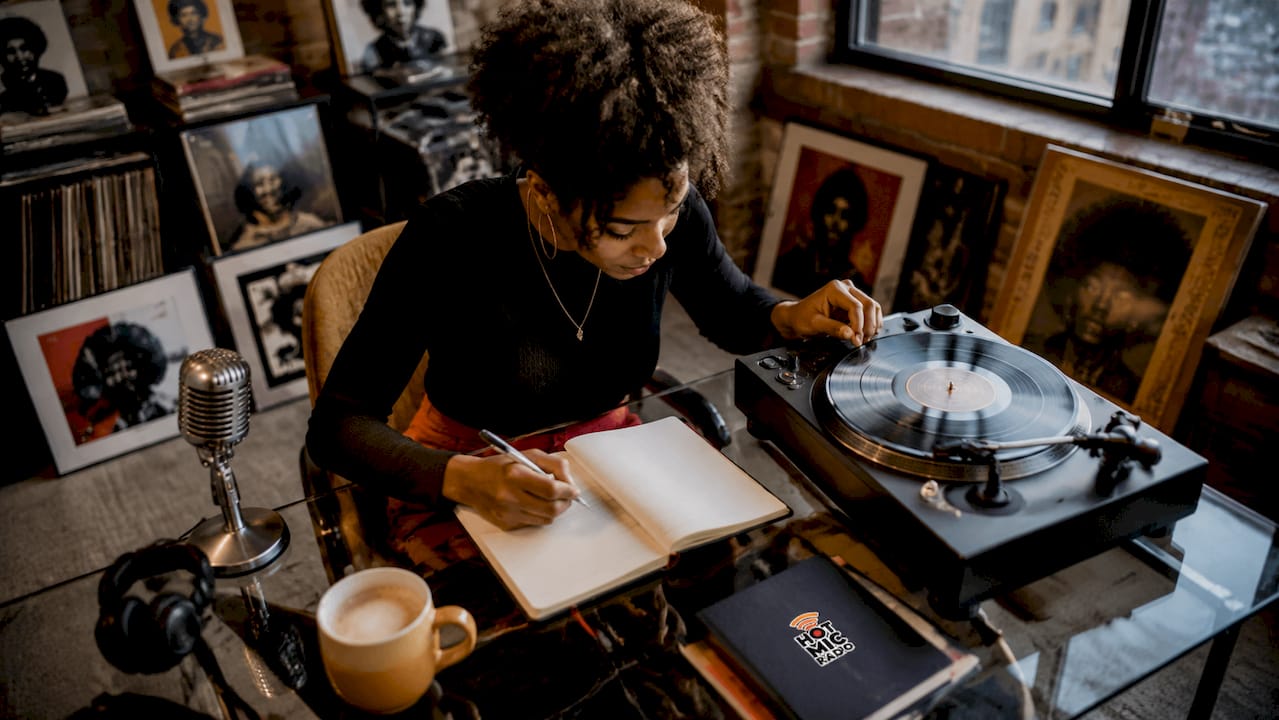
Black music is the primary emotional and structural language of modern pop culture. Not an influence on it. Not a contributor to it. The actual foundation. Historian Steven Mintz puts it plainly: Black Americans authored the emotional vocabulary through which modern America expresses desire, grief, rebellion, and intimacy. That is why black music shapes pop culture at every level, from the rhythms underneath a pop radio hit to the slang in a luxury brand campaign. Black Music Month, now celebrated for 47 years and spanning 50+ genres, exists precisely because this contribution is that deep and that wide.
Why black music shapes pop culture: the historical roots
The story starts in West and Central Africa. The musical traditions carried across the Atlantic during the slave trade were not simple folk songs. They were complex systems built on polyrhythm, call-and-response, and microtonal tuning that Western notation could not fully capture. Those systems became the skeleton of American music.
Slavery and systemic exclusion did not erase those traditions. They concentrated them. When Black Americans were denied access to formal institutions, music became the primary tool for community survival, spiritual endurance, and coded resistance. Blues, gospel, and work songs were not entertainment first. They were functional. They regulated grief, organized collective labor, and transmitted cultural memory across generations.
- Blues carried the emotional directness and bent pitch of African tuning systems into American ears for the first time.
- Gospel formalized call-and-response as a communal ritual, turning congregations into active participants rather than passive listeners.
- Work songs used polyrhythm and elastic timing to synchronize collective physical labor, proving that Black music was always designed for practical use.
- Jazz took improvisation from a survival skill into an art form, establishing emotional vulnerability as a legitimate aesthetic value.
Economic and technological forces then spread these forms nationally. The Great Migration moved Black communities and their music from the rural South into Northern cities. Radio and the recording industry, once they recognized the commercial potential, carried those sounds into white households across America. The cultural transmission was real, but the credit was often not.
Pro Tip: When you study the history of any mainstream American genre, trace it back two or three generations. You will almost always land on a Black musical tradition as the structural source.

How Black music’s innovations became the sound of global pop
The musical features that define pop music globally are not accidents. They are direct inheritances. Bent pitch and syncopation originated from African tuning systems, not Western standard melodies. When a pop singer slides between notes or a producer drops a beat slightly behind the grid for feel, that is African musical logic at work.
Here is what Black music introduced that pop music now treats as standard:
- Syncopation: Placing rhythmic emphasis off the expected beat creates tension and release. Every genre from funk to EDM runs on this principle.
- Bent pitch: Microtonally sliding between notes adds emotional honesty that equal-tempered Western scales cannot produce alone.
- Improvisation: The freedom to deviate from a fixed melody in real time made performance feel alive. Pop music’s vocal runs, ad-libs, and freestyle sections all trace back here.
- Elastic timing: Slightly stretching or compressing the beat for expressive effect, what producers now call “feel,” is a direct inheritance from Black performance practice.
- Audience participation: Call-and-response turned listeners into co-performers. From church to hip-hop concerts, this structure makes music a communal event rather than a one-way broadcast.
“Black music functions as a science of survival and community utility, designed under systemic constraint to reinstitute humanity.” — Melvin Gibbs
That quote from musician and scholar Melvin Gibbs reframes everything. These were not stylistic choices made for commercial appeal. They were practical community tools that happened to be so emotionally effective that the entire world adopted them. Mainstream genres like EDM and pop inherit rhythmic DNA directly from African diaspora traditions including gospel phrasing and clave rhythms. That is not a metaphor. That is musicology.
Black music also produces measurable physical effects. Research shows that communal music participation creates physiological changes in listeners, including cortisol reduction, which explains why Black music formats feel so universally appealing beyond their sonic qualities alone.
What does the current economic data say about black music’s impact?
The cultural significance of black music is not just historical. The numbers in 2026 are loud. Sub-Saharan Africa recorded a 22.6% revenue increase in audio streaming in 2024, crossing $100 million for the first time. That growth reflects the global appetite for Afrobeats, Amapiano, and other Black African music forms that are now reshaping mainstream pop playlists worldwide.

| Metric | Data Point | What It Means |
|---|---|---|
| Sub-Saharan Africa audio revenue growth | 22.6% in 2024 | Black music from Africa is now a major commercial force globally |
| Sub-Saharan Africa revenue milestone | Crossed $100 million | First time the region hit this threshold, signaling sustained market growth |
| Black consumers prioritizing culture-reflective brands | 67% | Black music aesthetics drive purchasing decisions, not just listening habits |
| General population equivalent | 46% | Black consumers are 21 points more likely to reward culturally aligned brands |
| Black Music Month duration | 47 years | Institutional recognition spanning nearly five decades confirms deep cultural legitimacy |
The brand relevance data is particularly telling. 67% of Black consumers prioritize brands that reflect their culture, compared to 46% of the general population. That gap shows that Black music is not just a soundtrack. It is a value system that shapes spending, identity, and loyalty. Fashion houses, sneaker brands, and streaming platforms all know this. Their marketing budgets reflect it.
Pro Tip: Pay attention to which brands show up at hip-hop and R&B events. The sponsorship patterns tell you exactly how much commercial value the industry places on Black music’s cultural reach.
Common misconceptions about black music’s role in pop culture
The biggest misconception is framing Black music as an “influence” on pop culture rather than its primary authorship. Influence implies a secondary relationship. The reality is that Black artists pioneered improvisation, emotional vulnerability, and audience participation as aesthetic values that the entire global pop industry then adopted as its own standard.
A few other misconceptions worth addressing directly:
- “Black music is simple.” The apparent simplicity is a design feature, not a limitation. Complex rhythmic systems are embedded beneath accessible surfaces, reflecting African tuning logic rather than Western compositional norms. The groove is doing more work than it looks like.
- “It’s just entertainment.” Black music has always carried a communal utility function. It regulates emotion, builds collective identity, and transmits cultural memory. Entertainment is a byproduct, not the purpose.
- “The influence flows one way.” Black music absorbs and transforms everything it encounters, from European harmonic structures to Caribbean rhythms. The result is a living, adaptive tradition, not a static artifact.
“The emotional language of pop culture was not borrowed from Black music. It was written by Black music.” — Steven Mintz
The cultural appropriation problem sits inside this misconception gap. When the authorship is misread as mere influence, it becomes easier to adopt the aesthetic without crediting the source or supporting Black artists in industry leadership roles. Recognizing the communal and artistic roots of Black creative expression is the first step toward closing that gap.
Key Takeaways
Black music is not a genre category. It is the structural and emotional foundation on which modern pop culture was built, and its global economic power in 2026 confirms that foundation is still growing.
| Point | Details |
|---|---|
| Primary authorship, not influence | Black Americans wrote the emotional language of modern pop culture, including desire, grief, rebellion, and intimacy. |
| African roots define pop’s sound | Syncopation, bent pitch, and call-and-response all originate from African musical traditions, not Western norms. |
| Economic power is real and growing | Sub-Saharan Africa’s audio revenue grew 22.6% in 2024, crossing $100 million for the first time. |
| Cultural value drives brand behavior | 67% of Black consumers prioritize culture-reflective brands, making Black music aesthetics a commercial force. |
| Communal utility explains global appeal | Black music was designed for emotional survival and community use, which is why it resonates across cultures and borders. |
The Hot Mic Radio team’s take: this is not a history lesson, it’s a live conversation
We have been living inside this music for a long time, and here is what we keep coming back to: the people who treat Black music as a historical artifact are missing the whole point. This is not a museum exhibit. It is a living, breathing, constantly evolving conversation between artists and communities. Every time a producer flips a sample, every time a vocalist bends a note, every time a crowd shouts back at a rapper, that is the tradition continuing in real time.
What frustrates us is the gap between how much the world consumes Black music and how little credit flows back to its origins. The rhythms in your favorite EDM track came from somewhere. The emotional rawness in that pop ballad that wrecked you last week has a lineage. Knowing that lineage does not make the music less enjoyable. It makes it hit harder.
The other thing we want to push back on is the idea that Black music’s power is accidental. It is not. Melvin Gibbs is right: this is a science. It was built under pressure, refined through necessity, and optimized for human connection in ways that commercial pop music has been trying to replicate ever since. The contemporary Black art and music styles you see thriving globally right now are not trends. They are the latest chapter of a very long, very intentional story.
Appreciate the complexity. Respect the source. And turn it up.
— Hot Mic Radio Team
Hotmicradio: where the culture lives and breathes
Black music is the heartbeat of pop culture, and Hotmicradio is built to keep that heartbeat loud. We are not just a radio station. We are a platform dedicated to the full spectrum of Black music, from Gospel and Motown classics to Afrobeats, hip-hop, and Neo-Soul.
Every show on Hotmicradio is curated to honor the roots while staying locked in on what is next. We champion independent artists, spotlight regional hip-hop scenes, and bring live DJ energy directly to your speakers. If you want to hear the culture in real time, not just read about it, this is where you tune in. Turn it up. Welcome to the culture.
FAQ
Why is black music considered the foundation of pop culture?
Black music established the core emotional and structural elements of modern pop, including syncopation, improvisation, call-and-response, and bent pitch. Historian Steven Mintz identifies Black Americans as the primary authors of the emotional language that all of modern pop culture now uses.
What African musical traditions shaped black music?
Polyrhythm, call-and-response, and microtonal tuning systems from West and Central Africa formed the structural foundation of Black American music. These traditions survived the Atlantic crossing and became the backbone of blues, gospel, jazz, hip-hop, and eventually global pop.
How does black music influence fashion and lifestyle today?
Black music aesthetics shape purchasing decisions, not just listening habits. In 2026, 67% of Black consumers prioritize brands that reflect their culture, compared to 46% of the general population, showing that the influence of black music extends well beyond sound into identity and commerce.
What is Black Music Month and why does it matter?
Black Music Month is a 47-year-old annual recognition that now encompasses over 50 genres. It exists to formally acknowledge the depth and breadth of Black music’s contribution to American and global culture, from its African roots to its contemporary commercial dominance.
How does black music’s global economic impact show up in 2026?
Sub-Saharan Africa’s audio streaming revenue grew 22.6% in 2024, crossing $100 million for the first time. That growth, driven largely by Afrobeats and Amapiano, shows that the cultural significance of black music is translating into major and accelerating economic power worldwide.


Post comments (0)