


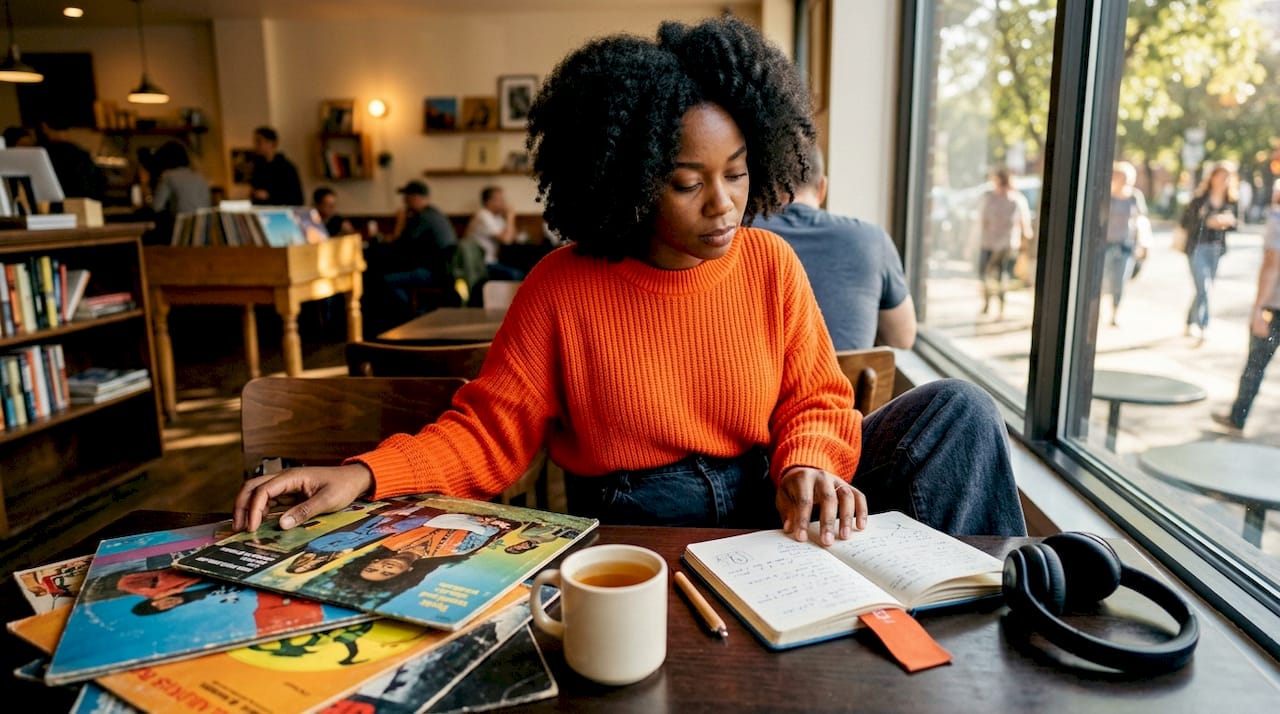
Music genre diversity is defined as the coexistence of multiple distinct musical styles, traditions, and forms within a shared cultural ecosystem. It is not a nice-to-have feature of the music world. Cultural diversity is as necessary for humankind as biodiversity is for nature, and genre diversity is one of its most direct, living expressions. When Hip-Hop, Gospel, Afrobeats, Jazz, and Dancehall all have room to breathe and grow, the whole culture wins. Understanding why music genre diversity matters means understanding how creativity, identity, and human connection actually work.
Why music genre diversity matters for cultural expression
Genre diversity is not just an aesthetic preference. UNESCO frames cultural diversity as foundational to human intellectual, emotional, moral, and spiritual well-being. That framing puts genre diversity squarely in the category of a cultural right, not a luxury.
When a genre disappears or gets pushed to the margins, a community loses a vehicle for its stories, its grief, its joy, and its identity. Southern Soul carries the weight of the American South. Motown carries the sound of Black ambition in mid-century Detroit. Afrobeats carries the pulse of a continent asserting its global voice. Each genre is a living archive.

Genre diversity also drives social cohesion. Shared music creates shared meaning across communities that might otherwise have little in common. A Jazz listener who discovers Neo-Soul, or a Gospel fan who finds Soca, does not just expand a playlist. They expand their understanding of other people’s lives.
The table below shows how cultural diversity concepts map directly onto music genre diversity.

| Cultural diversity concept | Music genre diversity equivalent |
|---|---|
| Biodiversity of ideas and expressions | Coexistence of Hip-Hop, Jazz, Gospel, Afrobeats, and more |
| Cultural rights and participation | Access to niche, regional, and independent genres |
| Social cohesion through shared meaning | Cross-genre listening building community bridges |
| Protection of minority cultural voices | Preservation of local scenes and independent artists |
How do digital platforms shape genre exposure?
Digital platforms are the primary gatekeepers of genre exposure for most listeners today. That is a big deal, and not always in a good way.
Research from TU Delft shows that incremental, feedback-driven exposure to unfamiliar genres produces higher listener engagement and broader taste development than sudden or passive exposure. Gradual discovery works because it respects natural preference thresholds. You do not fall in love with a new genre in one listen. You ease into it.
The problem is that most streaming algorithms are not built for gradual discovery. They are built for retention. Algorithmic curation can collapse supply-side diversity beyond a certain threshold, creating positive feedback loops that lock listeners into familiar sounds. The “Shrinking Sweet Spot” model shows that institutional gatekeeping and social influence compound this effect. The result is a listener who thinks they have broad taste but is actually cycling through a narrow band of sounds the algorithm already knows they like.
The good news is that cultural capital buffers against this. Listeners who actively seek out new genres, read about music history, and engage with curated programming are less vulnerable to algorithmic homogenization. Here is what that active approach looks like in practice:
- Follow genre-specific curators and DJs, not just algorithm-generated playlists.
- Seek out regional Hip-Hop scenes and international sounds like Soca and Dancehall that mainstream platforms underserve.
- Use radio platforms that program with human intent, not engagement metrics.
- Pay attention to independent artists who exist outside the major label ecosystem.
- Revisit classic genres like Motown and Southern Soul to understand the roots of sounds you already love.
Pro Tip: Set aside one listening session per week with the explicit goal of hearing something you have never heard before. TU Delft’s research confirms that consistent, low-pressure exposure is the fastest path to genuinely expanding your taste.
Do independent labels or major labels support genre diversity more?
The music industry’s structure directly determines which genres survive and which ones get squeezed out. IMPALA’s 2026 report makes the case that independent music companies are not just participants in the ecosystem. They are the infrastructure that makes genre diversity possible.
Major labels operate on scale. They need a genre to move units before they invest in it. Independent labels operate on belief. They sign artists because the music is real, the scene is alive, and the community deserves a voice. That difference in motivation produces a massive difference in output.
Berklee College of Music notes that genres are increasingly fluid and permeable in the digital era, but genre classification still drives discoverability on streaming platforms. That tension creates a real problem for artists who blend styles or work in niche categories. Independent labels are better positioned to navigate that tension because they are not beholden to a major platform’s playlist categories.
Who controls genre classification matters enormously. When a streaming platform decides whether an artist is “R&B” or “Pop,” it shapes which playlists they appear on, which listeners find them, and ultimately whether their career survives. Independent sector ownership and investment are fundamental to keeping that classification power distributed rather than concentrated.
| Role | Independent labels | Major labels |
|---|---|---|
| Risk tolerance | High. Sign niche and emerging genres | Low. Require proven market demand |
| Local scene support | Strong. Rooted in regional communities | Weak. Focused on global scalability |
| Genre classification power | Limited but flexible | Significant and commercially driven |
| Artist development | Long-term and genre-specific | Short-term and format-driven |
| Contribution to diversity | Core infrastructure | Supplementary at best |
How does genre diversity enrich your listening experience?
The benefits of genre diversity are personal before they are cultural. When you listen across genres, you do not just hear more music. You hear more of yourself.
Exposure to multiple genres expands creative capacity. A Hip-Hop producer who studies Jazz harmony writes better chord progressions. An R&B vocalist who listens to Gospel understands breath and dynamics at a deeper level. Creation flourishes in cultural diversity, and that principle applies to listeners as much as it does to artists. Consuming diverse music is a form of creative education.
Feedback-driven discovery research confirms that taste evolves through a balance of familiar comfort and new rewards. The sweet spot is not total novelty. It is the feeling of something slightly unfamiliar that still connects to what you already love. Lo-fi connects to Jazz. Afrobeats connects to R&B. Soca connects to the same joy that Gospel carries. The threads are always there.
Here is a practical framework for expanding your personal genre range:
- Start with the roots. Gospel, Soul, and Motown are the foundation of almost every Black music genre. Understanding them makes everything else click.
- Follow the evolution. Trace how Soul became R&B, how R&B influenced Hip-Hop, and how Hip-Hop absorbed Jazz. The lineage is the lesson.
- Go global. Afrobeats, Dancehall, and Soca are not exotic additions to your playlist. They are parallel branches of the same cultural tree.
- Listen to live DJ sets. A skilled DJ creates genre connections in real time that no algorithm can replicate.
- Read the criticism. Cultural critics who write about music with depth and context accelerate your understanding faster than passive listening alone.
Emotional fulfillment is the real payoff. Music that hits you in the chest does so because it carries the full weight of a human experience you recognize. The more genres you know, the more of those moments you get.
Key Takeaways
Genre diversity is the foundation of cultural expression, creative innovation, and a resilient music ecosystem that serves listeners, artists, and communities alike.
| Point | Details |
|---|---|
| Cultural right, not a preference | UNESCO frames genre diversity as essential to human intellectual and spiritual well-being. |
| Algorithms narrow taste over time | The Shrinking Sweet Spot model shows curation can collapse diversity without active listener intervention. |
| Independent labels are the backbone | IMPALA confirms independents take the creative risks that sustain niche and regional genres. |
| Gradual discovery expands taste | TU Delft research shows incremental exposure outperforms passive or sudden genre introduction. |
| Genre fluidity creates classification tension | Berklee notes that fluid genres still require consistent categorization for streaming discoverability. |
The culture needs more than one lane
We have been in this music space long enough to know that the real danger is not bad music. The real danger is a world where only one kind of music gets amplified. And we are closer to that world than most people realize.
Algorithmic curation feels like freedom because the choices are endless. But endless choices built on the same preference data is not freedom. It is a very comfortable loop. We have watched listeners who swear they love music slowly drift into a place where they only recognize three artists and two sounds. That is not a music lover. That is someone who got comfortable.
Cultural critics have a specific responsibility here. Advocating for genre diversity is not about nostalgia or gatekeeping. It is about defending the infrastructure that makes creativity possible. When independent labels lose funding, when regional scenes get no platform, when niche genres get buried under algorithmic weight, the whole ecosystem shrinks. And once it shrinks, it is very hard to grow back.
The listeners who push back against that are the ones who tune into platforms built for discovery, who follow DJs with real curatorial vision, and who treat their listening habits as a practice worth developing. That is the move. Not just consuming music, but being intentional about what you let into your ears and why.
— Hotmic
Hot Mic Radio is where genre diversity lives
At Hot Mic Radio, we built our programming around exactly this idea. Genre diversity is not a talking point for us. It is the whole architecture.
Our rotation runs from Gospel and Motown classics to Hip-Hop, R&B, Neo-Soul, Jazz, Lo-fi, Afrobeats, Soca, and Dancehall. Live DJs curate those connections in real time, the way a great DJ always has. We spotlight regional Hip-Hop scenes that mainstream platforms ignore. We put independent artists on the air before the algorithm knows their name. If you are serious about the importance of music diversity and want a listening experience that actually reflects the full spectrum of the culture, tune in at Hot Mic Radio and hear what a genuinely diverse music ecosystem sounds like.
FAQ
Why does music genre diversity matter?
Music genre diversity sustains cultural expression, creative innovation, and social cohesion. UNESCO defines it as essential to human intellectual and spiritual well-being, placing it in the category of a cultural right.
How do streaming algorithms affect genre diversity?
Streaming algorithms tend to reinforce familiar tastes through positive feedback loops. Research models show that high algorithmic curation can collapse the range of genres listeners encounter over time.
What role do independent labels play in genre diversity?
Independent labels are the primary infrastructure for niche, regional, and emerging genres. IMPALA’s 2026 report confirms they take creative risks that major labels avoid, making them essential to a diverse music ecosystem.
How can listeners expand their genre range?
TU Delft research shows that gradual, feedback-informed exposure to unfamiliar genres is the most effective method. Starting with root genres like Gospel and Soul, then tracing their evolution, accelerates the process.
What is genre fluidity and why does it create problems?
Genre fluidity refers to the increasing permeability between musical styles in the digital era. Berklee College of Music notes that while genres blend culturally, streaming platforms still require consistent classification for discoverability, creating tension for artists who cross genre lines.


Post comments (0)