

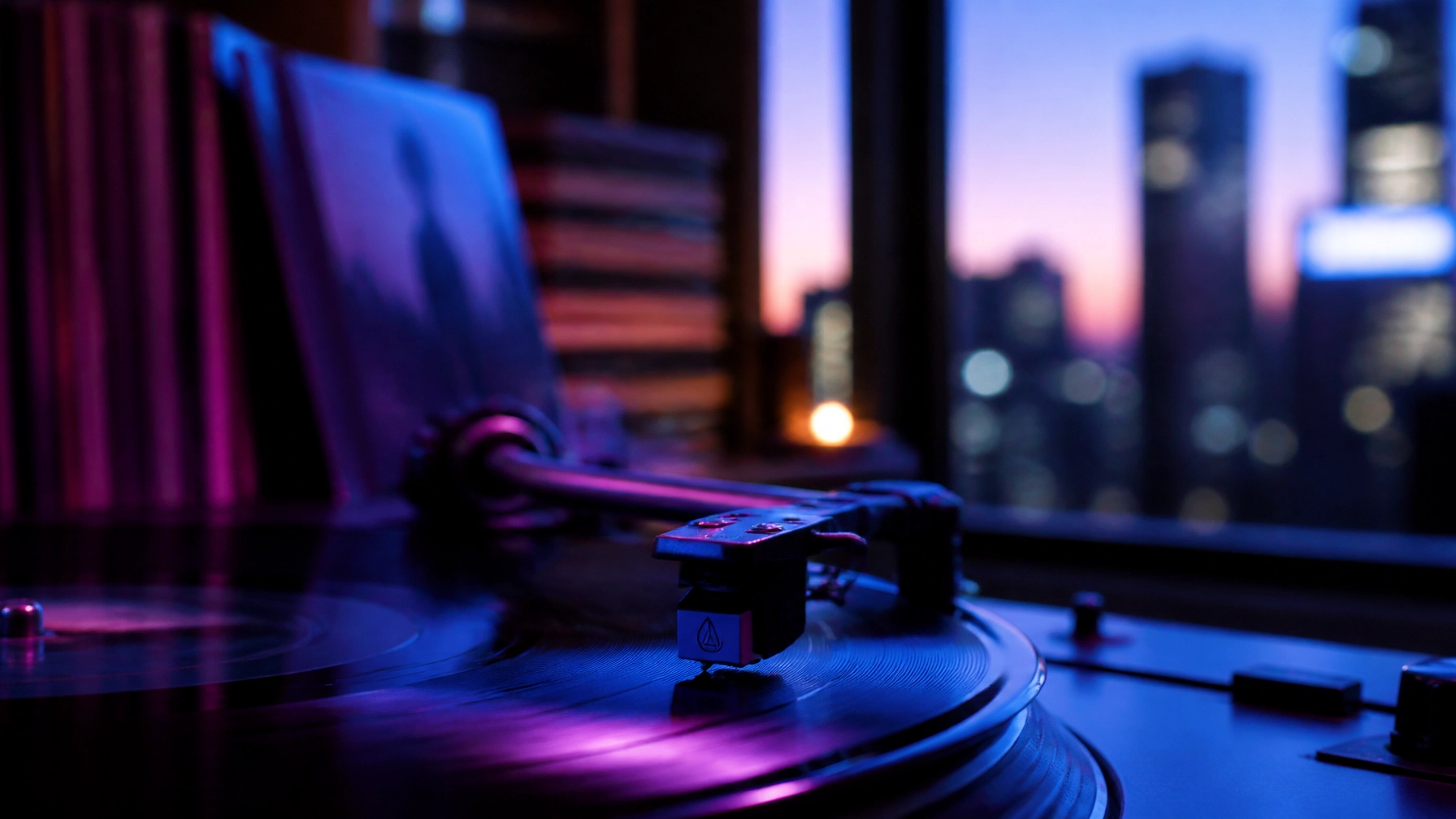
Walk into any apartment in Brooklyn, Atlanta, or L.A. right now, and you’ll likely see the same thing: a shelf meticulously curated with vinyl records and glossy CD jewel cases. They look great. They catch the light. They tell you exactly who that person is and what they value.
But here’s the plot twist: if you asked to actually hear one of those albums, there’s a 50/50 chance your host would have to awkwardly explain that they don’t actually own a record player or a CD deck.
Welcome to the era of Aesthetic Ownership.
According to the newly released Luminate 2026 Midyear Music Report, the numbers are telling a story that defies logic: physical media is surging, but not necessarily because we’ve suddenly rediscovered a love for analog hardware. We’re buying the objects, but we’re still streaming the audio. At Hot Mic Radio, we’re all about the culture, and this shift says something profound about how we connect with music in a digital-first world.
The Numbers: The Great CD Resurgence
For years, the narrative was that vinyl was the “cool” older brother and the CD was the dusty relic of the 90s. 2026 has officially flipped that script.
The Luminate data shows that U.S. CD sales surged by 16% in the first half of 2026, moving 16.3 million units. To put that in perspective, vinyl: long the darling of the physical revival: only grew by a modest 2.4%. While K-pop remains a massive driver of CD sales due to their incredible packaging and “photo card” culture, even when you strip those genres away, CD sales are still up nearly 7%.

But here is the kicker: About 50% of these physical media buyers don’t even own a player.
It sounds like a punchline, but it’s actually a sophisticated shift in consumer behavior. We aren’t buying tools; we’re buying artifacts.
Why “The Vibe” Is Winning
In a world where everything is “in the cloud,” nothing feels like it’s actually ours. You pay your monthly subscription to a streaming giant, and in return, you get access to millions of songs. But the moment that subscription lapses, or a licensing deal between a label and a platform sours, that music vanishes.
Aesthetic ownership is the antidote to the “disappearing library.”
When you buy the physical copy of an album: especially in Hip Hop and R&B, where the visual aesthetic is as much a part of the art as the 808s: you are claiming a piece of that culture. It’s about the tangible weight of the case in your hand. It’s about the liner notes, the hidden photography, and the ability to display your taste on a shelf rather than just a Spotify Wrapped slide once a year.
The “Disappearing License” Anxiety
There’s a deeper, more practical reason for this trend: digital fatigue. We’ve seen entire discographies disappear overnight because of legal disputes. We’ve seen “deluxe” versions of albums replaced by “super deluxe” versions, often overwriting the original mix we fell in love with.

Owning the physical disc is a hedge against the volatility of the internet. Even if you never crack the seal, knowing that the music exists in a permanent, physical format provides a sense of security. It’s a way of saying, “This album changed my life, and I’m not letting a corporate algorithm decide if I can keep it.”
This is particularly true for heads who follow shows like Rythm & Roots, where the focus is on the soul and history of the genre. When you find a track that speaks to you on that level, you want to hold it.
Hip Hop, R&B, and the Collector Charge
The urban music community has always been about the “flex,” but the flex has evolved. In the early 2000s, it was about the loudest car stereo. In the 2010s, it was about the rarest sneakers. In 2026, it’s about the “Archive.”
Hip Hop and R&B artists are leaning into this by turning their physical releases into high-end art pieces. We’re seeing textured covers, colored wax, and CDs that come with exclusive zines. For the fans, buying these items isn’t a waste of money: it’s a form of high-level curation.

We recently discussed how Hip Hop’s market share shifts are actually good news because it forces the genre to focus on quality over quantity. This physical media boom is a byproduct of that. If an artist drops a project that is truly “all killer, no filler,” the fans want the physical trophy to prove they were there for it.
Real Talk: Is It a Waste of Money?
Critics argue that buying a piece of plastic you’ll never play is the height of consumerist absurdity. But is it?
If you spend $25 on a CD, you are supporting the artist in a way that 1,000 streams never could. In an era where streaming payouts are under constant scrutiny, buying physical media is the most direct way to ensure your favorite creators can keep creating.
Think of it as a “Superfan Tax.” You stream the music for the convenience: during your commute, at the gym, or while listening to the Hot Mic Radio live stream: but you buy the physical album to keep the lights on for the artist. It’s an investment in the ecosystem.
The Nostalgia Factor
There’s no denying the pull of the “Old School.” For many younger fans, the ritual of going to a record store is a new experience. It’s a break from the digital noise. The smell of the paper, the sound of crates flipping: it’s a sensory experience that an app can’t replicate.

Whether it’s a legendary shop in a major city or a boutique section in a big-box retailer, the act of searching for music makes the music feel more valuable. When you have to find it, buy it, and carry it home, the songs hit differently.
Final Thoughts: The Hot Mic Perspective
At Hot Mic Radio, we live at the intersection of these two worlds. We are a digital-first platform, streaming the freshest Hip Hop and R&B 24/7 to listeners across the globe. We love the convenience of the stream. But we also respect the heads who have 500 vinyls and no needle.
Aesthetic ownership isn’t about being a “poser.” It’s about recognizing that music is more than just data: it’s an identity. Whether you’re spinning wax, popping in a CD, or just letting the stream ride, as long as you’re supporting the artists and feeling the vibe, you’re doing it right.
So, next time you see that limited edition drop, don’t worry about whether you have a player. Buy it for the art. Buy it for the artist. Buy it because some things are too good to just leave in the cloud.


Post comments (0)