

Marketing music to Black audiences is defined by cultural authenticity and channel precision, not just ad spend. Radio reaches 92% of Black consumers in the U.S., making it the single most powerful medium for music marketers in this space. Streaming platforms like Audiomack, where 75% of listeners are African American, confirm that genre-specific channels outperform general-market platforms every time. The strategies in this guide combine trusted audio channels, community-building, and cultural intelligence to help you connect with Black Hip-Hop and R&B fans in a way that actually sticks.
What are the most effective channels to reach Black Hip-Hop and R&B audiences?
Radio is the foundation. Radio’s 92% reach among Black consumers is not a legacy stat. It reflects active, daily listening tied to trusted personalities who shape purchasing decisions and cultural opinion. That same data shows 57% of Black listeners support brands they hear on their favorite stations. That kind of brand loyalty is rare in any medium.
Streaming platforms add the next layer. Audiomack’s audience is 80% Hip-Hop, Afrobeats, and Afropop by stream volume, with a listener base that skews heavily African American. That concentration matters because it means your placements land in front of the right ears without wasted impressions. Understanding how streaming shapes reach for Hip-Hop and R&B is critical before you allocate any budget.

Podcasts are the fastest-growing channel in this space. Black adults listening heavily to podcasts, defined as more than 8 hours per week, grew 135% over the past five years. That growth signals a real shift in how Black audiences consume long-form audio content. Marketers who ignore podcasts in 2026 are leaving a wide-open lane untouched.
| Channel | Reach and engagement strength |
|---|---|
| Radio | 92% reach among Black consumers; 57% brand loyalty impact |
| Audiomack streaming | 75% African American audience; 80% Hip-Hop and Afrobeats streams |
| Podcasts | 135% growth in heavy Black listeners over five years |
| Cross-platform (radio + podcast) | Amplified recall through familiar host voices across formats |
Pro Tip: Place your music or ad on a radio station first, then follow up with the same host’s podcast. Listeners who recognize the voice carry trust from one platform to the other.
How does cultural relevance build real connections with Black music fans?
Cultural relevance is not a tone or a color palette. It is the difference between a campaign that lands and one that gets dragged on social media. Radio DJs and personalities serve as trust bridges for Black audiences in a way that no algorithm can replicate. Their endorsements carry emotional weight because listeners have built real relationships with them over years, sometimes decades. Read more about DJ influence in Hip-Hop and R&B to understand why that trust is so hard to manufacture elsewhere.
Partnership choices carry cultural weight too. The Jay-Z and Target collaboration is a textbook case. Despite Jay-Z’s credibility within Black culture, the cultural cost of that partnership sparked significant backlash because Target had a documented history of controversy with Black consumers. The lesson is direct: evaluate every brand partnership for its cultural cost, not just its financial upside. A misaligned deal can erase years of goodwill in a single news cycle.
Community-building separates short campaigns from lasting movements. Here is what that looks like in practice:
- Build private fan communities. Discord servers, Patreon tiers, and text clubs give fans a sense of ownership and belonging that public social media cannot provide.
- Spotlight local voices. Regional Hip-Hop scenes have dedicated followings. Featuring local artists or DJs signals that you understand the culture at a granular level.
- Avoid performative messaging. Black audiences recognize when a campaign is built around a cultural moment for optics. Consistency across the full year matters more than a single Black History Month push.
- Collaborate with community institutions. HBCUs, Black-owned barbershops, and community radio stations are trusted spaces. Showing up there builds credibility that paid ads cannot buy.
Pro Tip: Before signing any partnership, ask one question: “Would this brand feel at home at a cookout in the community we’re targeting?” If the answer is no, the cultural cost is probably too high.
What step-by-step strategies help marketers target Black Hip-Hop and R&B listeners?
Effective targeting in this space combines data-driven tools with old-school, on-the-ground hustle. Neither works as well alone. Here is a practical sequence:
- Use multicultural affinity audiences. Major ad platforms offer affinity segments built around Hip-Hop, R&B, and Black culture. These segments outperform broad demographic targeting because they reflect actual listening behavior, not just age and zip code.
- Run physical tastemaker outreach at key events. Hand-delivering music to tastemakers at events like BET Awards Weekend is a decisive factor between a viral release and a quiet one. USB drives, physical press kits, and face-to-face conversations create impressions that digital outreach cannot match.
- Integrate podcast hosts into your campaign. Black podcast listeners are 32% more likely to engage with content hosted by familiar radio personalities. Cross-promoting with a host who already has your audience’s trust shortens the credibility gap dramatically.
- Layer AI tools for consumption insights. AI helps independent Black artists analyze consumption trends and identify where their music is gaining traction before it peaks. Marketers can use the same tools to time drops and target playlists more precisely. For a deeper look at how AI is reshaping this space, AI in Hip-Hop is worth your time.
- Build a direct-to-fan rollout. Direct-to-fan platforms that emphasize community ownership have secured Billboard Top 10 placements by bypassing algorithmic gatekeeping entirely. Superfans who feel invested in an artist’s success become the most effective street team you will ever have.
| Strategy | Primary benefit | Key limitation |
|---|---|---|
| Affinity audience targeting | Precision reach by listening behavior | Requires platform ad budget |
| Physical tastemaker outreach | High credibility and personal connection | Time-intensive and event-dependent |
| Podcast host integration | Trust transfer from familiar voices | Dependent on host availability and fit |
| Direct-to-fan community | Long-term loyalty and organic promotion | Slower to build than paid campaigns |
How do you measure success and avoid common pitfalls?

The right metrics for reaching Black music fans go beyond streams and impressions. Track listener reach, engagement rate, brand recall lift, and community growth month over month. Engagement rate matters more than raw reach because it tells you whether the audience is actually responding or just scrolling past.
Common mistakes in this space follow a predictable pattern:
- Inauthentic casting. Featuring artists or spokespeople who have no real connection to Black culture reads as hollow. The audience will clock it immediately.
- One-and-done campaigns. A single viral moment does not build community. Sustained presence across radio, streaming, and social channels is what creates lasting recognition.
- Ignoring feedback loops. Black music communities are vocal. Comments, replies, and community posts are real-time data. Ignoring them is the same as ignoring your audience.
Emerging AI tools add a new dimension to measurement. They can surface consumption pattern shifts before they show up in chart data, giving marketers a window to adjust before momentum stalls. The Afrobeats influence on R&B is one example of a genre trend that AI tools flagged early, well before mainstream coverage caught up.
Pro Tip: Set up a weekly review of community comments and DMs across every platform where your campaign runs. Responding within 48 hours signals that the brand is listening, and that responsiveness builds the kind of trust that keeps fans engaged long after the campaign ends.
Key Takeaways
Marketing music to Black audiences succeeds when cultural authenticity, trusted audio channels, and community-first tactics work together rather than in isolation.
| Point | Details |
|---|---|
| Radio is the dominant channel | Radio reaches 92% of Black consumers and drives 57% brand loyalty among listeners. |
| Genre-specific streaming matters | Audiomack’s 75% African American audience makes it a precision channel for Hip-Hop and R&B campaigns. |
| Podcasts are a fast-growing opportunity | Heavy Black podcast listening grew 135% in five years, making cross-platform integration a priority. |
| Cultural cost shapes campaign outcomes | Evaluating partnerships for cultural fit protects credibility and prevents community backlash. |
| Direct-to-fan communities outlast viral trends | Superfan platforms build sustainable loyalty that algorithmic campaigns cannot replicate. |
Why authenticity always beats the algorithm
We have watched a lot of campaigns come and go, and the pattern is consistent. The ones that land are built on real relationships, not just real budgets. Radio personalities in Black communities are not just media figures. They are neighbors, voices that have been in people’s cars and kitchens for years. When a DJ co-signs your music, that is a personal recommendation from someone the listener actually trusts. No retargeting pixel replicates that.
The campaigns we have seen fail almost always share one trait: they treated Black audiences as a demographic to reach rather than a community to join. Generic targeting, surface-level cultural references, and one-time activations around Black History Month or Juneteenth signal that the brand is performing, not participating. Black music fans have sharp radar for that distinction, and they talk.
What actually works is showing up consistently, supporting Black-owned radio and independent artists year-round, and letting the culture lead. The marketers who get this right are not just running campaigns. They are building a presence that the community chooses to keep around.
— Hot Mic Radio Team
Hot Mic Radio: your platform for authentic Hip-Hop and R&B promotion
Hot Mic Radio is built specifically for the culture you are trying to reach. Our curated Hip-Hop and R&B archives give your music a home on a platform where Black listeners already show up every day. Our live DJ network brings the kind of personality-driven promotion that builds real fan loyalty, not just play counts.
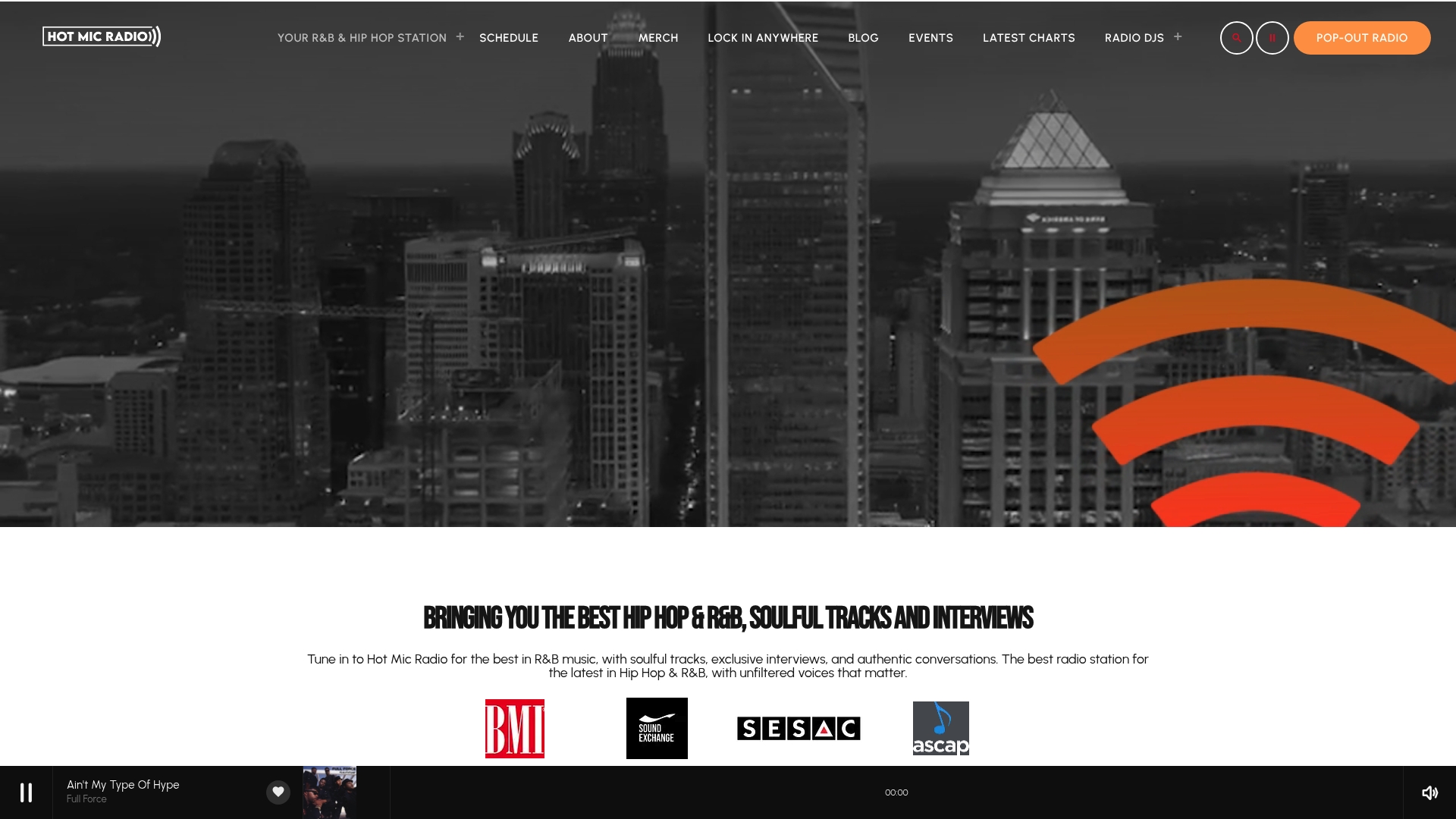
Whether you are promoting an independent artist or running a full label campaign, Hot Mic Radio connects you to an audience that is engaged, genre-loyal, and ready to discover what’s next. From indie Hip-Hop placements to curated R&B programming, we have the channels and the community to make your campaign count. Tune in, turn it up, and let’s get your music to the people who need to hear it.
FAQ
What channels work best to reach Black music audiences?
Radio reaches 92% of Black consumers and drives the highest brand loyalty. Audiomack and podcast platforms are strong secondary channels, especially for Hip-Hop and R&B campaigns.
Why does cultural authenticity matter in Black music marketing?
Black audiences recognize performative campaigns quickly. Partnerships, messaging, and spokespeople that lack genuine cultural connection risk backlash that outweighs any promotional gain.
How do radio personalities help promote music to Black audiences?
Radio personalities serve as trust bridges, delivering higher brand recall than algorithmic platforms because listeners have built long-term emotional connections with their voices.
What role do podcasts play in reaching Black Hip-Hop and R&B fans?
Heavy Black podcast listening grew 135% in five years. Black listeners are also 32% more likely to engage with content hosted by familiar radio personalities, making cross-platform campaigns especially effective.
How can marketers build lasting loyalty with Black music communities?
Direct-to-fan platforms that give audiences a sense of ownership and belonging create superfans who promote organically. Sustained, year-round presence outperforms single-moment viral campaigns every time.


Post comments (0)