

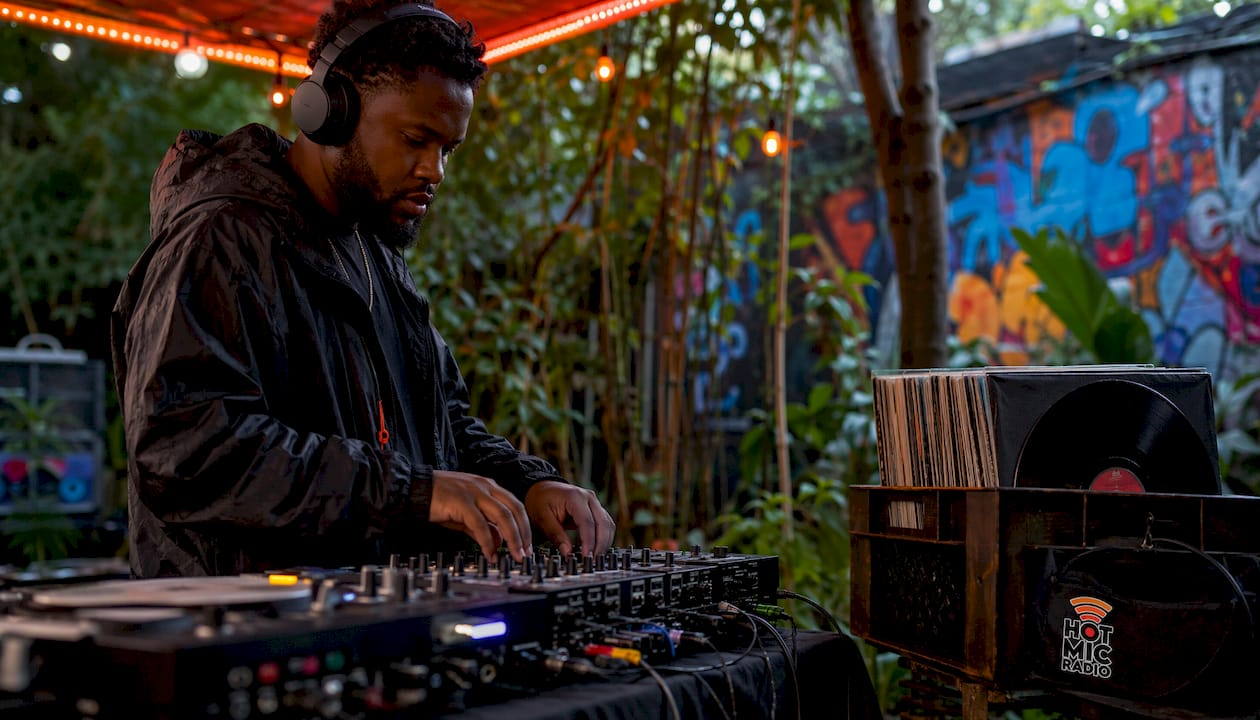
Sampling is the engine of hip hop. It is the practice of lifting a recorded audio fragment and transforming it into the rhythmic foundation, melodic hook, or cultural commentary of an entirely new track. Roughly 32% of the top 100 hip-hop songs contained at least one sampled element in 2019, which tells you this is not a stylistic quirk. It is the genre’s core creative language.
Here is what sampling actually does in hip hop:
-
Rhythmic foundation: Drum breaks and percussion loops give a track its pulse, the structural backbone producers build everything else around.
-
Melodic hook: A lifted chord stab, bass line, or vocal phrase becomes the emotional center of a new song.
-
Texture and atmosphere: Surface samples add sonic color, depth, and mood without carrying the main groove.
-
Cultural quotation and commentary: Reusing a James Brown shout or a soul vocal connects the new track to a lineage, making a statement about where the music comes from.
-
Production shorthand: A well-chosen sample can communicate an entire sonic world in two bars, doing in seconds what a full arrangement might take minutes to build.
The legal pivot that changed everything came in 1991 with Grand Upright Music, Ltd. v. Warner Bros. Records Inc. — the Biz Markie case — which ended the era of unlicensed sampling and made clearance the industry standard. Understanding the role of sampling in hip hop means understanding all three dimensions: the creative, the historical, and the legal.
Table of Contents
-
Copyright, lawsuits, and clearance basics in the United States
-
What we’re hearing at Hotmicradio: a sampling listening guide
Where did sampling in hip hop actually come from?
The story starts before hip hop existed as a named genre. Experimental composers in the mid-20th century, particularly those working in the musique concrète tradition, were already splicing and manipulating recorded tape to create new sonic textures. That spirit of treating recordings as raw material rather than finished product traveled, through many hands, into the Bronx.

From the Bronx block party to the studio

DJs in the South Bronx used two turntables to isolate and extend the “break” — the percussion-heavy passage in a funk or soul record where the band drops out and the drummer goes in. Kool Herc pioneered this technique at block parties in the early 1970s, looping breaks from records by James Brown and others to give dancers a continuous rhythmic canvas. MCs freestyled over the top. That live, turntable-based practice was the first form of sampling in hip hop, and it set the template for everything that followed.

The leap from live turntablism to studio production happened when affordable digital samplers arrived. Before those machines, producers either played live or worked with expensive, specialized gear.
The hardware that changed everything
| Era | Device / Technique | Creative effect |
|---|---|---|
| Early 1970s | Turntable break-looping (Kool Herc) | Extended drum breaks for live performance |
| 1970s–1984 | Fairlight CMI | First digital sampler; expensive, studio-only |
| 1987 | E-mu SP-1200 | Gritty, lo-fi chop; became the sound of golden-era hip hop |
| late 1980s onward | AKAI MPC series | Pad performance, swing quantization, longer loops |
| 1990s–present | DAWs (Ableton Live, FL Studio) | Unlimited tracks, time-stretching, plugin integration |
The Fairlight CMI was a landmark but priced out of reach for most producers. The E-mu SP-1200, released in 1987, democratized the chop. Its 12-bit sampling gave hip hop that warm, slightly crunchy texture that producers still chase today. Then the AKAI MPC arrived and changed the game again: pads you could finger-drum, swing timing you could dial in, and enough memory to sequence full arrangements. Producers stopped thinking of samples as loops to be played back and started treating them as instruments to be performed.
How do producers actually sample? Techniques and tools
Sampling is not a single action. It is a set of techniques, each producing a different musical result, and the choice of technique shapes both the sound and the legal exposure.
Core sampling techniques
Chopping is the most foundational move: slicing a recorded phrase into individual hits or fragments, then rearranging them in a new sequence. A four-bar drum break becomes eight individual snare hits, each assigned to a pad on the MPC, then reprogrammed into a completely new groove.
Looping takes a phrase and repeats it continuously, usually two or four bars, to create a hypnotic rhythmic or harmonic bed. Early hip hop leaned heavily on loops; post-1991 clearance costs pushed producers toward shorter, more transformed uses.
Pitch-shifting and time-stretching let producers change the key or tempo of a sample without changing the other. Slow a soul vocal down and it becomes eerie; pitch it up and it turns into something bright and chipmunk-soul adjacent, which Kanye West made a signature move on The College Dropout.
Interpolation is the legal workaround that became standard after clearance costs spiked: instead of using the original recording, a producer re-records the melody or riff with new musicians. You still need to clear the publishing rights, but you avoid the master recording fee entirely.
Granular sampling chops audio into tiny grains (sometimes milliseconds long) and reassembles them into textures that bear little resemblance to the source. It is more common in experimental and lo-fi production than in mainstream hip hop.
Sample types and what they mean creatively and legally
Musicologists classify samples into three functional categories, and the distinction matters for both creative decisions and clearance strategy:
| Sample type | Musical function | Typical clearance risk |
|---|---|---|
| Structural | Rhythmic backbone; the loop that carries the track | High — foregrounded, continuous use |
| Surface | Textural color, atmosphere, brief ornamental hit | Moderate — depends on prominence |
| Lyric | Vocal phrase or sung hook from the original | High — recognizable, often the emotional center |
A structural sample that runs through an entire track is going to attract more legal scrutiny than a single snare hit buried in a mix. Knowing the difference helps producers make smarter creative and business decisions before they fall in love with a loop they cannot afford to clear.
Tools producers use today
The AKAI MPC line remains a studio staple, now available as standalone units with touchscreens and built-in sample libraries. Ableton Live is the DAW of choice for producers who want deep sample manipulation alongside live performance. FL Studio is popular for its pattern-based workflow and affordable entry point. For cleared samples, platforms like Tracklib offer a catalog of original recordings that producers can license directly, removing the clearance headache from the creative process.
Who built sampling culture? Pioneers and landmark examples
Kool Herc: the originator
Clive Campbell, known as Kool Herc, did not use a sampler. He used two copies of the same record and a mixer. At 1520 Sedgwick Avenue in the Bronx in 1973, he isolated the break in Babe Ruth’s “The Mexican” and looped it live between two turntables. That technique, which he called the Merry-Go-Round, is the direct ancestor of every drum loop in hip hop history. Herc did not produce records; he invented the concept.
Marley Marl: the studio pioneer
Marley Marl discovered by accident in 1984 that he could sample individual drum sounds from existing records and reprogram them into new patterns. That discovery, made while working with MC Shan, broke hip hop production wide open. Instead of needing a live drummer, you could build a kit from the best snare on a James Brown record, the best kick from a Larry Graham bassline, and sequence them into something entirely new. His work with the Juice Crew throughout the late 1980s defined the sample-based drum programming that became golden-era hip hop’s signature sound. Check out the classic hip hop archives to hear that era in full.
Biz Markie: the legal turning point
Biz Markie’s 1991 track “Alone Again” sampled Gilbert O’Sullivan’s “Alone Again (Naturally)” without clearance. The resulting lawsuit, Grand Upright Music, Ltd. v. Warner Bros. Records Inc., ended with a federal judge quoting the Bible and referring the case to the U.S. Attorney’s office. The ruling was blunt: get a license or do not sample. Every producer working after 1991 had to reckon with that decision.
J Dilla: the master of feel
James Yancey, known as J Dilla, redefined what a sampled beat could feel like. Working primarily on the AKAI MPC3000, he turned off the quantize function and programmed beats with deliberate micro-timing imperfections that made loops breathe and sway rather than march. His Donuts album (2006), assembled largely from 45 rpm soul and funk records, is essentially a masterclass in what chopping and resequencing can do when guided by a producer with extraordinary ears. The swing is not sloppy; it is intentional, and it sounds like nothing else.
Why sampling matters culturally and artistically
Sampling is not just a production technique. It is a form of cultural archaeology), a way of reaching into recorded history and pulling forward the sounds that shaped Black American music. When a producer loops a Curtis Mayfield string arrangement or a Sly Stone bass riff, they are not stealing. They are citing, the way a scholar cites a text, and they are introducing that music to an audience that might never have found it otherwise.
Sampling stat worth knowing: According to Tracklib analytics, roughly 32% of the top 100 hip-hop songs contained at least one sampled element in 2019. That is not a niche practice. That is the mainstream.
The practice preserves funk, soul, and jazz lineages by weaving them into contemporary production. Tricia Rose and other scholars of Black music have argued that sampling creates a direct link between hip hop and the African American musical traditions that preceded it, a continuous conversation across decades. When Kendrick Lamar builds a track around a jazz sample, he is not just making a sonic choice. He is making a cultural statement about continuity and respect.
Postmodern scholars describe this as “transformative appropriation,” and it is what separates sampling from simple copying. The source material is transformed, recontextualized, and given new meaning in a new context. That is the artistic argument, and it is a strong one. The legal system has been slower to agree, but the cultural case has always been clear.
Hip hop’s connection to community and cultural identity runs directly through its sampling practice. The genre does not just reference the past; it builds the present out of it.
Copyright, lawsuits, and clearance basics in the United States
The U.S. legal landscape around sampling is shaped by three decisions every producer needs to know.
The three cases that define the rules
Grand Upright Music, Ltd. v. Warner Bros. Records Inc. (1991) — the Biz Markie case — established that unlicensed sampling is copyright infringement, full stop. The “ask first” era began here.
Bridgeport Music, Inc. v. Dimension Films (2004) went further. The Sixth Circuit ruled that sampling even a single note from a sound recording without a license constitutes infringement. No de minimis exception for sound recordings. That ruling covers master recordings specifically and remains the controlling precedent in the Sixth Circuit.
Campbell v. Acuff-Rose Music, Inc. (1994) gave producers a partial lifeline. The Supreme Court ruled that parody can qualify as fair use even when it is commercial, and that courts must look at the transformative nature of the use. This case opened the door for transformative-use arguments, though it does not guarantee protection.
Master rights vs. publishing rights
Clearing a sample means clearing two separate rights. The master recording is owned by whoever owns the original recording, usually a label. The publishing rights cover the underlying composition, owned by the songwriter or their publisher. Both require separate licenses, separate negotiations, and separate fees. Interpolation sidesteps the master fee but still requires a publishing license.
Sample clearance checklist
-
Identify the sample’s master rights holder (usually the label that released the original recording).
-
Identify the publishing rights holder (the songwriter’s publisher or administrator).
-
Contact both rights holders before recording or distributing the track.
-
Get written license agreements that specify the use, territory, and royalty split.
-
Budget for both fees upfront; retroactive licensing after release is almost always more expensive.
-
If budget is tight, consider interpolation or a cleared-sample platform like Tracklib.
Know your rights before you release. Distributing a track with an uncleared sample exposes you to retroactive royalty demands, injunctions, and takedowns. Pre-clearance is not optional; it is the cost of doing business with someone else’s recording.
For a deeper look at how copyright intersects with music video distribution, the copyright essentials guide for DJs covers the audiovisual side of the same clearance issues.
This article is general information, not legal advice. Consult a qualified music attorney for guidance specific to your situation.
How sampling is used in contemporary hip hop
The post-clearance era changed not just the legal process but the sound of hip hop itself. Producers in the early 1990s layered samples densely, sometimes dozens per track, because the legal and financial consequences were still unclear. After Grand Upright and Bridgeport, that approach became financially prohibitive for most artists. The result was sparser arrangements, more interpolation, and a shift toward in-house replay.
Current trends shaping the practice
The 2010s and 2020s brought a nostalgia wave that Tracklib’s State of Sampling reporting documented clearly: producers began sampling from more recent decades, pulling from 1980s and 1990s R&B and hip hop rather than exclusively from 1960s and 1970s soul and funk. That shift reflects both changing tastes and the fact that older recordings often carry higher clearance costs due to their iconic status.
Cleared-sample platforms have grown significantly. Services that offer pre-licensed recordings let producers build tracks without the clearance negotiation, trading some creative freedom for legal certainty. That tradeoff is real but often worth it for independent artists without label resources.
The debate around AI-generated audio that mimics vintage recordings is the newest front. If a producer uses an AI tool to generate something that sounds like a 1970s funk break, does that require clearance? The legal answer is unsettled, and the cultural argument about authenticity versus crate-digging is just getting started.
One concrete example of navigating these tradeoffs: producers working in the lo-fi hip hop space often use cleared drum breaks and public-domain recordings specifically to avoid clearance costs while maintaining the aesthetic of sample-based production. It is a workaround, but it shows how the legal environment actively shapes creative choices.
How to start sampling: a practical guide for new producers
Getting into sampling does not require a massive budget. It requires the right tools, a clear workflow, and an understanding of where the legal lines are before you fall in love with a loop you cannot afford.
Starter gear and software
-
Turntable and audio interface: A basic belt-drive turntable plus a USB audio interface lets you rip vinyl directly into your DAW.
-
Entry-level sampler: The AKAI MPC One or the Roland SP-404 MK2 are both approachable, capable, and used by working producers.
-
DAW: Ableton Live’s Intro tier or FL Studio’s Producer Edition cover everything a beginner needs for chopping, sequencing, and arranging.
-
Cleared-sample library: Tracklib offers original recordings with transparent licensing fees, so you can build tracks without the clearance guesswork.
A 6-step production workflow
-
Crate-dig: Search vinyl, streaming, or cleared-sample platforms for source material. Listen for interesting breaks, chords, or vocal phrases.
-
Select and capture: Record or import the sample into your DAW or sampler.
-
Chop: Slice the sample into usable fragments. Isolate the drum hits, the melodic phrase, or the texture you want.
-
Sequence: Arrange the chopped pieces into a new pattern. This is where the composition happens.
-
Arrange: Build the full track structure around your sample, adding bass, melody, and additional layers.
-
Pre-clear: Before you distribute or pitch the track commercially, identify the rights holders and begin the clearance process.
Pro Tip: If you are not sure whether your use qualifies as transformative, lean toward interpolation instead of direct sampling. Re-recording the melody with new musicians still requires a publishing license, but it eliminates the master recording fee and gives you more negotiating room.
Legal dos and don’ts
-
Do identify both master and publishing rights holders before release.
-
Do use cleared-sample platforms when budget is tight.
-
Do not assume a short sample is automatically safe — Bridgeport eliminated the de minimis defense for sound recordings in the Sixth Circuit.
-
Do not release a track commercially without written clearance in hand.
For producers who also create music videos, understanding music video copyright basics is the natural next step after clearing the audio.
What we’re hearing at Hot Mic Radio: a sampling listening guide
At Hot Mic Radio, sampling is not an abstract concept. It is the sound we play every day. Our DJs and curators have spent years digging through the same crates that shaped hip hop, and we hear the lineage in every track we spin. Here is a short listening guide that puts the techniques from this article into your ears.
Tracks that show you what sampling does
“Impeach the President” — The Honeydrippers (1973): This is the source. The drum break from this record has been sampled hundreds of times. Listen to it once and you will recognize it immediately from dozens of hip hop tracks. It is the structural sample in its purest form.
“The Breaks” — Kurtis Blow (1980): One of the earliest commercially released hip hop records to build its groove around sampled and replayed breaks. A direct line from Kool Herc’s block parties to the record store.
“Shook Ones Pt. II” — Mobb Deep (1995): Built around a piano loop from a jazz record, filtered and chopped into something menacing. A textbook surface sample elevated into a structural one by sheer repetition and placement.
“Donuts (Outro)” — J Dilla (2006): Dilla’s entire Donuts album is a sampling masterclass, but the outro distills it. Hear how the micro-timing makes the loop feel alive rather than mechanical.
“N.Y. State of Mind” — Nas (1994): DJ Premier’s production chops a jazz piano loop and layers it with a drum break. The sample is transformed enough to feel original but carries the weight of its source.
Dig deeper into these eras and sounds through the hip hop archives at Hot Mic Radio, where our curated sets trace sampling’s evolution from the Bronx to the present. For the soul and R&B source material that producers have been mining for decades, the R&B archives are exactly where you want to be.
Key Takeaways
Sampling is hip hop’s foundational creative tool, and understanding its history, techniques, and legal requirements is non-negotiable for anyone who wants to work seriously in the genre.
| Point | Details |
|---|---|
| Sampling is hip hop’s core language | Roughly 32% of the top 100 hip-hop songs contained at least one sampled element in 2019, confirming it as mainstream practice. |
| Three sample types shape creative and legal strategy | Structural, surface, and lyric samples each carry different musical functions and clearance risk levels. |
| The 1991 Biz Markie ruling changed everything | Grand Upright made pre-clearance the industry standard; releasing without a license risks injunctions and retroactive fees. |
| Hardware shaped the sound | The AKAI MPC and E-mu SP-1200 transformed sampling from passive reuse into active, pad-based composition. |
| Clear both master and publishing rights | Every sample requires two separate licenses; interpolation avoids the master fee but still needs a publishing deal. |
Our take on sampling and why it still hits different
We have been living in sample-based music at Hot Mic Radio since day one, and here is the honest truth: the conversation around sampling has been framed wrong for decades. The debate gets stuck on “is it stealing?” when the more interesting question is “what does it mean?” Every producer who digs a crate and lifts a break is making an argument about musical history, about what deserves to be heard again, and about who gets credit for the sounds that built a culture.
The legal system caught up with sampling in 1991 and has been tightening ever since. That is a real constraint, and we are not dismissing it. But the cultural argument for sampling has never been stronger. The practice preserves Black musical lineages that might otherwise fade from mainstream consciousness. It creates intergenerational conversations in sound. And when it is done with craft, the way J Dilla did it or the way Marley Marl did it, it produces music that no amount of original composition could replicate, because the history is literally in the audio.
What gets underestimated is how much skill the best sampling requires. Choosing the right two bars out of a four-minute record, knowing how to chop it so the timing breathes, understanding what key it is in and how to build around it — that is musicianship. The MPC is an instrument. The crate is a library. And the producer who knows both is doing something genuinely creative, not just borrowing.
Tune into our classic hip hop programming and listen with fresh ears. You will hear the samples. You will hear where they came from. And you will understand why this practice is the heartbeat of the culture.
Primary sources and further reading
These are the core sources behind this article. Each one is worth your time if you want to go deeper.
-
A Typology of Sampling in Hip-Hop — Amanda Sewell’s musicological framework for classifying structural, surface, and lyric samples. The clearest academic tool for understanding how sampling functions musically and legally.
-
The Endtroducing of Sampling: A Comparative Study — Valparaiso University study that includes the Tracklib analytics showing 32% of top hip-hop songs contained sampled elements in 2019.
-
Behind the Beat: Technical and Practical Aspects of Instrumental Hip-Hop Composition — MA thesis covering the AKAI MPC, E-mu SP-1200, and how hardware shaped production practice.
-
Sampling: The Foundation of Hip Hop — TeachRock — Curriculum resource grounding sampling in Bronx DJ culture and the transition from live performance to studio production.
-
Sampling in Hip-Hop: Creative Genius or a Total Flop — Washington University — Senior capstone thesis examining sampling as cultural preservation of Black musical traditions, with analysis of legal and ethical dimensions.
-
Tracklib State of Sampling 2020 — Industry report documenting shifts in sample sources, clearance behavior, and the rise of cleared-sample platforms through the 2010s and 2020s.
-
Sampling (music) — Wikipedia) — Solid overview of device history, technique names, and the cultural archaeology framing; useful as a starting reference with links to primary sources.
-
Hot Mic Radio Hip Hop Archives — Curated DJ sets and programming that trace sampling’s evolution across hip hop eras; the best place to hear the techniques described in this article in action.


Post comments (0)