


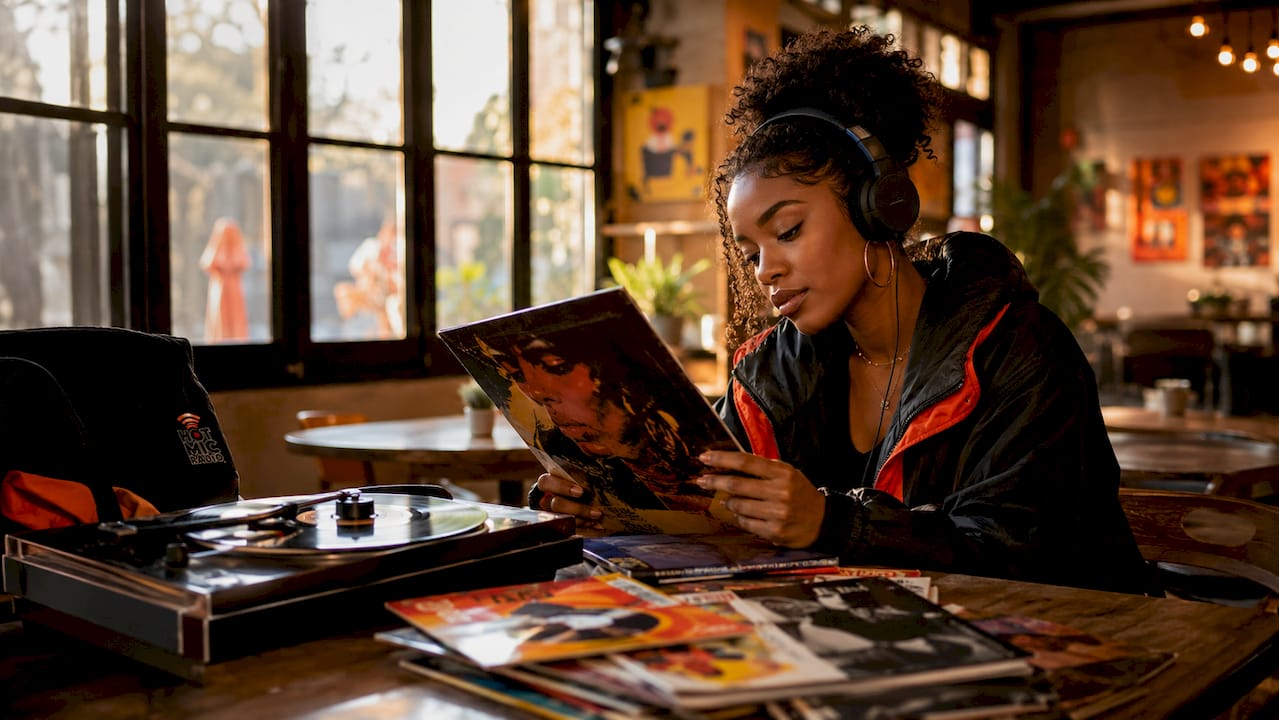
Global R&B influence is defined as the process by which rhythm and blues, rooted in African American musical traditions, reshapes popular music cultures across every continent through emotional storytelling, vocal technique, and genre fusion. R&B’s core power has always been its emotional directness. That quality travels. It does not need translation. From Seoul to Lagos to São Paulo, listeners connect with the same vulnerability that made Marvin Gaye and Aretha Franklin untouchable. What we are watching right now is that connection going global at a speed the music industry has never seen before, fueled by streaming era digital discovery and a generation of artists who grew up with no geographic limits on what they could hear or who they could become.
What is global R&B influence, and how does it spread?
R&B spreads globally because its emotional core is universal. Grief, desire, joy, and longing do not belong to one culture. They belong to every human being who has ever felt something too big for words. R&B gives those feelings a structure, a melody, and a beat. That is why the genre keeps finding new homes.
The mechanism behind the spread is worth understanding clearly. Streaming platforms and social media since 2015 have accelerated R&B’s global reach by enabling independent artists to bypass traditional labels and connect with international audiences faster than any prior industry model allowed. That shift is enormous. An artist recording in Accra or Busan no longer needs a major label deal to reach a listener in Chicago or London.

R&B also spreads because it is structurally generous. The genre absorbs outside influences without losing its identity. A four-bar chord progression, a melismatic vocal run, a confessional lyric. These elements can sit comfortably inside a Dancehall rhythm or an Amapiano groove. That flexibility is not accidental. It is the reason R&B has outlasted every trend that was supposed to replace it.
Hot Mic Radio tracks this spread in real time. Our programming covers the full arc from classic R&B roots to the newest global hybrids, because we believe the culture deserves a platform that honors where it came from and where it is going.
How do digital platforms fuel R&B’s worldwide reach?
Digital platforms did not just expand R&B’s audience. They restructured how the genre grows. Before streaming, geographic distribution was the chokepoint. A record had to physically exist in a market for that market to discover it. Streaming removed that wall entirely.
The results show up in listening behavior. R&B songs incorporating Afro-fusion elements like Afrobeats, Amapiano, and Dancehall have seen listener growth in North America and Europe, driven by streaming algorithms that reward engagement over geography. That means a track blending Lagos percussion with Atlanta vocal production can land on a playlist in Stockholm the same week it drops.
Social media adds another layer. Short-form video platforms turn R&B moments into cultural events. A vocal run goes viral. A lyric becomes a caption. An artist with no label and no radio play builds a fanbase of hundreds of thousands before a single industry executive notices. This is how independent artists reach global audiences faster than the traditional model ever allowed.
Streaming algorithms also drive genre hybridization. When listeners who love Burna Boy also stream SZA, the algorithm connects those worlds. Over time, artists respond to that data. They make music that lives in the space between genres because that is where the audience already is.
- Follow curated “Global R&B” playlists on major streaming platforms to catch hybrid sounds before they hit mainstream rotation.
- Use the “fans also like” and radio features on streaming apps to move from a known artist into unfamiliar regional R&B scenes.
- Check social media discovery pages weekly. New R&B artists often break there before landing on any editorial playlist.
- Tune into Hot Mic Radio’s emerging artist programming to hear independent voices pushing the genre forward right now.
Pro Tip: Save a “Global R&B Discovery” playlist and add one new artist from a different country every week. Within a month, you will have a map of where the genre is heading next.
How does cross-cultural fusion shape regional R&B sounds?
R&B does not arrive in a new culture and stay the same. It lands, listens, and transforms. R&B serves as a cultural language that adapts across Europe, Asia, Africa, and Latin America without losing its core purpose of emotional storytelling. That adaptability is what makes the genre’s global influence a living, breathing thing rather than a one-way export.
The fusion process works in both directions. In East Asia, American R&B adoption triggers a cyclical identity revival process where initial mimicry evolves into genuine local cultural reinvention within the R&B framework. Korean artists absorbed American R&B vocal techniques and then layered them over traditional harmonic sensibilities and K-pop production aesthetics. The result is something new. It is not American R&B. It is not traditional Korean music. It is a third thing entirely, and it is resonating with audiences worldwide.
The same dynamic plays out in West Africa with Afro-R&B and across Latin America with Latin R&B. Each region brings its own rhythmic foundation, its own lyrical traditions, and its own emotional priorities. R&B provides the frame. The region fills it with local color.
| Region | Subgenre | Key influences | Signature sound |
|---|---|---|---|
| West Africa | Afro-R&B | Afrobeats, highlife, traditional percussion | Polyrhythmic grooves with melismatic vocals |
| East Asia | Korean R&B | K-pop production, traditional harmony | Layered harmonics, introspective lyrics |
| Latin America | Latin R&B | Reggaeton, salsa, bolero | Syncopated rhythm with confessional storytelling |
| Caribbean | Dancehall R&B | Dancehall riddims, soca | Uptempo bass lines with smooth vocal delivery |

This table is not just a catalog. It shows that R&B’s global influence is a two-way exchange. Every regional reinterpretation feeds back into the global conversation and changes what R&B sounds like everywhere else.
What emerging subgenres and artists are driving R&B’s global evolution?
Alternative R&B is the subgenre doing the most work right now. Characterized by introspective lyrics, ethereal production, and unconventional song structures, Alternative R&B has introduced electronic elements to a global audience that was ready for something more complex than radio-friendly hooks. SZA and The Weeknd are the clearest examples of this subgenre crossing over from cult status to genuine mainstream dominance.
But the story goes wider than those two names. Tems brought Nigerian vocal tradition into an R&B framework and landed on global charts without softening her sound. Kehlani built a devoted international following through emotional rawness and consistent independent output. These artists are not following a formula. They are writing new ones.
The hybrid sounds driving R&B’s evolution right now include:
- Alternative R&B: Ethereal production, electronic textures, confessional lyricism. SZA’s SOS is the benchmark.
- Afro-R&B: West African rhythmic foundations fused with R&B vocal and harmonic structures. Tems and Wizkid operate here.
- Amapiano-influenced R&B: South African log drum bass lines meeting smooth R&B melodies. This is the sound gaining the most ground in 2026.
- Latin R&B: Reggaeton and bolero traditions blended with contemporary R&B production. Bad Bunny’s R&B-adjacent moments point toward where this goes next.
Cross-generational collaborations between veteran and emerging artists preserve genre roots while reaching younger global audiences. Remix EPs and shared tour slots are not just marketing moves. They are how the genre passes its DNA forward without freezing in place.
The current global R&B surge emphasizes genre fluidity where traditional soul vocals mix with regional rhythmic foundations. This approach creates new sonic architectures rather than simply reviving old ones. That distinction matters. Nostalgia is a lane. Innovation is a highway.
Pro Tip: Search “Amapiano R&B” and “Afro soul” on your streaming platform right now. You will find a catalog of tracks that sound like the future of the genre, and most of them dropped in the last 18 months.
How do live performances and festivals deepen R&B’s global reach?
The live experience is where R&B’s global influence becomes physical. Boutique festivals in emerging markets are replacing grueling stadium tours for global R&B artists, and the trade-off works in everyone’s favor. Artists build deeper connections. Audiences get immersive, culturally specific experiences. The music lives in a context that amplifies its meaning.
The Saint Lucia Jazz and Arts Festival is a strong example. It draws international R&B and jazz artists into a Caribbean setting where the music interacts with local culture, local food, and local rhythm. That interaction changes how the music lands. A song about longing hits differently when you are surrounded by the ocean at sunset with a crowd that feels every word.
Narrative-driven stage design is another shift worth noting. Top R&B artists now build shows around visual storytelling, not just setlists. Beyoncé’s Renaissance tour set the standard for what a culturally immersive R&B performance can look like at scale. Smaller artists are applying the same philosophy at boutique festival level, creating experiences that audiences remember and talk about long after the last note.
| Format | Audience size | Cultural depth | Artist-fan connection | Career sustainability |
|---|---|---|---|---|
| Stadium tour | Very large | Low | Distant | High revenue, high cost |
| Boutique festival | Intimate | High | Direct | Lower cost, stronger loyalty |
| Destination festival | Medium | Very high | Immersive | Long-term brand building |
The data is clear. Destination festivals provide culturally immersive experiences that stadiums simply cannot replicate. For R&B artists building global careers, the boutique festival circuit is not a step down. It is a smarter path.
Key Takeaways
R&B’s global influence is driven by emotional authenticity, digital access, and the genre’s ability to absorb and reflect local cultures without losing its core identity.
| Point | Details |
|---|---|
| Emotional universality | R&B’s core themes of love, loss, and identity translate across every culture and language. |
| Streaming as accelerator | Digital platforms since 2015 have broken geographic barriers, letting independent artists reach global audiences instantly. |
| Cross-cultural fusion | Afro-R&B, Korean R&B, and Latin R&B each blend local traditions with R&B structure, creating genuinely new sounds. |
| Alternative R&B leads globally | Artists like SZA, The Weeknd, and Tems show how introspective, genre-fluid R&B dominates international charts. |
| Boutique festivals build loyalty | Culturally immersive destination festivals create deeper artist-fan connections than large stadium tours. |
The wave is not crashing. It is building.
Here is what we have learned from years of living inside this music: R&B does not go global by accident. It goes global because it tells the truth. Every time a new region picks up the genre and makes it their own, they are not copying something. They are recognizing something. They are saying, “This is how we feel too.”
The thing that concerns us is the pressure on artists to chase the algorithm rather than chase the feeling. R&B’s sustained global relevance depends on emotional authenticity combined with the ability to innovate. You cannot have one without the other. Pure nostalgia becomes a museum. Pure innovation without soul becomes noise.
What gives us real confidence is the cross-generational energy happening right now. Cross-generational collaborations are reinforcing R&B’s foundation while widening its international appeal. When a veteran artist and an emerging voice share a stage or a studio, the genre gets both its memory and its future in the same room. That is how you build something that lasts.
R&B is also doing something that music as a vehicle for identity rarely does at this scale. It is letting every culture that touches it keep a piece of itself. Korean R&B sounds Korean. Afro-R&B sounds West African. That is not dilution. That is the genre at its most powerful. The future of R&B is not one sound. It is a conversation between many sounds, all of them honest, all of them felt.
— Hot Mic Radio Team
Hot Mic Radio: your home for global R&B, live and on demand
R&B’s global story is best heard, not just read about. Hot Mic Radio is built for exactly that. Our R&B archives cover the full spectrum, from Motown classics and Southern soul to Alternative R&B, Afro-R&B, and indie sounds that have not hit mainstream rotation yet.
We feature live DJ shows that bring the energy of the culture directly to your speakers, plus curated programming spotlighting regional scenes and independent artists who got next. Whether you want to go deep on Hip-Hop and R&B history or catch the newest global hybrid sounds as they drop, Hot Mic Radio has a show for that mood. Tune in, turn it up, and let the music take you somewhere real.
FAQ
What is global R&B influence in simple terms?
Global R&B influence is the process by which rhythm and blues reshapes music cultures worldwide through emotional storytelling, vocal technique, and genre fusion. It operates through streaming platforms, cross-cultural collaboration, and local reinterpretation.
How does R&B influence pop music globally?
R&B shapes pop music by introducing melismatic vocal styles, confessional lyricism, and groove-based production that mainstream pop artists adopt and adapt. Artists like The Weeknd and Beyoncé have made R&B production the dominant sound in global pop.
What are the main R&B subgenres driving global trends?
Alternative R&B, Afro-R&B, Latin R&B, and Amapiano-influenced R&B are the subgenres with the strongest global momentum in 2026. Each blends regional musical traditions with R&B’s emotional and structural core.
Why does R&B resonate across different cultures?
R&B resonates globally because its core themes, including love, grief, identity, and desire, are universal human experiences. The genre’s structural flexibility allows it to absorb local rhythms and languages without losing its emotional directness.
How has streaming changed R&B’s global reach?
Streaming platforms have dismantled geographic and industry barriers since 2015, allowing independent R&B artists to reach international audiences without traditional label distribution. Algorithms that reward engagement over geography accelerate cross-cultural discovery.

Post comments (0)