


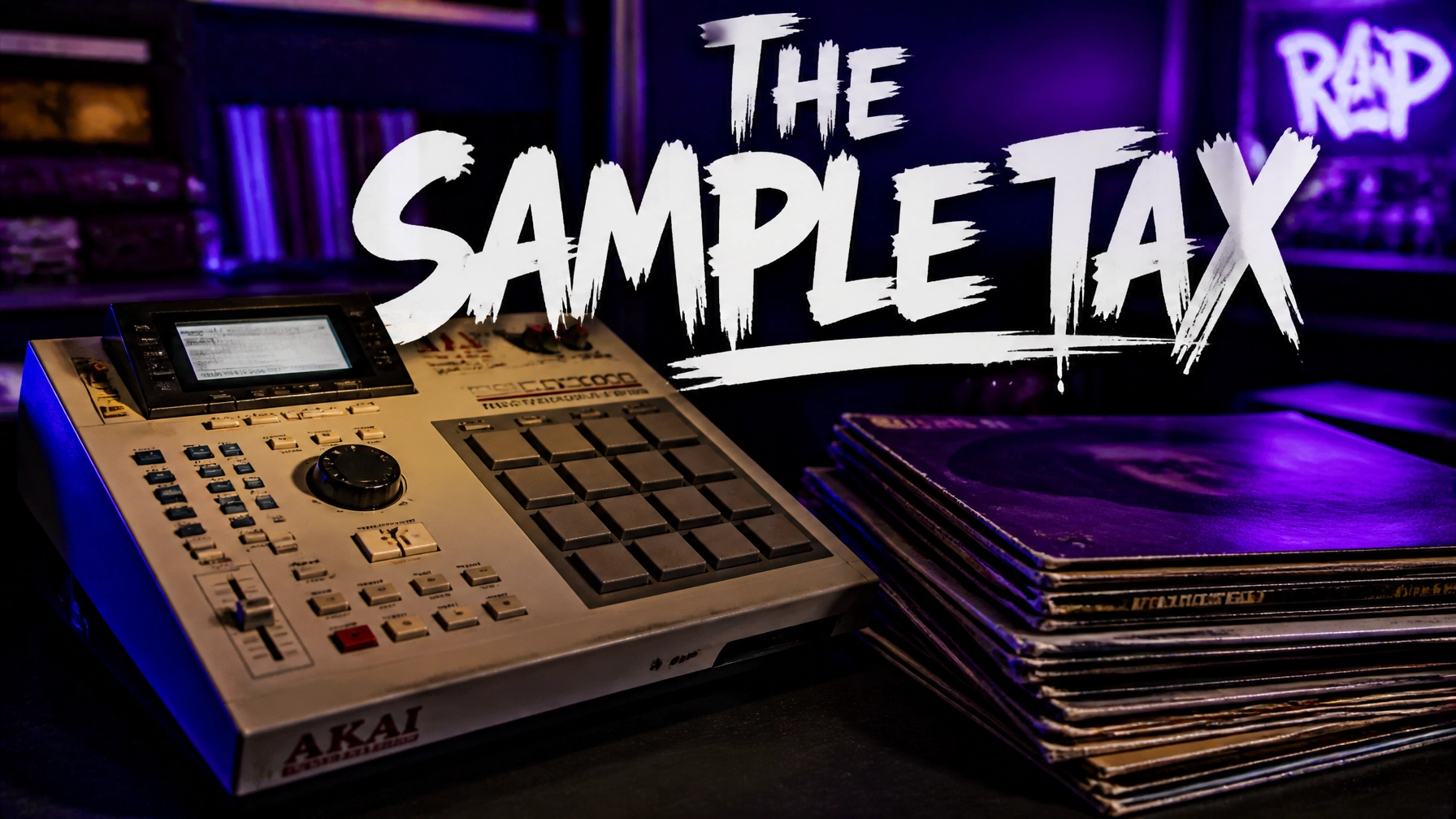
If you’ve been scrolling through Twitter or catching the latest industry interviews lately, you’ve probably heard a common complaint from the new generation of R&B and Hip Hop artists: the music isn’t “musical” anymore. People miss the soul, the bridges, and that thick, lush sound that dominated the 90s and early 2000s. But there’s a massive, expensive reason why your favorite new artists aren’t just “flipping a classic” like they used to.
Welcome to the era of the Sample Tax.
At Hot Mic Radio, we live and breathe the culture, from the freshest beats on Fresh Out the Lab to the unfiltered conversations that define the streets. Lately, those conversations have turned toward the boardroom. Sampling, once the bedrock of Hip Hop creativity, has become a luxury item. What used to be a creative nod to the legends has turned into a high-stakes financial hurdle that is effectively stifling the very genres we love.
The $40,000 “Entry Fee”: The Finesse2Tymes Case

Let’s talk about Finesse2Tymes. Recently, the Memphis rapper went viral for a very public rant about trying to clear a sample for his track. He wanted to use a piece of “Notorious Thugs”: the legendary 1997 collab between The Notorious B.I.G. and Bone Thugs-N-Harmony.
The quote he got back? $40,000.
Finesse was hot. He felt like he was being extorted by the OGs. But the reality is even more complicated. Layzie Bone eventually hopped on social media to clarify that Bone Thugs doesn’t even own that master; it’s owned by Bad Boy Records.
When you want to sample a song of that magnitude, you aren’t just paying the artist. You’re paying for the “Sample Tax” levied by the labels and the estates. For a song like “Notorious Thugs,” you have the master owner (Bad Boy/Warner) and then the publishing side, which involves six writers and six different publishers. That’s 12 different hands in the cookie jar before a single stream is even counted. When an artist is asked for $40k upfront, it’s not just a fee: it’s a barrier to entry that most emerging artists simply can’t afford.
The $850,000 Cautionary Tale: Russ and “Losin Control”

If $40,000 sounds steep, look at what happens when you don’t pay the tax upfront. Russ, an artist known for his “DIY” and independent spirit, learned this lesson the hard way with his breakout hit “Losin Control.”
Russ has been incredibly transparent about the fact that he sampled two simple synth chords for that track. He didn’t clear them. Once the song blew up and became a multi-platinum R&B staple, the owners of that original master recording came knocking. Because they owned the master, they had total leverage.
In the end, Russ reportedly had to give up his entire share of the master royalties for that song to settle the dispute. The total loss? An estimated $850,000.
This is the “Sample Tax” at its most lethal. It’s a “success tax.” If your song flops, nobody cares. But the moment you have a hit, the “Big Three” (Sony, Universal, and Warner) will come for their pound of flesh. For Russ, two chords he could have easily replayed on a keyboard ended up costing him nearly a million dollars.
Even the Giants Bleed: Ye’s $438,000 Loss

You would think that someone like Ye (Kanye West), with his billions and his industry stature, would be immune to this. But the Sample Tax doesn’t care about your ego.
Recently, Ye and his team were hit with a $438,000 judgment over an uncleared sample used on “Hurricane” from the Donda album. This wasn’t a negotiated settlement like Russ’s; this was a court award.
When major labels like Sony, Universal, or Warner own the masters, they treat those recordings like real estate. They aren’t just songs; they are assets with appreciating value. When Ye used a piece of someone else’s work without the proper paperwork, the court viewed it as a “theft” of intellectual property.
The legal risk has become so high that many labels won’t even let their artists release a song if it has a sample that isn’t 100% cleared through the legal department first. This is why your favorite R&B artist might tease a snippet on Instagram, but the song doesn’t actually drop for another 18 months. They’re stuck in “Clearance Hell,” trying to negotiate the tax.
Why the “Big Three” Are Tightening the Grip
So why is this happening now more than ever? It comes down to the business of catalogs. We recently covered how T.I. is ending his “King of the South” era with his final album, and we’ve seen countless legends like Lil Wayne and Future selling their publishing for hundreds of millions.
When a major label or a massive investment fund buys a catalog, they need to see a return on that investment. One of the primary ways they make money: besides streaming: is by charging a premium for samples. They are essentially turning the history of R&B and Hip Hop into a subscription service where the “tax” is always rising.
This monopoly on the masters means that the soulful, sampled sound of the 90s is becoming a “premium” aesthetic. Only the artists with major label backing and massive budgets can afford to sound like the legends.
How the Tax Is Killing R&B Creativity
This financial pressure is changing the actual sound of the music. Think about it:
- Shorter Songs: If you have to pay a massive fee and a 50% royalty split for a sample, you’re less likely to write a long, complex song. You want to get in and get out.
- Lack of Bridges: Bridges often require more musicality and sometimes additional samples or interpolations. To save money, artists are sticking to the “Hook-Verse-Hook” formula.
- The Rise of “Type Beats”: Instead of sampling a real record with soul and grit, artists are using royalty-free loops that sound “kind of” like the classics but lack the actual DNA of the culture.
The result? A lot of modern R&B feels thin. It lacks the layers that made the classics feel like a journey. We’re losing the “major city vibes” and soulful tracks that Hot Mic Radio is dedicated to preserving.
The Way Forward for New Artists
If you’re an emerging artist looking to promote your music and get noticed, you have to be smarter than the generation before you.
- Re-play, Don’t Rip: If you love a melody, hire a session musician to replay it. It’s often cheaper to clear the composition (the notes) than the master (the actual recording).
- Sample the Indies: Look for independent artists and smaller catalogs. They are often more willing to negotiate a fair deal because they actually want the exposure.
- Clear it Early: Don’t wait until the song is a hit to call the lawyers. By then, you have zero leverage, and they can take 100% of your royalties.
The Sample Tax is real, and it’s expensive. But the culture has always been about making something out of nothing. We might be in a corporate era, but the “unfiltered voices that matter” will always find a way to get the message across: even if they have to pay a little extra for the beat.
Keep it locked to Hot Mic Radio for more on the business of the beats and the truth behind the tracks.


Post comments (0)