


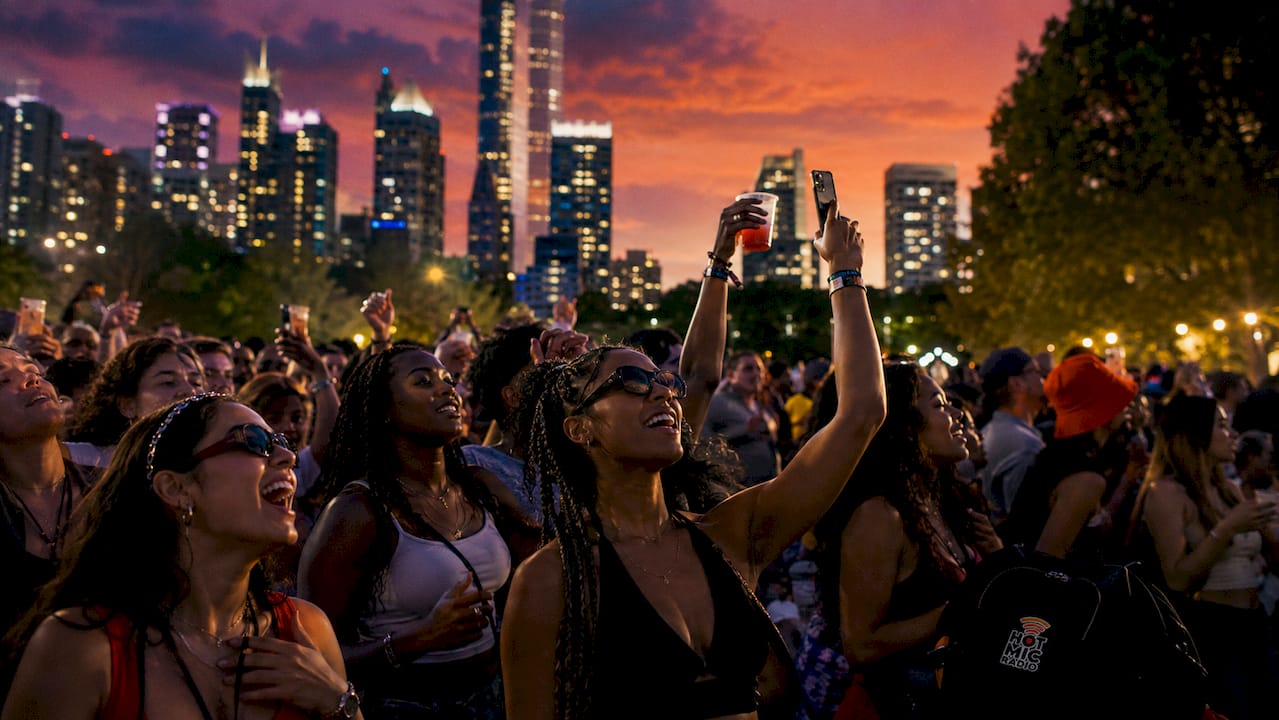
A live music show is defined as a planned musical performance delivered in real time to an audience, creating a shared auditory experience between performers and listeners. The industry standard term is “concert,” though “show,” “gig,” and “festival” all describe specific formats within this broader category. Whether you’re catching a rapper at a 500-seat club or streaming a headliner from your couch, the core experience stays the same: a performer communicating outward to a focused audience in the moment. Understanding what separates a live music show from other performances helps you get more out of every event you attend, and it deepens your appreciation for what artists actually put on the line every night.
What is a live music show, and how is it defined?
A live music show is a scheduled event where performers play music in real time for an audience that has made a conscious decision to attend. Core concert criteria include a planned program, a focused audience, and live performers without heavy pre-recording. The music itself is the event’s entire focus, not a backdrop to a story or a script. That last point is what separates a concert from a Broadway musical, where the songs serve the plot rather than standing on their own.
Terminology matters here, and the industry uses these words with intention. “Concert” is the universally understood formal term, safe to use worldwide and across every genre. “Show” is more informal and promo-friendly, which is why you see it all over social media and ticket listings in the US. The word you choose signals the vibe before the first note drops.

Virtual and hybrid concerts with simultaneous physical and online audiences are now industry-standard live performances. They meet every defining criterion: the performance is live, unedited, and intentional. The screen between you and the stage does not disqualify the experience.
What are the different types and formats of live music shows?
Live music events come in a wide range of sizes, settings, and structures. Each format carries its own energy, and knowing the difference helps you pick the right experience for your mood.
- Concert: The broadest and most formal term. Covers everything from a 200-seat jazz club to a 70,000-seat stadium. “Concert” and “show” can describe small to stadium-sized events with equal accuracy.
- Gig: Casual, smaller-scale, and usually informal. Think a local Hip-Hop act at a neighborhood bar or an indie R&B singer at a listening room. The word carries a grassroots energy that “concert” does not.
- Recital: Formal and structured, most common in classical or jazz settings. The performer typically plays a curated set without much crowd interaction.
- Festival: A multi-artist, large-scale event spread across multiple stages and often multiple days. Coachella, Rolling Loud, and Afropunk are textbook examples.
- Virtual concert: A fully online performance streamed live, with no physical venue audience. Artists perform in real time to a digital crowd.
- Hybrid concert: Combines a live venue audience with a simultaneous online stream. This format exploded post-pandemic and is now a permanent part of the industry.
| Format | Typical size | Setting | Key feature |
|---|---|---|---|
| Gig | Small (under 500) | Bar, club, lounge | Informal, intimate |
| Concert | Small to massive | Theater, arena, stadium | Broad, formal |
| Recital | Small to mid | Concert hall, school | Structured program |
| Festival | Very large | Outdoor grounds | Multi-artist, multi-day |
| Virtual concert | Unlimited (online) | Streamed platform | No physical venue |
| Hybrid concert | Mixed | Venue plus stream | Dual audience |
Tours and residencies are two more formats worth knowing. Major concert tours can last months to years, drawing millions of fans across multiple cities and generating significant ticket revenue. Residencies flip that model entirely. Concert residencies keep the artist in one fixed location, like a Las Vegas venue, for a set number of shows. Fans travel to the artist instead of the other way around. Both formats serve different audience needs and artist goals.

What makes a live music show distinct from other performances?
Not every musical performance qualifies as a live music show. The distinction comes down to intent, structure, and audience engagement.
A concert requires an audience that consciously decides to attend, even for a free event. That intentionality is what separates a concert from busking. A street performer playing for passersby has a transient audience that never committed to being there. The music is incidental to their day. At a concert, the music is the entire reason everyone showed up.
Here is what defines a live music show versus other performance types:
- Planned program: The set list and structure are prepared in advance, even if the artist improvises within it.
- Focused audience: Attendees are there specifically for the music, not passing through.
- Live musicianship: Performers play or sing in real time without relying on pre-recorded playback as the primary sound source.
- Music as the central experience: Unlike musical theater, the songs are not serving a larger narrative. They are the point.
- Defined timeframe: The event has a clear start and end, with a structured flow from opener to headliner or set to set.
Musical theater sits in a different category entirely. The music in a show like Hamilton or The Lion King exists to advance the story. Strip the plot away and the songs lose context. Strip the songs from a Kendrick Lamar concert and there is no concert. That difference in purpose is the clearest line between the two art forms.
Pro Tip: If you are unsure whether an event qualifies as a live music show, ask one question: is the music the main event, or is it supporting something else? If the music stands alone, you are at a concert.
How do live music shows enhance the experience for audiences and artists?
Live music events create something that recorded music simply cannot replicate: a shared moment in real time. The benefits of live music go beyond sound quality. They include physical energy, emotional connection, and the unpredictability that makes every show unique.
Here is what makes the live experience hit differently for both sides of the stage:
- Real-time emotional connection. When a performer locks eyes with the crowd or changes a lyric on the fly, the audience feels it. That moment cannot be manufactured in a studio.
- Collective energy. A room full of people reacting to the same beat at the same time creates a feedback loop between artist and audience. The crowd fuels the performer, and the performer fuels the crowd.
- Improvisation and spontaneity. Live shows allow artists to stretch a song, change the tempo, or respond to the room. That creative freedom is part of what makes every performance different from the last.
- Artist expression beyond the record. A studio album is a finished product. A live show is a living one. Artists use the stage to reinterpret their catalog, test new material, and show sides of themselves that recordings cannot capture.
- Community and shared identity. Attending live music events connects you to a community of people who love the same thing. That shared identity is a big part of why concerts feel so significant.
Live DJ performances in EDM, featuring real-time beat-matching and crowd engagement, are recognized as full musical performances comparable to traditional concerts. This matters because it expands what “live music” means. A DJ set at a club is not just background noise. It is a live performance with real-time creative decisions happening in front of you.
Pro Tip: Arrive early enough to catch the opener. Support acts are often where you discover the next artist you will be obsessed with. Hotmicradio has been saying this for years: the underground is where the culture lives.
To get the most out of any live show, learn the setlist in advance so you know the deep cuts, stand near the sound board for the best mix in the room, and put your phone down for at least one song. Let it actually hit you.
What are the logistics and industry roles behind organizing live music shows?
A live music show looks effortless from the crowd. Behind it is a coordinated operation involving multiple professionals, significant equipment, and months of planning.
Professional tour promoters coordinate venues, audio equipment, ticketing, and schedules to guarantee concert quality. They are the engine behind every major tour, managing relationships between artists, venues, and local crews in every city. Without a promoter, even the most talented artist cannot get their show off the ground at scale.
The key roles that make a live music show happen include:
- Tour promoter: Books venues, manages logistics, and oversees the financial structure of the tour.
- Production manager: Handles stage setup, lighting rigs, sound systems, and crew coordination.
- Sound engineer: Manages front-of-house audio so every seat in the venue gets a clean mix.
- Stage manager: Keeps the show running on time and coordinates between performers and crew.
- Ticketing platform: Manages sales, distribution, and access control for live music tickets.
The scale of organization shifts dramatically between a small gig and a stadium tour. A local show might run with a two-person crew and a house sound system. A major arena tour requires semi-trucks full of custom equipment, a traveling crew of dozens, and advance teams that arrive days before the artist to prep the venue. The role of online radio for artists has also grown as a promotional tool, helping build the audience demand that fills those seats.
Virtual and hybrid shows add a technology layer on top of traditional logistics. Streaming infrastructure, camera crews, and broadcast engineers join the team. The result is a show that reaches audiences who cannot physically attend, which expands the artist’s reach without requiring a second tour date.
Key Takeaways
A live music show is defined by a planned program, a focused audience, and real-time performance, making it distinct from busking, theater, and recorded music events.
| Point | Details |
|---|---|
| Core definition | A live music show requires a planned program, focused audience, and live performers without heavy pre-recording. |
| Terminology matters | “Concert” is the formal universal term; “show” and “gig” signal scale and informality. |
| Modern formats count | Virtual and hybrid concerts meet all industry criteria and are recognized as full live performances. |
| Audience intent is key | Concerts require attendees who consciously chose to be there, unlike busking’s transient passersby. |
| Logistics drive quality | Tour promoters, sound engineers, and production managers coordinate every element that makes a show work. |
Why live music shows still hit harder than anything else
Here is our honest take after years of living inside this culture: no playlist, no algorithm, and no studio album has ever done what a live show does to a room. We have seen it happen at intimate R&B sets where an artist breaks down mid-song and the whole crowd holds them up. We have felt it at Hip-Hop shows where a verse lands so hard the floor shakes. That is not nostalgia talking. That is physics and community working together.
What we find underrated is the hybrid format. A lot of music lovers still treat the livestream as a lesser version of the real thing. We disagree. A well-produced virtual concert, with a tight camera crew and a locked-in artist, delivers something a bad seat in a bad venue never will. The format is not a compromise. It is a different kind of access.
The post-pandemic era proved that live music is not fragile. Artists got creative, venues adapted, and audiences showed up in new ways. The culture did not pause. It pivoted. And now we have more ways to experience live music than any previous generation. That is worth celebrating, not overthinking.
Our advice: stop waiting for the perfect show and start attending the available one. The gig at the local spot this weekend might be the story you tell for the next ten years.
— Hot Mic Radio Team
Hotmicradio: where the live music culture lives
If live music shows are your thing, you already know the culture runs deep in Hip-Hop and R&B. Hotmicradio is built for exactly that.
We bring the energy of live DJ shows directly to your speakers, every week, with curated programming that covers everything from classic Hip-Hop to Afrobeats. Whether you want to dig into the Hip-Hop archives or get lost in the R&B archives, the catalog is deep and the DJs are live. Check the live DJ show schedule and find your next session. The culture is always on at Hotmicradio.
FAQ
What is a live music show in simple terms?
A live music show is a planned event where performers play music in real time for an audience that chose to attend. The music is the central experience, not a backdrop to something else.
What is the difference between a concert and a gig?
“Concert” is the formal, universal term for public music performances of any size, while “gig” typically refers to smaller, informal settings like bars or clubs.
Do virtual concerts count as live music shows?
Yes. Virtual concerts are now industry-standard live performances because they meet all core criteria: the performance is live, unedited, and delivered to an intentional audience.
How is a concert different from busking?
A concert requires an audience that consciously decides to attend, while busking targets transient passersby who did not plan to stop. The intentionality of the audience is the defining difference.
What is a concert residency versus a tour?
A tour moves the artist across multiple cities over months or years. A residency keeps the artist in one fixed location, like a Las Vegas venue, for a set number of shows, with fans traveling to them instead.


Post comments (0)