

Releasing music on online radio is defined as submitting radio-ready tracks to internet-based broadcast stations that stream your music to global audiences and track your plays for royalty payments. The industry term for this process is “digital radio distribution,” and it sits at the intersection of music distribution online and targeted promotional campaigns. Independent artists who get this right gain real airplay, real listener data, and real credibility without a label deal. This guide breaks down exactly what you need to prepare, how to submit, and how to build momentum once your track hits the airwaves.
What are the technical requirements to release music on online radio?
Your track has to be radio-ready before any station curator will give it a second look. Radio-ready standards include a high-quality MP3 at 320kbps, both a clean version and an explicit version, professional cover art, a compelling artist bio, and ISRC codes. Each of these elements serves a specific function, and missing even one can get your submission rejected before anyone presses play.
ISRC codes are the backbone of airplay tracking. ISRC codes are essential for tracking every spin your song gets across global platforms and routing royalty payments back to you. Without them, you are essentially giving away plays for free. Register your codes through your music distributor or directly through ISRC agencies before you submit anywhere.

Your streaming presence also matters more than most artists realize. Most online radio stations use Spotify, Apple Music, and other streaming services to verify an artist’s legitimacy and handle royalties, making music distribution a prerequisite for radio submission. If your track is not already live on the major streaming platforms, many stations will not accept your submission at all. Get your distribution sorted first, then go after radio.
Incomplete metadata leads to rejections or disrupted royalty flows. Your submission must include the song version (live, cover, original), accurate label information, and copyright details. Think of your metadata as your track’s ID card. If the ID is missing fields, the station cannot process you.
Pro Tip: Prepare a dedicated submission folder with your 320kbps MP3, clean version, cover art at 3000×3000 pixels, a 100-word bio, and your ISRC code before you approach a single station. Having everything ready cuts your submission time in half and signals professionalism to curators.

How do independent artists submit music to online radio stations?
The submission process is more structured than most artists expect. Follow these steps to give your track the best shot at airplay:
- Get your music on streaming platforms first. Distribute your track through a digital distributor so it lives on Spotify, Apple Music, and similar services. This step is non-negotiable because stations use your streaming links to verify your release and manage royalties.
- Build your radio-ready submission package. Gather your 320kbps MP3, clean and explicit versions, cover art, artist bio, genre tags, and ISRC codes. Check your music submission checklist to make sure nothing is missing before you send anything.
- Research stations by genre and audience fit. Submitting a Lo-fi track to a high-energy Soca station wastes everyone’s time. Study each station’s programming, listener demographics, and submission guidelines before you pitch. Genre fit is the number one factor curators use to evaluate submissions.
- Use aggregated submission platforms. Platforms that submit to 400+ online radio stations exist, letting artists pay per submission and receive written feedback from station curators. These services save hours of manual outreach and give you data on which stations responded positively.
- Submit your streaming link, not just a file. Many stations prefer a Spotify or SoundCloud link over a raw audio file. It confirms your track is properly distributed and makes it easier for curators to pull metadata.
- Time your submission with your release. Submit two to three weeks before your official drop date. This gives curators time to review your track and schedule airplay to coincide with your launch momentum.
- Follow up on curator feedback. Station curators provide written responses evaluating your track for format fit and potential airplay. Read every response carefully. Feedback tells you exactly what to fix for your next submission cycle.
The submission process rewards patience and preparation. Artists who treat each submission like a professional pitch, complete with polished materials and a clear genre identity, consistently outperform those who blast the same generic email to every station on a list.
What strategies maximize your reach when you stream music on internet radio?
Getting your track on air is step one. Building real audience momentum from that airplay is where the strategy kicks in.
- Run coordinated release campaigns. Coordinated release campaigns produce a cohesive story that drives more effective promotion. Line up your radio airplay with your music video drop, your social media push, and any live performances. When listeners hear your track on the radio and then see your video the same week, the repetition locks in recognition.
- Use structured repetition to build familiarity. A 14-day campaign on 5 US internet radio stations results in roughly 50 plays per day, providing effective exposure. Repetition is how radio has always worked. Listeners need to hear a track multiple times before it sticks, and consistent airplay builds the credibility that streaming alone cannot replicate.
- Never rely on a single platform. Spread your campaign across multiple stations and genres. If one station passes on your track, others may pick it up. Diversifying your radio presence also protects you if one platform changes its programming or submission policies.
- Combine radio with playlist pitching and social media. Experts recommend combining radio promotion with playlist pitching, blogging, and social media to build a full launch campaign. Radio gets you heard. Playlists get you saved. Social media gets you followed. All three working together compound your reach.
- Run pre-save campaigns before your release date. Allowing 30 days between pre-save start and release date improves algorithm support on major streaming platforms. A strong pre-save number signals demand to streaming algorithms, which then push your track to more listeners organically.
Pro Tip: Track your airplay data after every campaign. Note which stations generated the most engagement, which regions responded, and which genres drove the most follows. Use that data to refine your next submission list. Radio promotion is a feedback loop, not a one-time event.
You can also learn more about getting discovered on internet radio with a step-by-step breakdown built specifically for independent artists.
What are the common mistakes artists make when releasing music on online radio?
Most failed radio campaigns come down to the same avoidable errors. Knowing them in advance puts you ahead of the pack.
- Submitting incomplete materials. Missing a clean version, low-resolution cover art, or an absent ISRC code signals to curators that you are not ready. Stations receive hundreds of submissions. Incomplete packages go straight to the bottom.
- Ignoring metadata accuracy. Wrong song version labels, missing copyright info, or incorrect genre tags create downstream problems for royalty tracking and station programming. Incomplete metadata leads to rejections and disrupted royalty flows. Double-check every field before you hit send.
- Poor station targeting. Sending your R&B ballad to a station that programs exclusively high-energy Hip-Hop is a wasted submission fee and a wasted opportunity. Read each station’s format guide and recent playlists before submitting.
- Bad timing. Submitting your track the day it drops gives curators no runway to schedule airplay. Submit weeks in advance and coordinate your radio campaign with your broader release timeline.
- Ignoring curator feedback. Feedback from station curators lets artists track progress and plan further campaigns. Artists who dismiss negative feedback miss the clearest signal they will ever get about what needs to improve.
“Professional and consistent submission practices increase credibility with online radio curators and improve your chances of airplay.” — Industry standard, confirmed across multiple submission platforms.
The role of online radio for artists goes far beyond a single spin. Every avoided mistake is a step closer to building a real radio presence that compounds over time.
Key takeaways
Releasing music on online radio requires radio-ready tracks, accurate metadata including ISRC codes, and a coordinated promotional campaign timed to your release date.
| Point | Details |
|---|---|
| Radio-ready prep is non-negotiable | Submit 320kbps MP3, clean and explicit versions, cover art, bio, and ISRC codes every time. |
| Streaming presence comes first | Distribute to Spotify and Apple Music before submitting to any radio station. |
| Target stations by genre fit | Match your track’s sound to each station’s format to maximize curator acceptance rates. |
| Coordinate your full campaign | Align radio airplay with video drops, playlist pitching, and social media for compounded reach. |
| Act on curator feedback | Written responses from curators are your clearest guide to improving future submissions. |
Our honest take on the online radio grind
By the Hot Mic Radio Team
We have seen a lot of independent artists treat radio submission like a lottery ticket. Drop the track, blast a hundred stations, and hope something sticks. That approach almost never works, and it burns bridges with curators who remember sloppy submissions.
What actually works is treating every submission like a professional pitch. Your materials need to be clean, your genre targeting needs to be specific, and your timing needs to be deliberate. The artists who get consistent airplay are not necessarily the most talented ones in the room. They are the most prepared.
Here is something the typical radio promotion article will not tell you: the feedback loop is the real prize. When a curator tells you your track does not fit their format, that is not a rejection. That is market research. We have watched artists use that exact feedback to refine their sound, resubmit three months later, and land regular rotation. Persistence built on data beats raw talent every time.
The other thing we keep seeing is artists who underestimate how much repetition matters. Radio has always worked on familiarity. A listener who hears your track five times in two weeks is far more likely to search your name than someone who caught it once on a playlist. That is not nostalgia for old media. That is how human memory works. Build your campaign around repetition, and the audience will follow.
The independent artist path is harder than ever in some ways and more accessible than ever in others. Online radio is one of the few channels where a well-prepared independent artist can compete directly with signed acts. Use it right.
— Hot Mic Radio Team
Hot Mic Radio is built for artists like you
At Hot Mic Radio, we are not just playing music. We are championing the independent artists who are out here grinding every day to get their sound heard. Our platform is built around Hip-Hop, R&B, and the full spectrum of the culture, and we actively support emerging artists who are ready to put in the work.
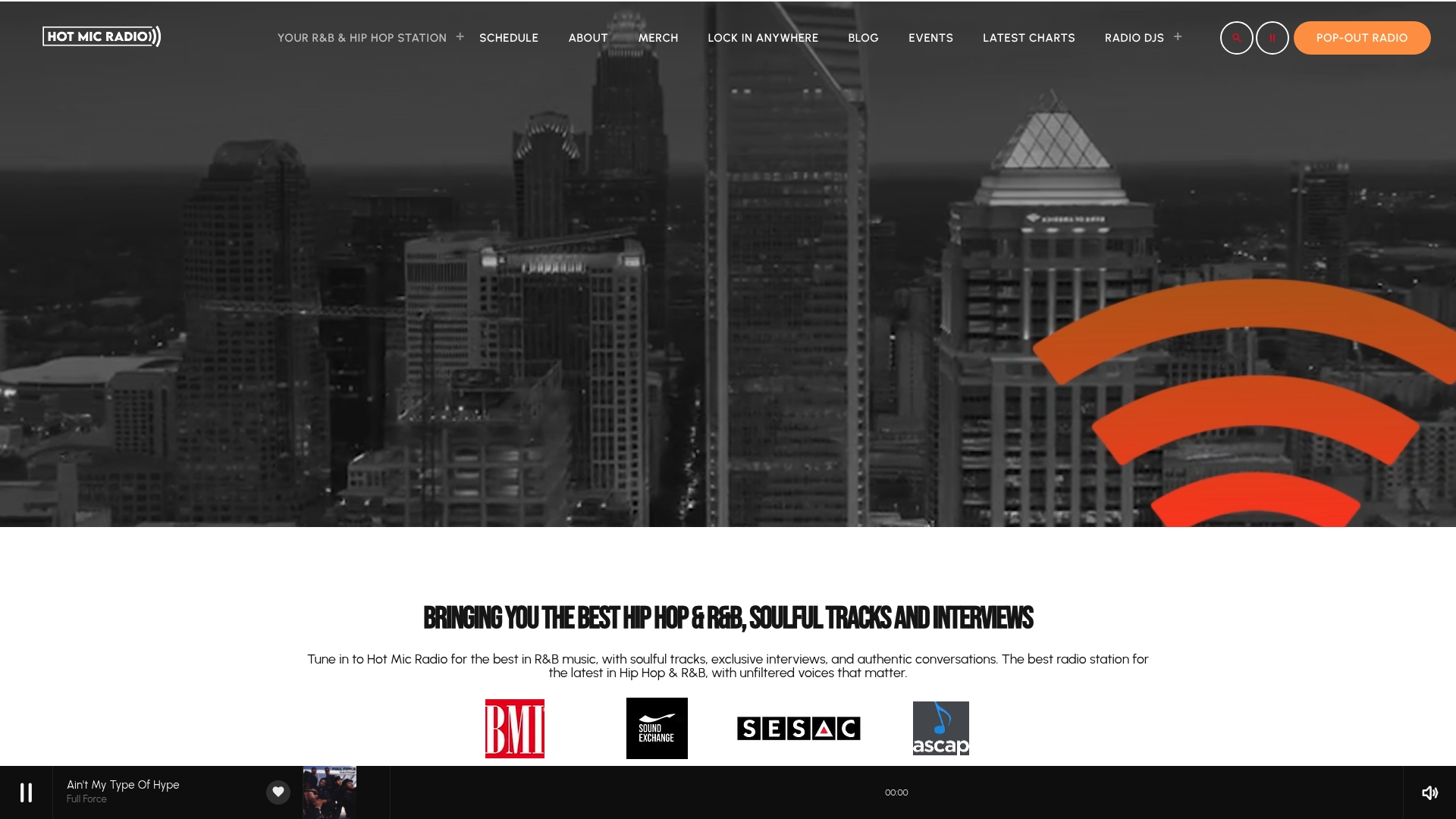
Whether you are dropping your first single or building momentum on your third project, Hotmicradio has the right home for your sound. Browse our Hip-Hop archives and R&B archives to hear what we are spinning, get a feel for our format, and submit your music directly to our team. We listen to everything that comes through, and we are always looking for the next voice that needs to be heard.
FAQ
What does “radio-ready” mean for online radio submissions?
A radio-ready track includes a 320kbps MP3, clean and explicit versions, professional cover art, an artist bio, and a registered ISRC code. These elements meet the technical and metadata standards that online radio stations require for airplay and royalty tracking.
Do I need my music on Spotify before submitting to online radio?
Yes. Most online radio stations use Spotify, Apple Music, and other streaming platforms to verify your legitimacy and manage royalties, making active distribution a prerequisite for submission.
How many stations should I submit to at once?
Platforms exist that submit your track to 400 or more online radio stations simultaneously, with curators providing written feedback on genre fit. Starting with a targeted list of 5–10 stations that match your genre is a practical approach for your first campaign.
How far in advance should I submit my track?
Submit two to three weeks before your release date. This gives curators enough time to review your track and schedule airplay to align with your launch momentum.
What should I do with curator feedback?
Read every response and use it to refine your next submission. Curators flag specific issues like genre mismatch or audio quality, and acting on that feedback directly improves your acceptance rate on future campaigns.


Post comments (0)